

Americans are inventive people. This has been a national characteristic as far back as the 18th century, when Founding Father Benjamin Franklin interspersed his time as a printer and ambassador by experimenting with electricity.
In his gigantic History of the American People, Paul Johnson noted that ‘from 1790 to 1811 the US Patent Office reported an annual average of seventy-seven registrations. By the 1830s it had jumped to 544 annually, by the 1840s to 6,480 and in the 1850s over 28,000 every year.’ Between 1865 and 1900 the US Patent Office issued half a million registrations, and the country produced an extraordinary number of world-changing inventions, from electric light bulbs to record players and telephones. Today they produce way more patents than all other western countries combined, reflecting their love of experimentation, and this extends beyond science.
For all that, few inventors have had such an obvious impact as Willis Carrier, who in 1902 came up with the first air conditioning unit. At the time of his breakthrough, GDP per capita in the southern states was 40 per cent lower than in the north: the old free states had long been dominant economically and accounted for nine-tenths of American industry at the time that South Carolina seceded from the Union, dooming that romantic but wrong cause from the start.
Air conditioning changed all that, and as a result American life has become far more orientated towards the South. It’s notable as one drives through the Carolinas along Interstate 95, where fast, wide roads are followed by light industry, expensive cars and graduates. In contrast much of the north is now characterised by rust: I have never seen so much decaying metal, a legacy not just of America’s declining industry but a tendency to throw away and move on.
Without air-con, the country’s new southern orientation would be impossible, the heat too much for many people. When I arrived in Austin, Texas it was close to 35 degrees, in mid-October; in August I’d have to hide inside air-conditioned rooms all day like some sort of Celtic vampire.
Texas is the richest state within the old Confederacy, as it has been for decades, but while much of that is down to the oil discovered at the turn of the 20th century, it was also the birthplace of another great American breakthrough - the integrated circuit, ancestor of the microchip, first invented in Dallas in the late 1950s. As everyone knows, it was the San Francisco Bay Area which came to dominate this revolutionary technology, a result not just of the military’s investment but also Stanford University, whose founders understood that concentration of brainpower was the key to a city’s greatness - and the Bay Area won the talent race in the late 20th century. Of course, location helped in other ways, as San Francisco has a uniquely blessed temperate climate, keeping it cool and often foggy, while just to the north is the luxurious Marin County and Napa, a wine-making region that resembles Tuscany.
Oil money fuelled the growth of Dallas and Houston, the former projecting the Texan image for people of my generation – big hats, big ranches, new money and religion - but now tech is also returning to its birthplace as an exodus of Californians escape dysfunctional government and head for Austin.
Texas’s capital is among the fastest growing urban areas in the United States, and very much feels like the city of the moment. The latest series of White Lotus features a wealthy Austinite country club wife, who starts to fall out with her friends on holiday when they realise she’s not just a churchgoer but also a quasi-Republican. Austin in fact is notably liberal, once upon a time a student town, famous for its live music and for being ‘weird’, in the shade of the richer, more conservative Houston or Dallas.
In many ways it is notably futuristic, and this must be how it felt for late medieval travellers visiting Venice or Genoa for the first time, coming back with exciting stories about these inventions that you stick on your nose and help you to read, or navigational tools that enable sailors to travel the world without the use of stars. In this case, it’s AI-driven taxis and robot food deliveries making their way along the pavements.
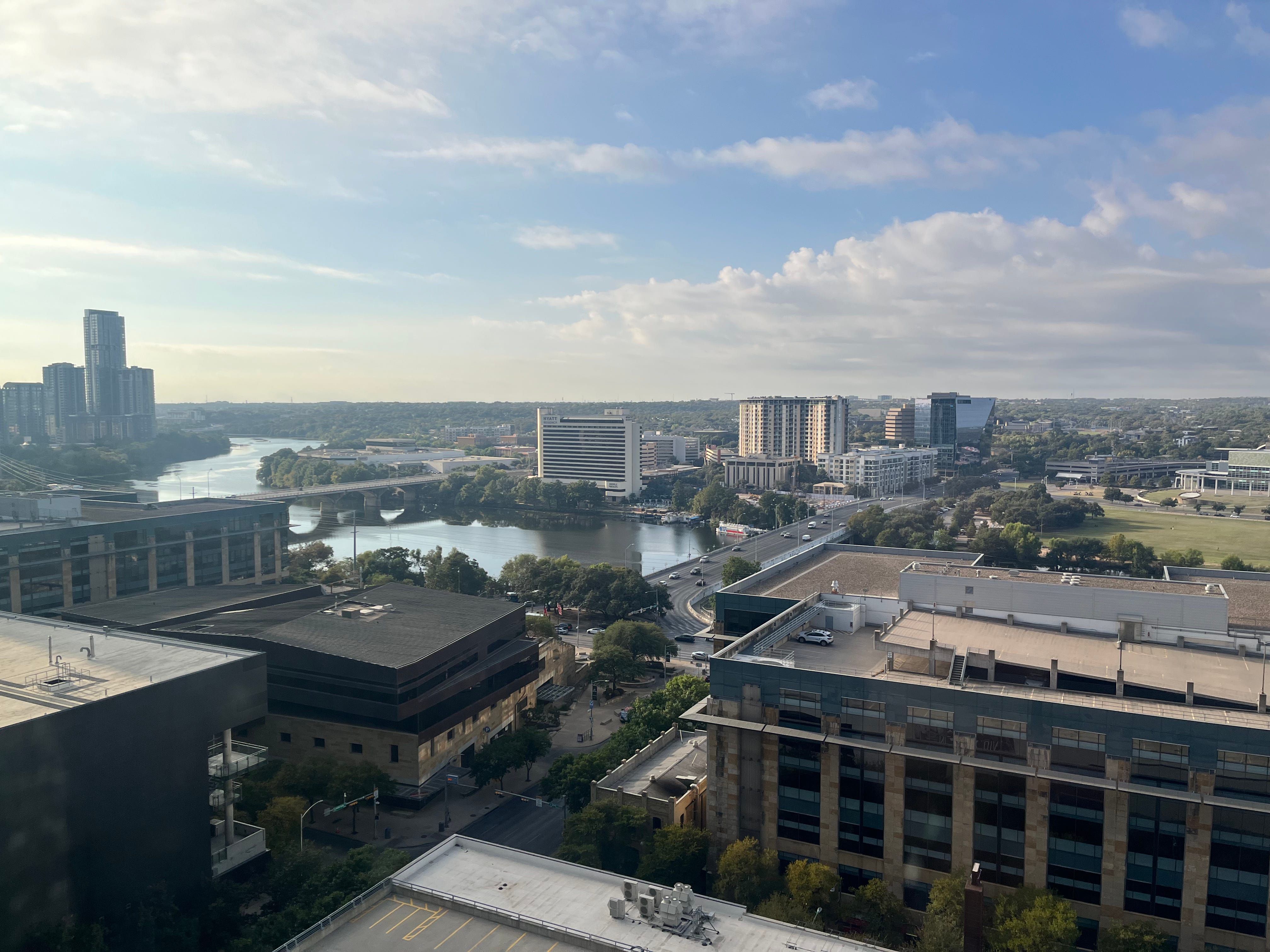
Perhaps a better analogy might be with early 19th century Manchester, which was drawing in people and technology as well as a new economic theory, although this comparison is rather unfair; industrial Manchester was hellish, while Austin is pleasant and so wealthy that much of it makes the average British city look like somewhere in the former Soviet Union.
But like 19th-century Manchester, Austin’s growth is driven by the state’s laissez-faire economics and a combination of geographical advantages, including cheap energy, a migration of talent from across the US and access to the Mexican labour pool.
At the shiny new airport, the Mexican cab driver I’d booked didn’t turn up, then replied that he was on his way, then got stopped for speeding, and so sent his nephew - who nearly crashed within three minutes and had to come to a hard stop. I had hoped to use some sort of metro but this is obviously a mad idea, because even in the land of car-worship we’re in what JFK might have called ‘car nut’ country, so instead the city unfolds in a sea of four-lane highways.
Austin has always had its celebrities - Willie Nelson was the most famous, but there was also Matthew McConaughey, Sandra Bullock and Lance Armstrong, who still has a bikeway named in his honour, I was surprised to learn – but it’s become better known for its high-profile California exiles, typically right-liberal, the ‘I didn’t leave the left’ types disillusioned with the excesses of progressivism.
Elon Musk is the most famous example, and there is also Joe Rogan and his comedy store. In 2020 Rogan left LA because, as he put it, ‘I want fucking freedom.’ There is also the University of Austin, a new college founded to promote heterodox thinking in response to the stifling conformism of so much American academia.
Many of the people I met had come from San Francisco, which was my next stop, and lamented the city’s dysfunctional government and the collapse of civility - and in particular the army of homeless, many obviously mentally ill and/or addicted to hard drugs. Their new home is so much better, they all said, although even this city seemed to have quite a lot of obviously troubled homeless people compared to London; as I found out later, the problem is so much worse in San Francisco and New York, so that Austin must feel like Singapore in contrast.
Austin draws in huge numbers of people, the annual migration figure reaching 50,000 in the early 2020s, and international migrants have especially surged in the past couple of years. All nations of the world are found here, even Scots like my fellow substacker Daniel Kalder. Daniel and I had never met, but I’d been a fan of his writing since reading his books about his travels in the former Soviet Union during the chaotic Yeltsin years. He married a Texan lady and moved here twenty years ago, which makes him something of a native. Joining the crowds who line the Congress Avenue bridge to watch the exodus of bats heading south - few appear, as it turns out they’ve already left for Mexico - he points out that almost all the skyscrapers we see have gone up since he arrived, the sort of urban transformation one associates with China.
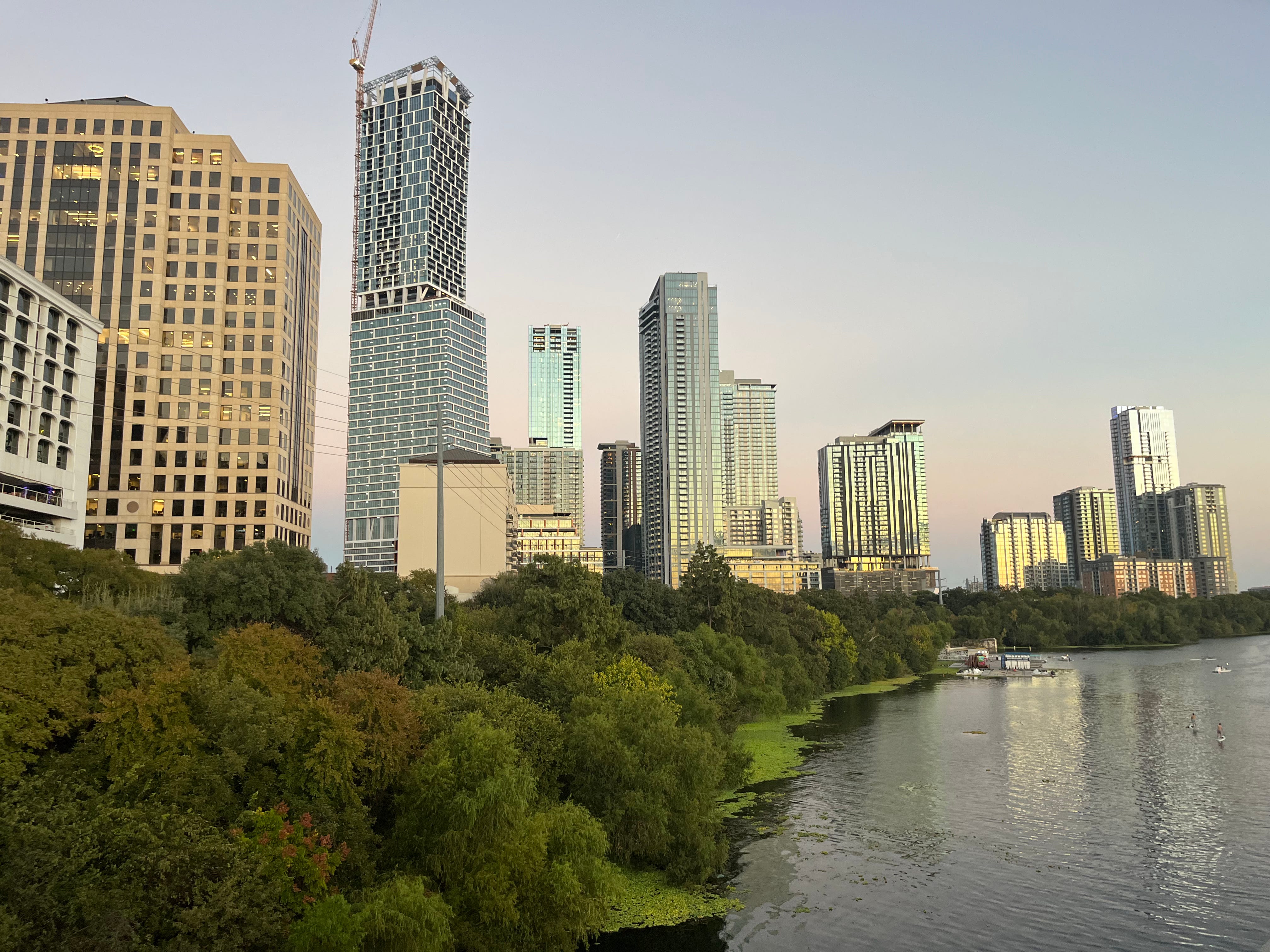
The sun is about to set and there are lots of people jogging around in brightly-coloured shorts, leggings and sports bras, which adds to the feeling of wealth; they are a constant feature in the city, signifiers in America’s class system, which is based not just on wealth but also IQ, impulse control and politics. Military-style police trucks race past, out in force for the Grand Prix, so flashy and fashy they would have British children pointing in awe. On our way to Sixth Street, the strip where the city’s comedy clubs and music venues are found, I spot an Uber Eats order being delivered by a robot, hurtling down the pavement, soon to come to Britain.
As the population has exploded, and the city has grown wealthier, the usual problems have arisen: it’s become more expensive, pushing up rents and transforming not just the skyline but its character. Kalder has previously written about Austin’s evolution from weird to rich, driven by the tech boom and the influx of migrants from around the country.
‘Joe Lonsdale, the co-founder of Palantir, the data mining firm that helped locate Osama Bin Laden, declared that Texas beats California “in almost every method you can name, whether it’s education, pollution, homeless[ness].” Trump-supporting billionaire Larry Ellison relocated the HQ of database giant Oracle from Redwood City to Austin following a bitter struggle with regulators. And, most famously, Elon Musk shifted Tesla’s headquarters to Austin in 2021, after claiming that California regulators had started behaving like a “monopoly that cannot go bankrupt.”
‘Long before Tesla arrived, Google, Amazon and Meta (as well as older firms such as Apple, IBM and Dell) had established significant presences in the city,’ but it was turbocharged during the crisis that especially hit progressive states over 2020-1, and the desire of many people to escape the dysfunction of government rule.
Musk moved into nearby Bastrop, where X and the Boring Company are based, with SpaceX housed in a 500,000 square foot building, and he is apparently planning ‘a Texas utopia’ called Snailbrook next to the Bastrop complex, which will include a school with a focus on STEM subjects. Although Victorian Britain had model villages for workers in the form of Saltaire and Bournville, this tendency towards semi-utopian or experimental communities is quintessentially American.
Such a vast influx of wealth would change any city, as it has done to Austin, ‘a second-tier provincial city until very recently’ in Kalder’s words. What in part attracted people was the bohemianism that wealth inevitably kills, since the city ‘always punched above its weight when it came to the counterculture. Cheap rents, low house prices and Left-wing politics made it attractive to creative people and misfits: “slackers” unafflicted by the ambition and status anxiety that bedevils all those chasing careers in NYC or LA. Psychedelic music was born here, in the shape of The 13th Floor Elevator’s debut LP’, as was the Fabulous Furry Freak Brothers, a famously druggy underground comic. Mayoral candidate Leslie Cochran, a homeless man in a thong bikini, came to represent ‘weird Austin’, and his death in 2012, aged 60, ‘coincides almost too precisely’ with its last gasp.
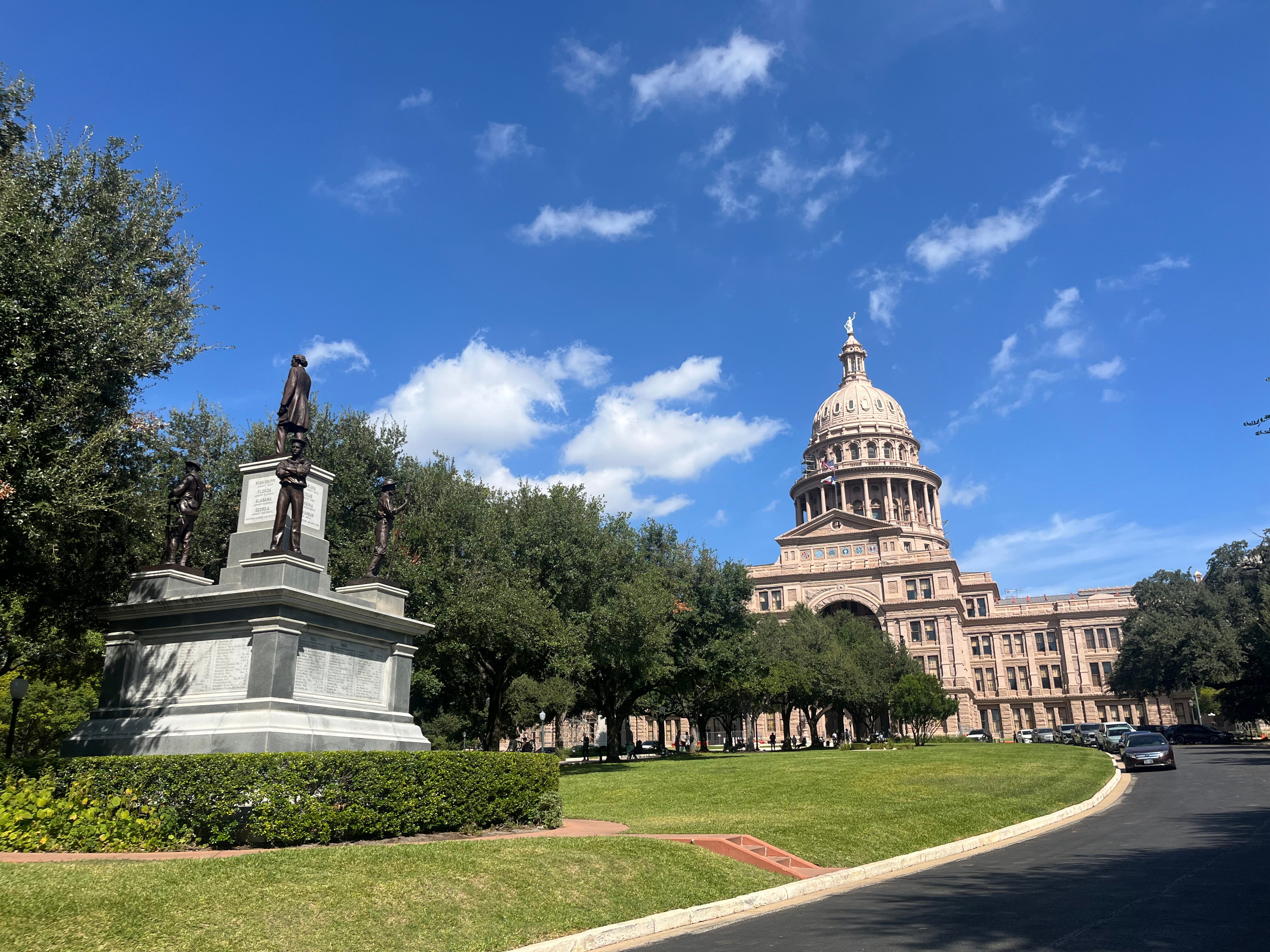
New wealth may inevitably drive out the bohemians who gave the city its soul. In the morning Kalder picked me up outside the state capitol in a very cool looking Dodge Challenger to take me to a ‘world-famous barbecue’ in Lockhart, a small town that has drawn in some of Austin’s weirdness.
The state capitol still has a statue of Jefferson Davis and a monument to fallen Confederate soldiers, characteristic of the Texan tendency to not give a damn, as is the fact that it’s taller than the equivalent in Washington. Outside, a vegan rally was being held and, right by the entrance, a man had parked a Dodge Ram pick-up truck with placards proclaiming his opposition to abortion and support for gun rights, alongside Trump 2024 and Don’t Tread on Me flags and a sign proclaiming REMEMBER THE ALAMO.
Austin has been described as inhabiting a sweet spot, a young liberal city with all the benefits that come with it, such as good restaurants and live music, while being restrained by a conservative state. Despite its noted lack of success, the city authorities do their best to imitate the politics of California, still very much the driving cultural force of the western world: they voted to defund the police during the 2020 hysteria, leading to a rise in murder rates (how counterintuitive). The year before, they decriminalised public camping, which resulted in homeless cities springing up and turning into open-air drug markets full of mad people.
On the drive out Kalder points to a motorway underpass which had previously been a giant encampment, which the authorities only cleared because a local resident started a petition. Even then the mayor was reluctant to carry out their wishes until eventually forced to by the Republican governor, although the issue still hasn’t been resolved. But because Austin is the capital, and the state’s conservative rulers work here, the self-destructive urge to imitate San Francisco is tempered. The Republican administration also makes it far easier to get things built, with clean energy projects in Texas taking less than half as much time as in California.
America’s meritocratic system produces phenomenal growth and progress but, when combined with a system of quite stark economic outcomes, and a prevailing ethos in which elites don’t preach the conservatism they practise, as Charles Murray put it, it can be brutal for society’s losers. The contrast is often quite shocking; one sees luxury apartment blocks way more lavish than anything in Britain, and the next block is home to an army of insane, homeless drug addicts by a bus stop. The United States shut down large numbers of mental hospitals in the 1960s, the result of a toxic mixture of progressive and libertarian thinking, and the social safety net is frighteningly thin. Because the states are free to choose their own response this problem, the tendency is for the homeless, the mentally ill and addicted to gravitate to those offering the most hospitality – warm and blue.
American cities get stuck in a trap: they require an educated elite to give them both financial and cultural power, the most important factor being a successful university, but this graduate demographic then insists on voting for policies driven by status competition in which empathy is a primary virtue. Crime and incivility follow; businesses drown in regulation; zoning laws push house prices up, and people flee to red states. Fears that incomers would vote to recreate the same policies they escaped from have not been borne out here, and Kalder points out that defeated Democrat candidate Beto O’Rourke scored higher among natives than incomers. As one famous former governor put it, there’s a famous Texan saying: ‘fool me once, shame on you. Fool me - you can’t get fooled again.’
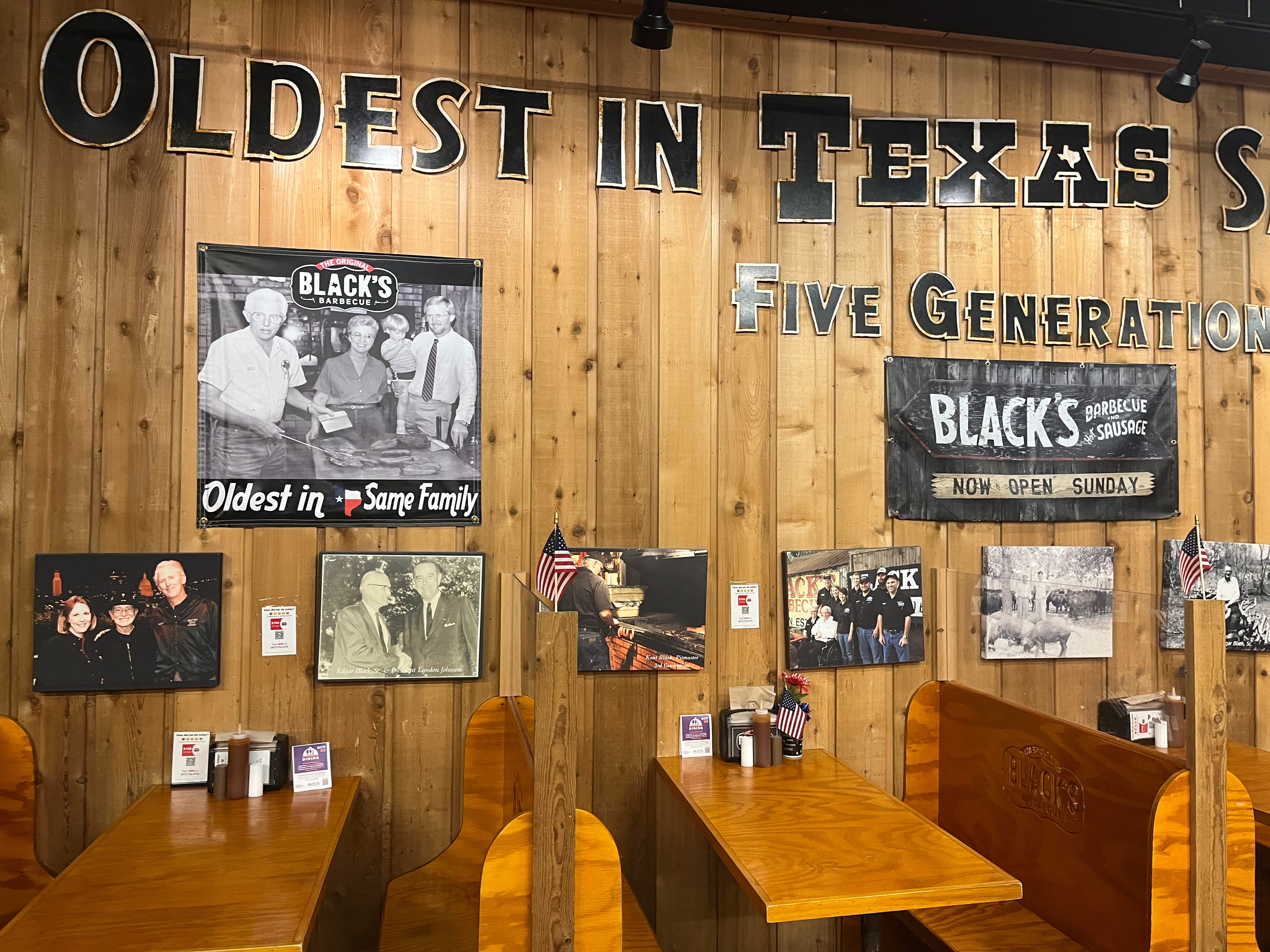
Passing by abandoned oil wells and under the huge skies – only Russia offers anything like it, he says – we come to the world-famous Blacks barbecue in Lockhart, which really is as good as the hype suggests. The setting is perfect; Lockhart has a quintessential western style town square, complete with late Victorian town hall, the ideal spot for a shoot-out between a gun-slinging sheriff and a notable outlaw from a notorious clan of Scots-Irish cattle rustlers. Instead, it’s full of old people protesting against Trump.
Texan progressivism is sort of jarring to European travellers; it doesn’t quite compute. Daniel leads me into a second-hand bookshop which sells a lot of post-war British poetry, and I head for the politics section, wall-to-wall leftist screeds against neoliberalism and George W Bush. Next door to a record shop is some sort of evangelical Christian drop-in centre - we’re at the intersection of ‘Jesus saves’ America and ‘In this house we believe’ America, the country’s two competing religions.
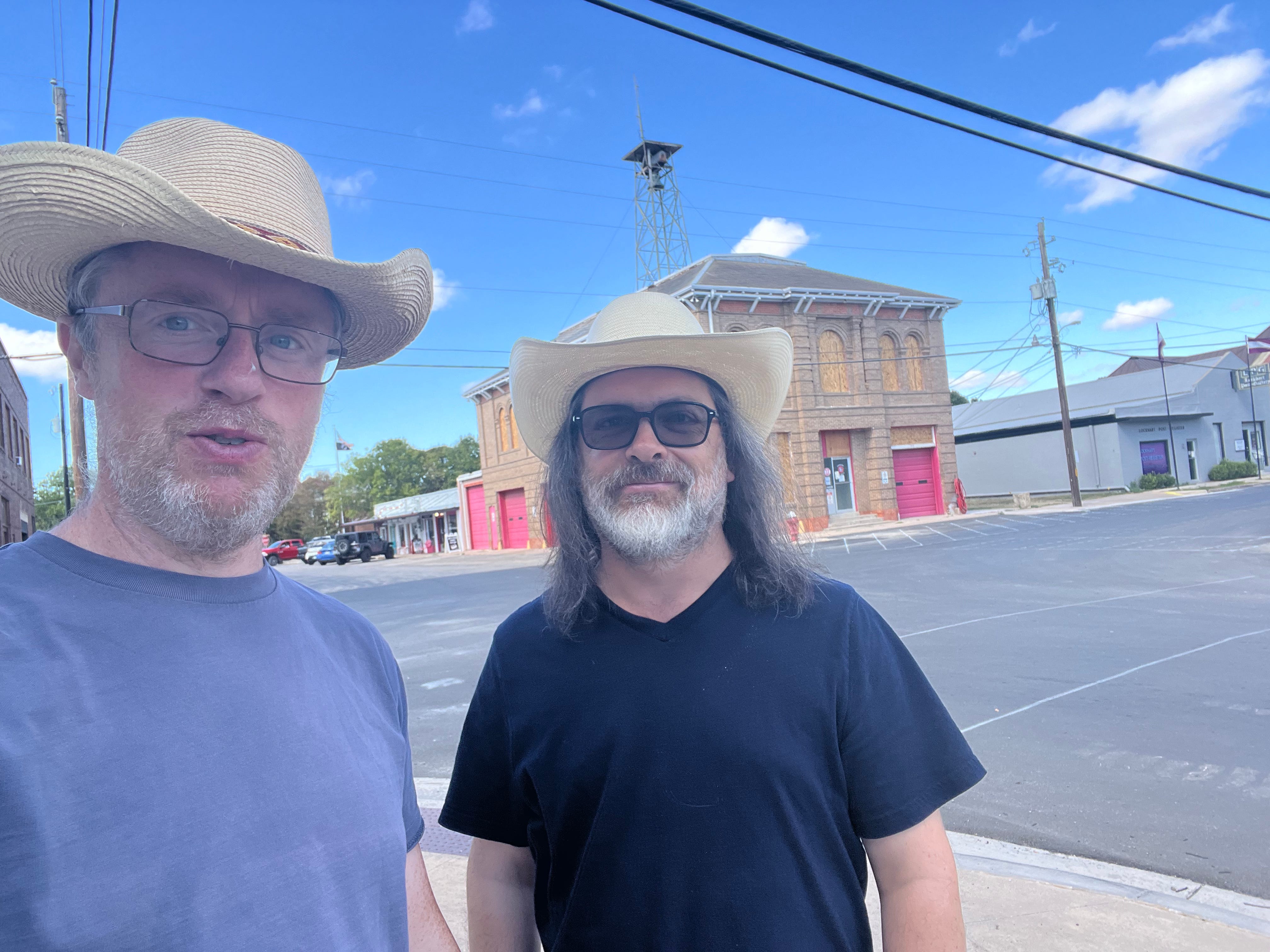
The latter is the faith of the country’s cultural elite, not its true bohemians, and already the eccentric counter-culture of the town faces the onslaught of rising wealth from Austin. Bohemianism depends on genteel poverty, and there isn’t enough of a place for it in such a booming region; so the bohemians, most likely, will move on to somewhere cheaper, repeating the cycle.
On the way to Palmetto State Park we pass through Luling, a former oil town which has turned some of its 183 disused wells into art. The small town boomed as long as the oil kept flowing but, unlike many faded communities, it may get a second shot as part of the commuter belt of a global tech capital.
Texas is mind-numbingly big, and this part of it is on the border of two climates, the desert of the West and the swamp of the Mississippi delta. As we walk past a river which looks like the sort of place you’d pick up a flesh-eating virus if you went for a swim, he points out a venomous snake.
The next morning, a Sunday, I meet Razib Khan, yet another substack writer, for a podcast interview. It looks like a half an hour walk, so I head off in that direction but the only people in the street are mentally ill - and this is about three blocks from the governor’s office. Depressed by the walk, I hire a robot taxi to pick me up, my first experience of a future coming to London next year; my sense of unease and alienation at American life, as so often, quickly transforms into childlike excitement.
The urge to experiment is America’s greatest strength, but it also feels strange at times. Later in my trip I visit a school where most of the teaching is done via screens, and children are encouraged to build their LinkedIn profiles. The aim is to enable pupils to create a resume that can win the extremely competitive college entrance system; one of them has just been in New York negotiating her Broadway musical. More than that, though, the school’s ethos is about teaching agency. With my obsession for historical analogies, I can’t help but think of the guiding spirit of the British aristocracy at the time of Trafalgar: passivity was the worst sin, ‘bottom’, boldness, the greatest virtue. But I also get a troubling sense that everywhere America’s educated classes are thinking about the jobs massacre that will come with AI’s takeover.
Like with much of American life, I wouldn’t want this for myself but I’m glad that someone is trying it out; if it works, we can always feed on the crumbs (if our regulator-rulers don’t stop us). While experiments often fail, or become unfashionable - upper-middle-class parents are becoming very anti-screens - Americans don’t share our shame about failure; it is the failure to try which shames them.
Joe Lonsdale, one of the most notable California exiles, was among the co-founders of the new University of Austin, or UATX, which was established to challenge the ‘new ideologies of intolerance that order subservience and quash those who think differently.’ Again it’s very American, that tendency to experiment and set up shop elsewhere when established institutions are failing, or captured. The country’s 4,000 universities include a number of quite unusual and experimental institutions like St John’s College, which avoids modern books, Deep Springs College, which teaches in a cattle ranch, or Wyoming Catholic College which requires all students to undergo a three-week backpacking trip.
UATX Associate Provost Loren Rotner views the university as being like a start-up carried out in ‘the spirit of experiment’. The university is small, with an income of $25m a year, minuscule compared to the long-established University of Texas at Austin with its $20 billion endowment. UATX began in a car lot and has now moved to a block in the centre of the city, which is so modest that it shares an address with a bar which I mistakenly walk into.
They don’t take government money, which would come with conditions, and they want to be free. ‘The spirit is better here,’ he says, even if they have had threats from political extremists, a fear heightened by the Kirk assassination. In a recent statement the university’s Twitter account declared that ‘Every breakthrough — every invention, every industry, every new frontier — began with a handful of extraordinary individuals free to take extraordinary risks.’
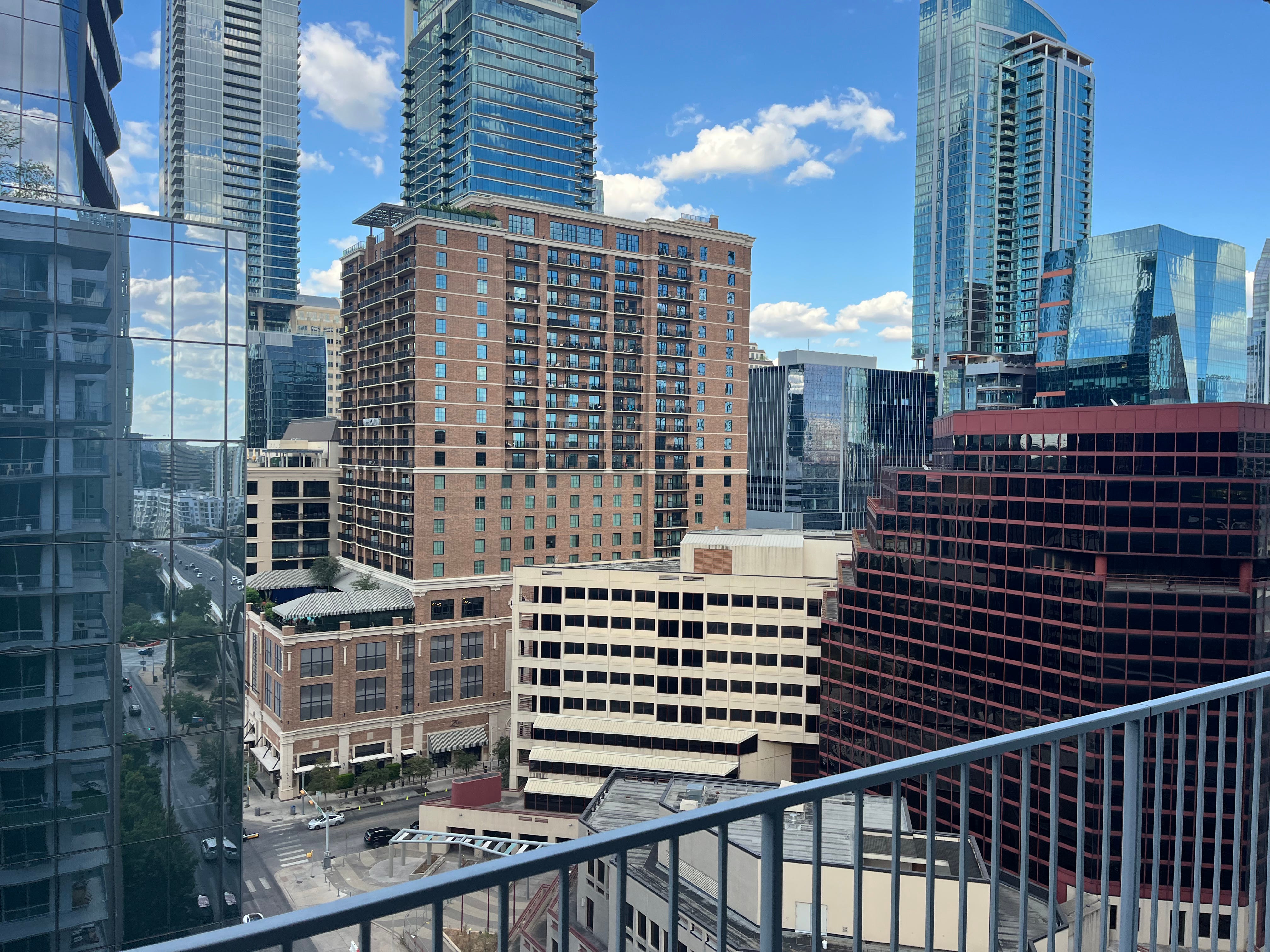
They can also take risks because America is bountiful and land is cheap, even here. Austin has pioneered an exciting and counter-intuitive response to the problems of unaffordable housing, based on a little-known theory called ‘supply and demand’. After a three-year-building spree, rents dropped by 20 per cent, the city seeing the third largest reduction across the US. Last year, London started fewer homes than Austin - a city a quarter of the size - approved in just one month in 2023. Rents are now 30 per cent lower than the British capital, while average salaries are about 25-50 per cent higher. Unsurprisingly, people keep on coming, and there is much talk that New York’s mayoral election will further the exodus south.
I like Austin, but the city does sort of lack something. As one urbanist put it, much of it could do with ‘linger spots that create serendipity’, which San Francisco, for example, has in spades. One major factor is that tech elites are not that interested in the sort of civic pride represented by public endowments, something the founders I met saw as a problem. Houston and Dallas have grand art galleries, museum and concert halls, the legacy of previous generations, while Austin’s are notably mediocre. American tech billionaires do give large amounts away, but they tend to be good causes unconnected to either place or to culture (or to fashionable political movements that actually cause more harm than good).
Andrew Carnegie funded 3,000 public libraries, not just in the US but Europe, Africa and Fiji. Of his $400 million fortune, $350 million went to public benefactions, with the rest going to his endowment for peace or support for old tenants. John D Rockefeller moved a whole medieval French cloister to New York, and restored 400 buildings in Williamsburg.
One obvious reason is that the country’s new elite are mobile, their wealth intangible, but the decline of religion is probably a major factor. Cosimo de’ Medici was not a saintly man, but he patronised fine works of art that gave Florence lasting beauty, because he thought his money-lending would land him in hell. The Dunfermline-born Carnegie was influenced by his Calvinist roots. If, and perhaps when, Austin eventually declines like Florence and Venice, or even Baltimore and Cleveland, what will the tech titans leave behind as a legacy to show visitors that here was a great city?
Can't imagine chronically resentful British dysfunctionals, or schoolboys, allowing R2D2-lookalike Ubereats to move along the pavement unmolested.
I'm an actual native Austinite. My family has been in Travis County since the mid-19th century and I qualify for membership in the Oak Hill Old Settlers Association. (Not trying to flaunt my pedigree, just a shout out to any other Old Settlers in the comments section.)
Naturally I live in Houston now because I can't afford to live in Austin. My consolation is that two roads in Austin bear my surname, not to mention the other streets bearing other family names. I can remember when some of them were dirt roads going through open pasture and I only qualified for Social Security this year.
"Houston and Dallas have grand art galleries, museum and concert halls, the legacy of previous generations, while Austin’s are notably mediocre."
That was my father's perennial complaint. Austin has always been the "second city" of Texas. San Antonio, Dallas, and Houston tried to compete with each other as well as other great US cities--New York, Chicago, and Philadelphia back in the day--but Austin always viewed urban greatness as an afterthought. It used to be that Austin was focused on a relaxed and pleasant life style, but now it’s obsessed with being cutting edge. I suppose now it's a first-tier provincial city. Well done, Austin.
San Antonio was Texas' first big city and it shows. It had a cosmopolitan population by the mid-19th century (Anglo American, Mexican American, and German American, roughly a 1/3 each) and built its cultural capital on this during the Victorian era. Germans played a crucial role building the American cultural legacy in the 19th century, it should be noted. (Shout out to the Germans in the comments section. I'm a good old British American but I give you props, as they kids say nowadays.)
San Antonio feels more like a city than any other big city of Texas. No grand museums but it has a well-established, albeit provincial (in a good way) cultural life and is happy to be itself. It's well worth a visit. I used to live there and it's my favorite Texas city, fwiw.
The White Lotus episode you mention would be much more accurate if it depicted a church going conservative