

According to the historian al-Tabari, upon conquering Jerusalem the Caliph Umar took it upon himself to tidy up the 35-acre area surrounding the Temple Mount. This had been left covered in rubbish by the Byzantine authorities, as a deliberate way of humiliating the Jews, and the new ruler is said to have begun to clear the garbage with his own hands, declaring ‘Oh people, do what am I doing!’ Ancient history is full of campaigns of mobilisation among the populace, with residents encouraged to take up defence of this city, but this must be the first (or one of the first) examples of a public litter-picking campaign.
Monarchs have from time-to-time berated city authorities for the state of their streets, one of the first known being Edward III’s instructions to the City of London after the Black Death complaining about the filth. But the first state to instigate a national clean-up was arguably Singapore, from where I’m writing now.
Other countries had voluntary anti-litter movements, including Keep Britain Tidy, which developed out of the Women’s Institute in 1955, while Keep America Beautiful scored some success with its famous ‘Crying Indian’ advert.
But the Asian city-state was the first to instigate a national campaign, in 1968, with Lee Kuan Yew’s ‘Keep Singapore Clean’ scheme. Citizens were urged to keep bus stops and toilets free of rubbish, and for a further campaign in 1976 teachers, pupils and parents were even encouraged to tidy up schools over the weekend. It’s still an important consideration for the authorities, and there are signs everywhere urging people to keep the place clean. Lee was so concerned with standards of cleanliness that he demanded a weekly report from Changi Airport about the state of the toilets.
A zero-tolerance approach to littering went hand-in-hand with the deliberate cultivation of a green aesthetic, turning Singapore into a ‘tropical garden city’.
In his memoirs From Third World to First, Lee expanded on how important the appearance of the environment was to a country’s health and wealth, writing that ‘after independence, I searched for some dramatic way to distinguish ourselves from other Third World countries. I settled for a clean and green Singapore.
‘I recounted how I had visited almost 50 countries and stayed in nearly as many official guesthouses. What impressed me was not the size of the buildings but the standard of their maintenance. I knew when a country and its administrators were demoralized from the way the buildings had been neglected - washbasins cracked, taps leaking, water closets not functioning properly, a general dilapidation, and, inevitably, unkempt gardens. VIPs would judge Singapore the same way. We planted millions of trees, palms, and shrubs. Greening raised the morale of people and gave them pride in their surroundings. We taught them to care for and not vandalise the trees.’
Lee planted his first tree in 1963 and would ceremoniously plant one each year for the next four decades. He even set up a department to care for the trees, and came to take a keen interest in the subject, developing opinions on which trees better suited particular surroundings; besides the small-scale gardens which line the streets here, there are signs informing passers-by about the species, for those interested.
A clean environment was important for the nation’s health, Lee reasoned, but it was also important to appearances and confidence. His belief was that if a city was clean and green, it would look richer and therefore it would also become richer, by attracting investors. That seems obviously true, and the converse is surely true too; the aesthetic of poverty creates poverty.
One of the very notable changes of my adult life is how much more rubbish there is almost everywhere in Britain; not just in urban high streets lined with take-aways, but also on the side of motorways and even on quiet country roads. I’m perfectly willing to believe that my pessimism screens out a lot of progress, but littering has got much worse and it adds to a sense of enshittification in public life.
A lot of people notice it, and are troubled by the problem. American comedian David Sedaris recently remarked that ‘Britain has the worst litter problem in the developed world’ and ‘it’s bad for the spirit to walk through filth’. Jeremy Clarkson called for snipers to be put in trees to shoot people who drop litter in the countryside. I’m not sure that Lee would have gone so far, but I think many would sympathise.
Fly-tipping has become endemic, a problem which reached widespread public attention last November when someone dumped a grotesque mountain of garbage in Oxfordshire, around 170 metres long and estimated to be somewhere around ten thousand cubic metres in size. It wasn’t the only large-scale waste atrocity even that same month; tons of rubbish was dumped in Avonmouth, outside Bristol, costing the taxpayers tens of thousands of pounds.
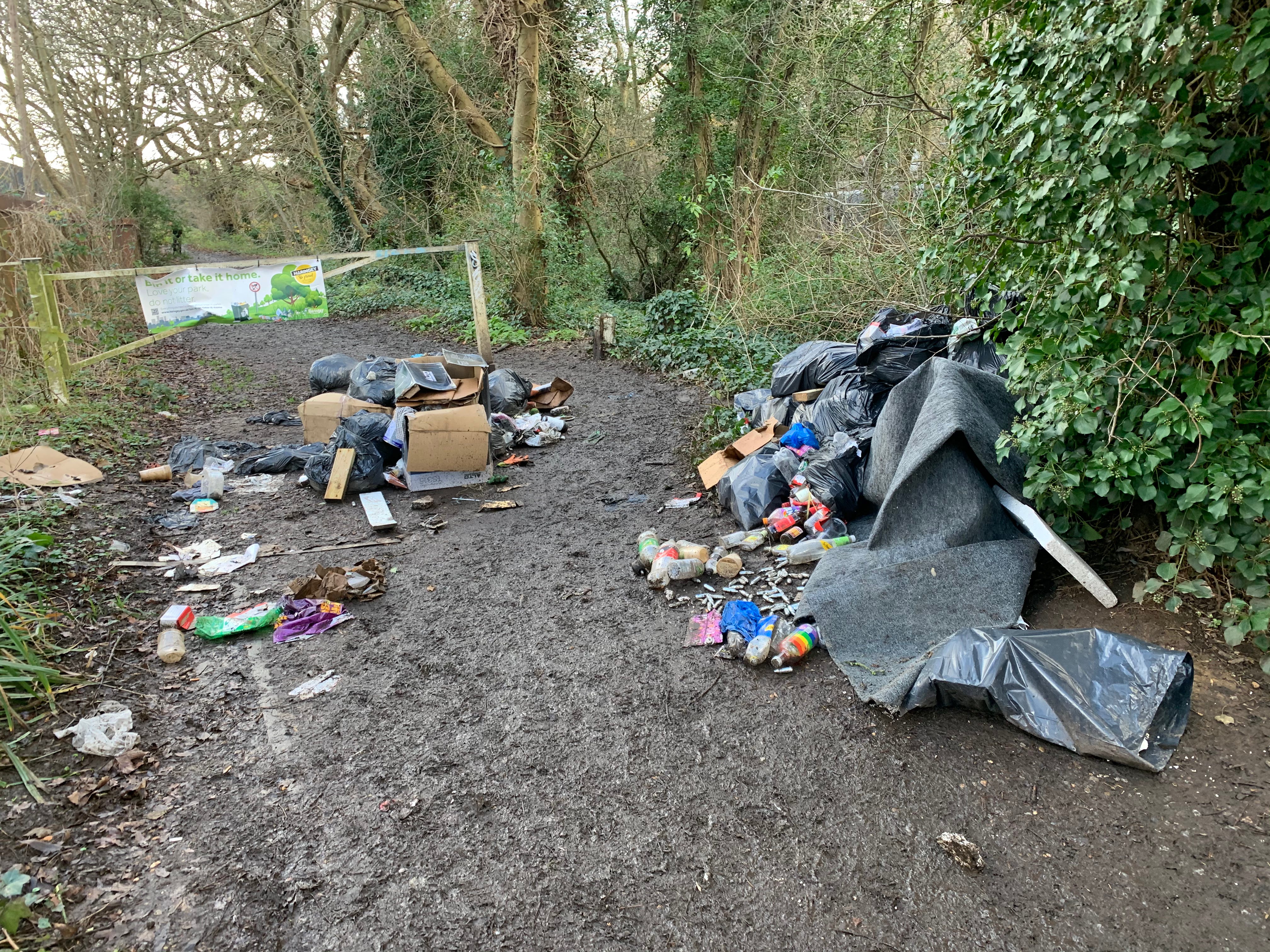
Fly tipping is now so endemic that just one London borough, Brent, recorded 35,000 incidents in a single year. The number across the country reached 1.15 million in 2024, up 20 per cent in five years.
Many of our major cities are now covered with rubbish, although Birmingham is especially squalid, not helped by the fact that the binmen are on strike because judges ruled that cleaners had to be paid the same under equality laws.
The city has become notorious to a global audience due to YouTubers like Benjamin Rich, aka Bald and Bankrupt, who portrayed high streets filled with overflowing bins. Last year Robert Jenrick chose the city to highlight the national trash problem. How would VIPs visiting Britain’s second city judge the country? How likely would they be to invest?
It seems instinctive for many people to see the growing problem of rubbish and equate it with spiritual and moral decline. Cleanliness is next to Godliness, and the declining environment symbolises a country fallen in some way. It is true that garbage mounds suggest a population with little investment in wider society, and ‘private splendour, public squalor’ is a characteristic of low trust societies, the quintessential third world trait Lee wished to escape from.
With this in mind, many naturally point to immigration as a source, since people who come from countries where littering is the norm bring that culture with them, but also that diverse neighbourhoods have the low social capital which ensures that no one cares about the public realm: there is no incentive to clean up, if you reasonably believe that no one else will clean up. Perhaps it’s symbolic of declining social trust and the apathy this brings: it is certainly true that immigrant-heavy cities like Bradford are the worst affected.
My impression is that the spread of rubbish is far too extensive to blame on immigration, except as an aggravating factor, and I’m not sure that one can even attribute it to moral decline either. People are probably more concerned about the environment than ever, even if anxiety about the global environment doesn’t always correlate with concern for the local - as anyone who lives near a self-proclaimed Green voter can attest.
The most likely explanation is that the state has ceased to function, that authorities do not have the resources to keep the streets clean, that Britain has very high landfill taxes, and there is a basic lack of enforcement, with only 0.14 per cent of fly-tipping cases ending with prosecution.
In Singapore, littering is punished firmly (obviously - everything is punished firmly here), with fines starting at £200 and rising substantially for the second offence. People have a reasonable fear that if they litter the environment, they will be punished, and without such a deterrence it’s much harder for the well-intentioned majority to keep the place clean; I personally know volunteer litterpickers, but in London it has become essentially a hopeless and demoralising task.
Public cleanliness is an important signal for which way a country is heading, and Lee was surely right that if a city looked clean and green, it would likely grow wealthy. It’s notable that Polish cities have become the cleanest in Europe, at a time when that country is the continent’s economic success story. I’ve been struck in recent visits by how wealthy Poland looks, but perhaps what I’ve been processing is its cleanliness.
If I were advising Nigel Farage and he won the general election, the first thing I’d suggest is to invest in some heavy gloves and litter-pickers, and announce on day one that the entire country is going to be cleaned up. Just as Jordan Peterson advises young men stuck in a doom loop to tidy their room as the first step, so it is with a nation. Many people would enjoy the sense of community and self-respect that this brings, but more importantly a great clean-up would signify the reversal of our slide into third world squalor.
Engaging in serious litter picking in my locality was when I started to become seriously aware that Britain had become a decadent and degenerate society. One is brought face to face with selfishness and insouciance. The lack of good parenting (no one who has a sense of stigma about dropping litter engendered into them in childhood will do this) is also obvious. I have thought very hard about the problem of this low-level antisocial behaviour and am pained by the degradation of the country I grew up in. I have tried hard to understand where it has come from. Litter is a symptom of a deeper malaise. I watched a TV program on the subject years ago in which a middle aged woman, frustrated by the despoiling of her town, was approaching people who dropped things in the street. One young man who had just tossed a cigarette end took exception to her asking him to pick it up and put it in a litter bin. “I’ll do what the fuck I want” he sneered at her. And that phrase summed up the problem we have: people have lost that sense of responsibility to others and their community; they have taken it upon themselves to behave as if no one else exists.
What is the solution? I do not believe that society can fix itself. Organisations, companies and countries which are bumping along the bottom can reform but it takes someone with exceptional leadership skills to make this happen. Do we have anyone like that?
Re: Britain has the worst litter problem in the developed world’
I hear your Britain and I'll raise you Baltimore. I would clean up in front of my house one day and the next day, like the stone of Sisyphus, trash would abound again. And we had regular incidents of dumping on vacant lots, or behind them. A trash heap left on the street behind me grew so vile, rat-ridden and fetid (apparently it included dead animals) that an auto shop on the street finally tricked a city councilman to come down and videoed him getting a good whiff of it, followed by a chewing out for the sanitation department's dereliction.