

Eighteen-year-old student Henry Nowak was on his way home from a night out with friends in Southampton last December when he was attacked by Vickrum Digwa, a complete stranger armed with an eight-inch knife. The victim tried to climb a fence to escape but Digwa pursued him, stabbing him five times, including a wound to the chest which punctured his lung.
Henry’s injuries had left a trail of blood, and he repeatedly cried out that he had been stabbed - but when the police arrived, they put him in handcuffs. Digwa told them he had been racially abused, that the student had knocked his turban off, a claim also made by his brother Gurpreet in a 999 call.
Henry passed out soon after being handcuffed, and The Daily Telegraph reported that ‘As the teenager lay there, unable to breathe as his lungs filled with blood, begging officers for help, they ignored his pleas and placed him under arrest. He died less than an hour later.’ The eighteen-year-old’s final words were ‘please brother, I can’t breathe’.
At Digwa’s murder trial this week, prosecutor Nicholas Lobbenberg KC recalled that: ‘Put simply, Henry drowned in his own blood with his lung having been cut by the knife going eight centimetres into him.’
Henry had been a popular student studying Accountancy and Finance, and was out celebrating with one of the two football teams he played for on the night of his murder. Friends describe a cheerful and pleasant young man, and he had consumed only a small amount of alcohol that evening, described as being below the drink-driving limit. In February, a charity fundraising match was organised between the two sides he played for.
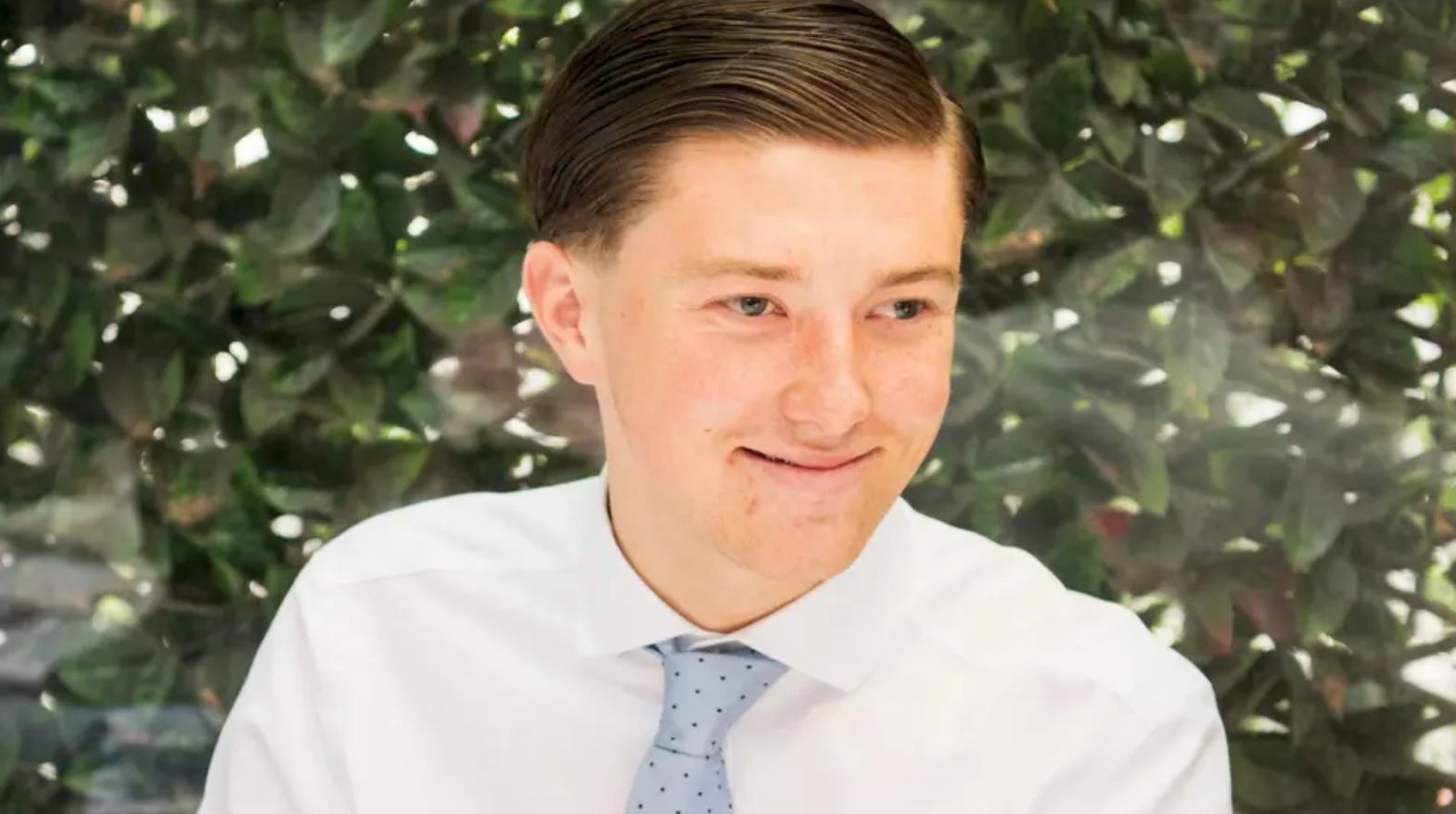
Digwa was convicted of murder yesterday, while Hampshire and Isle of Wight Constabulary is now under investigation by the police watchdog. The force’s assistant chief constable, Robert France, told reporters after the trial: ‘I’m sorry that Henry’s life couldn’t be saved that night, and I’m sorry that he was handcuffed and arrested. He was the victim.’
Mr France said the injuries were ‘deep and hard to find’ and as the bleeding was ‘happening internally’ it would not have been immediately obvious: ‘There wasn’t anything the officer [could] have done that night that would have saved Henry.’
There is much public confusion about the details, and many rumours circulating, confusion which will only be resolved when police release bodycam footage from the night - which they have so far not done.
The police claim that Henry’s injuries were so serious that he would have died anyway, but at the same time that they could not notice them; this is certainly possible with internal bleeding, but one might still wonder how they did not notice. The police also argue in their defence that they were lied to by the perpetrator, but isn’t it the job of officers to judge for themselves? Why did they feel the need to handcuff a young man who was crying out in pain and distress, just because racism allegations had been made, and without any evidence?
The murder was horrific, but the police response was also shocking. Many have speculated on what the public reaction might have been were the victim and perpetrator of a different skin colour. The Critic’s Tom Jones put it well when he pointed out that ‘Were the races reversed, this could be a story from the Jim Crow South that became a cause célèbre of the Civil Rights movement.’
It would be etched in the public consciousness, but this won’t become a cause célèbre because the source of the injustice is not something which society already believes to be wrong – racism – but instead a worldview the powers-that-be are firm believers in.
The prosecutor, describing a perpetrator with an unhealthy interest in knives, said that ‘This is not a case about Sikhism. This is not a case about racism. This is a case about murder.’ It is certainly not about Sikhism, it may not be about racism, but it is about anti-racism.
Will Solfiac recently wrote about the need for an inquiry into the harms caused by this worldview, including its role in the tragedies in Southport and Nottingham, both of which might have been prevented were it not for the effects of anti-racism. This is an ideology which was best summarised by the Macpherson Report: that group disparities are evidence of racism, and that racism has occurred if anyone believes it to have occurred.
As a result of that inquiry, the ideology has become institutionalised in the police force. Since an accusation of racism is far more damaging to an officer’s career than an accusation of incompetence, individuals are hugely incentivised to do everything possible to avoid it, with often tragic or perverse outcomes. The ideology turns the accusation of racism into a magic word which any bad actor can use to their advantage, in many cases without any personal cost.
At the trial, prosecutor Nicholas Lobbenberg said that the killer had used the ‘trump card’ in making the allegations of racism. Such a trump card should not exist, but the sin of racism has undergone runaway moralisation, growing out of all proportion to its real harm. It clouds people’s judgement and in many cases places the public at risk.
We still don’t know the full details of what happened that night, and won’t do until police release the footage. But the story of a young student in handcuffs as he died of his injuries is a powerful indictment of a society’s perverse ruling ideology.
The police need to release the bodycam video otherwise we conclude that the video showing the actions of the police were completely wrong.
Otherwise yet another cover-up or managed flow of information in the name of 'social cohesion'
You can add the Manchester Arena bombing to the list. A security guard testified that he hesitated to challenge the bomber because he didn’t want to be thought to be racially harassing him and let him walk away.
The police weren’t in a position to stop it because they were on the other side of town having a kebab, but that’s another story.