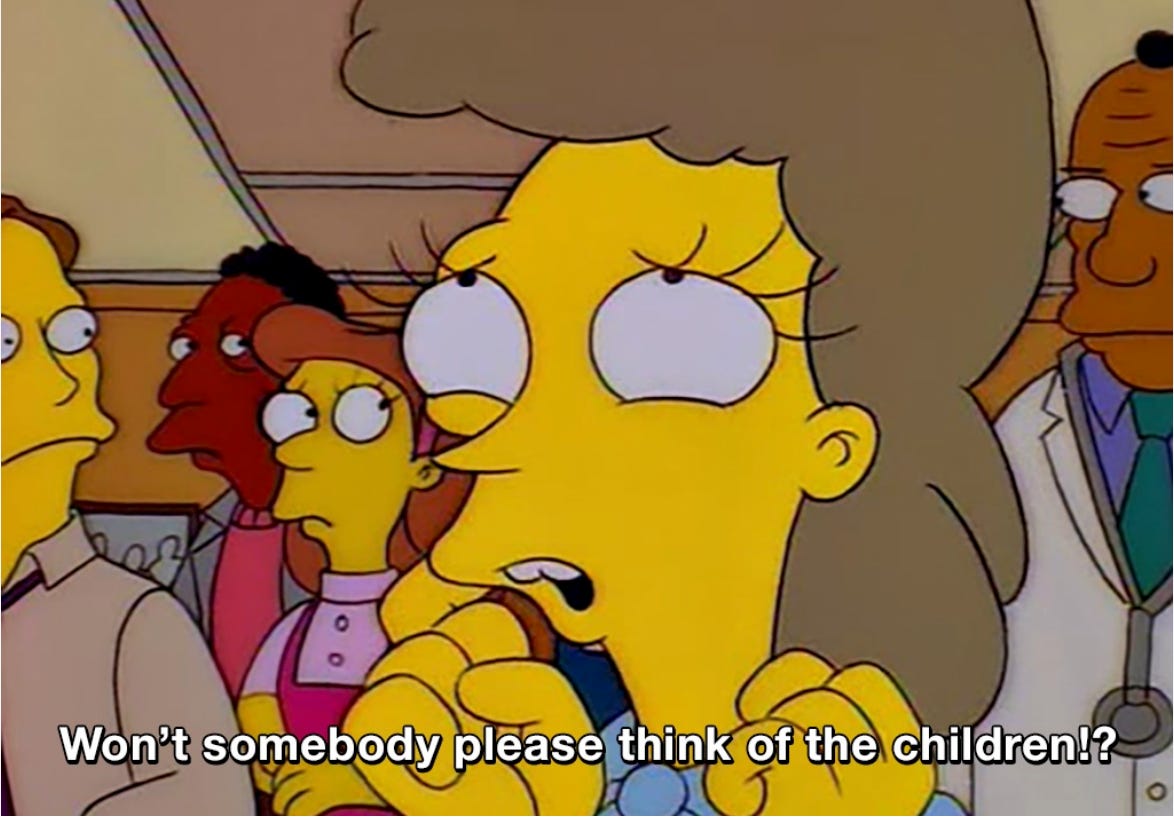
The term ‘moral panic’ was popularised in the early 1970s by sociologist Stanley Cohen, although the phrase is much older. It describes a certain type of hysterical conservative fear that the social order is in decline, and it became immensely popular.
This was odd, in some ways, since crime and hooliganism did rise significantly in the late 1960s, a reversal of centuries of progress which Steven Pinker called the ‘de-civilising process’. At the extreme end, the murder rate in American cities such as New York and Chicago trebled in just over a decade, but all forms of offending rose significantly across the English speaking world. In Britain, sociologist Stuart Hall described mugging as a moral panic, even though street robbery rose at an astounding rate in the late 20th century, from just a few hundred a year in the 1930s to around 100,000 in the early Noughties.
Perhaps ‘moral panic’ was an example of a term which spread because it provided a mental shortcut for people who wanted to dismiss their opponents, by becoming vaccinated against their ideas. If someone was engaged in a moral panic, you didn’t really need to look into the data; you could just dismiss them as a hysteric.