

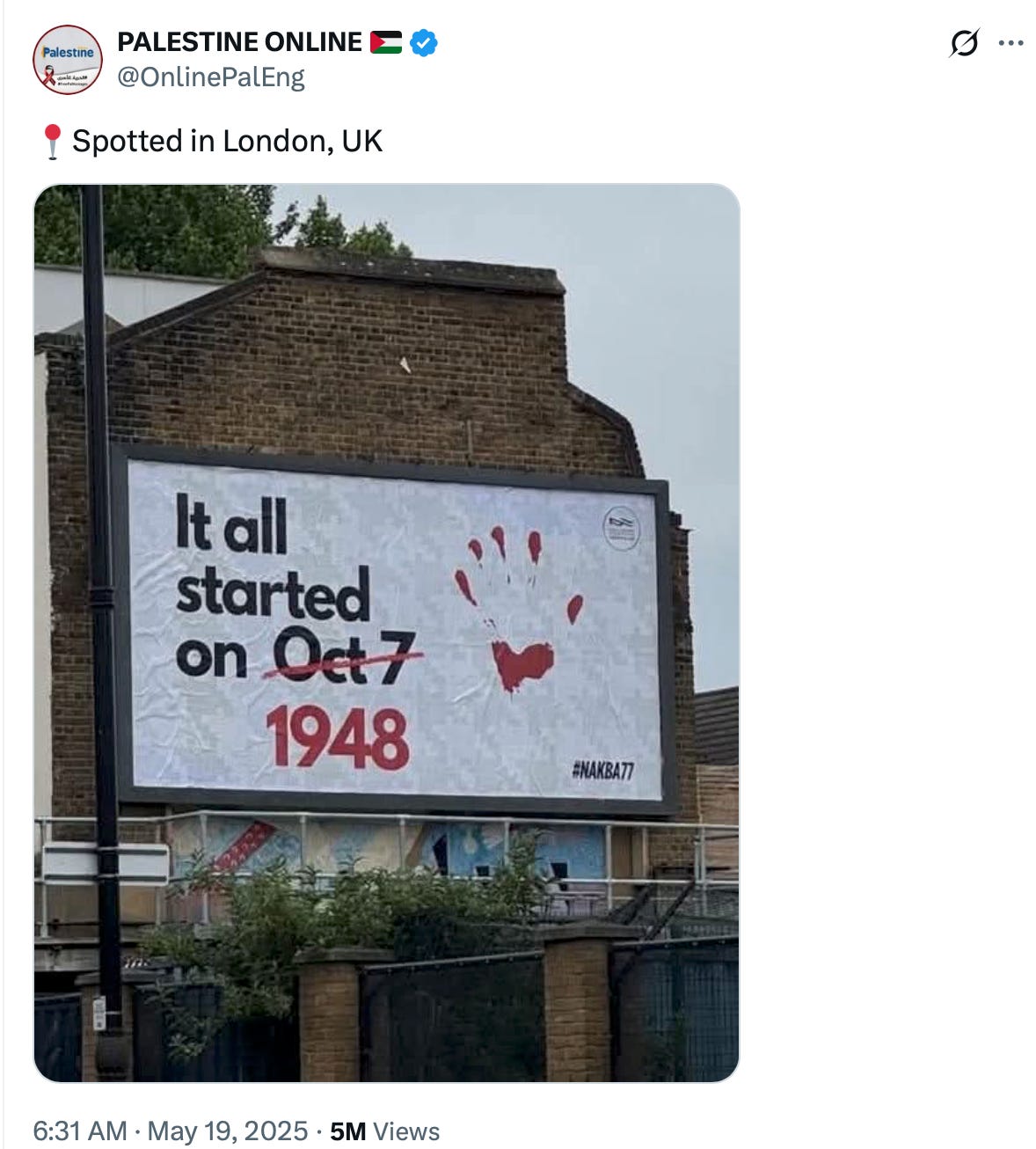
There’s a satisfying neatness to modern British history in that so many things central to our new country begin in 1948. In February that year the last British troops left India, a hurried exit with tragic consequences for millions of people and which signalled the end of the old empire. In May came the start of the Arab-Israeli War, a catastrophe or ‘Nakba’ for the defeated Palestinians, and an event which has come to gain great importance in British politics in the 2020s.
The NHS was founded two months later on July 5, an institution which for many people has come to symbolise what it means to be British. Perhaps most importantly of all, in June 1948 came the arrival of the Windrush, the most famous ship in British history and the subject of my recent discussion with Louise Perry (below the paywall).
The Windrush was more than a ship; it is a national myth, and the myth-making itself is a fascinating phenomenon. Today children across the country are taught that ‘you called and we came’, a quasi-official narrative that is almost uniformly promoted despite abundant evidence to the contrary. Historians who have spent their lives repeating the fashionable (and not wrong) idea that most national stories are myths created for political purposes remain largely silent as one is formed in their own lifetimes.
