

This year the United States celebrates its 250th anniversary, a momentous occasion and achievement, and only topped by the fact they’ll also be hosting the ‘football’ World Cup, as Donald Trump graciously called it. On top of this, and for the first time in history – and somehow this feels wrong – the Pope is also an American. This birthday offers plenty of opportunities for hungry British commentators and politicians to suck up to the world’s largest market by praising the American political system, with half an eye on the lucrative speech circuit and those juicy business class flights to Washington. That’s what I intend to do anyway.
The Trump administration, and in particular the vice-president, are very agitated by the issue of freedom of speech in the old continent. In February JD Vance gave a speech in Munich criticising European leaders for their record on the issue, speaking of ‘old entrenched interests hiding behind ugly Soviet-era words like misinformation and disinformation’.
Last month, the US State Department sanctioned a number of European activists they regard as being involved in censorship, many of them ‘misinformation’ experts of various sorts. Despite European appeals that they are merely ‘regulating digital platforms to protect citizens’ or preventing the spread of ‘hate’, the Americans are clearly correct on this issue.
You don’t need to support the current US administration, or even favour American geopolitical aims in Ukraine, Venezuela or the Middle East, to see that there is a problem here, especially in Britain, France and Germany. People don’t appreciate it when outsiders tell them that they’re doing it wrong, especially when it’s the world’s greatest power, led by a man they detest, and after years of being reminded that they ‘saved our assess in World War 2’. The fact that they did save our asses in WW2 only makes it more annoying.
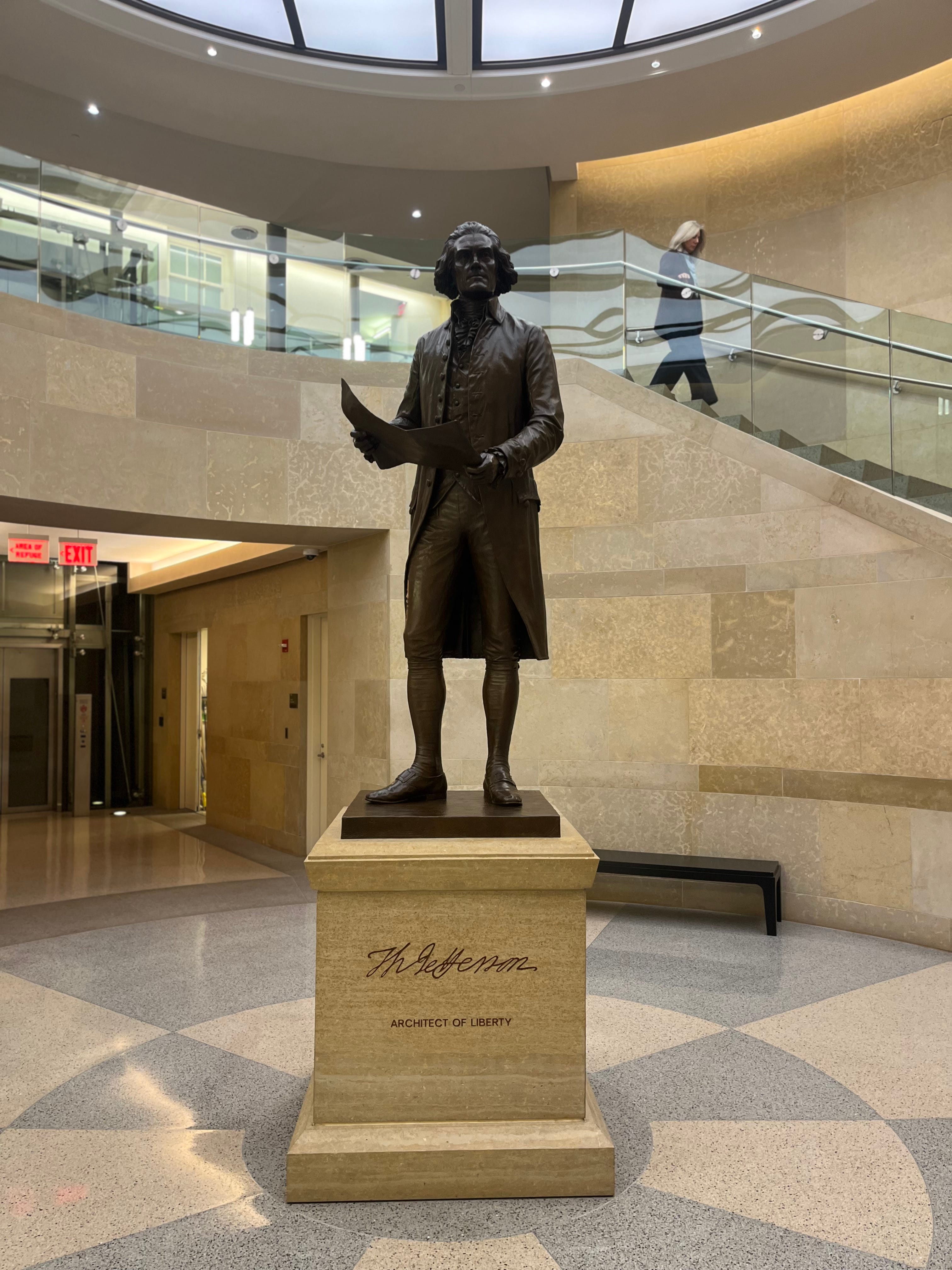
Many politicians on this side of the Atlantic seem to believe that people in their countries are ‘freer’ than the Americans, which strikes me as deluded. Others seem to believe that books are banned in the US, because some school board in the middle of nowhere has responded to parental concerns that they are inappropriate for the age group.
The American system is not perfect, but free speech is clearly a problem within the three main European powers, and it is getting worse. It’s notable that only 40 per cent of Germans now feel they can speak freely, and this is not hyperbole, since the German system is deliberately designed to curtail the freedom of people regarded as ‘extremists’, a system ironically established by the Americans after the War.
In Britain, meanwhile, there is the recurrent problem of people being arrested for speech crimes, including the most troubling case of Lucy Connolly. This is even before we discuss the issue of de facto Islamic blasphemy Laws, which the authorities seem determined to make de jure. We recently acquired further restrictions on what we read, via the Online Safety Act, which began as a measure against porn but ended up being captured by groups who claim to be combatting ‘hate’.
The regime in Westminster now proposes to abolish jury trials for less serious crimes, which will make citizens even more vulnerable. How much the government cares for our ancient rights was illustrated by Labour MP Natalie Fleet recently boasting about ‘Men in suits clinging on to a Magna Carta myth.’ Of all the European nations, Britain is where liberalism has the deepest roots, and yet even here its rulers are happy to dismiss its history in such a casual way. The same is not true of the United States, and Americans too often fail to appreciate how unusual their attachment to free speech is, and to openness more generally.
One notable difference between American and British political culture is the latter’s love of secrecy. In the US, court transcripts are publicly available, while here they are withheld and expensive to access. Just recently, the courts were forced to release details about a rape because the Daily Mail sued them - the judges and barristers had argued that it couldn’t be made public because of the dangers to ‘community relations’. This is a country where huge numbers of Afghans were brought over by the government using secret court orders, and now the press have to fight to report freely on rape cases. If it was up to the authorities in Britain - or in France or Germany - every sensitive issue would be decided far away from the public gaze, less they fall for ‘misinformation’.
