

Around 12 per cent of all Nicaraguans now live in the United States, half of them arriving under Joe Biden’s presidency.
Some 14 per cent of Hondurans live there, too, about 1.6 million people, a third of whom came during the same period.
In 2022 alone, 1.4 per cent of Bhutan’s population moved to Australia.
Around 1 per cent of New Zealanders also move there each year.
But twice that many arrive in New Zealand, mostly from east Asia.
At least one in 20 Romanians have settled status in Britain.
Around one in 500 people in Ireland are Pakistani arrivals from the last two years.
One in twenty people in Canada are immigrants from just one year in the 2020s.
Around a quarter of Cubans have left in the last five years.
The Indian population in Lithuania has grown six-fold since 2020.
So many have arrived in neighbouring Latvia that cricket is the fastest growing sport.
In Malta, foreign nationals comprised just 3 per cent of the population in 2005, but 35 per cent today.
So many sub-Saharan Africans have made a home in Morocco that people there post nostalgia videos about the good old days and warn of a ‘great replacement.’
The number of Nepalese workers in Romania has nearly doubled in just two years, reaching almost 40,000.
Serbia is to issue 100,000 work permits this year, almost all from the developing world, with countries such as Egypt and Ghana expressing an interest.
Belarus’s dictator has proposed inviting 150,000 Pakistani labourers.
Up to 5,000 East Timorese now live in County Tyrone.
The whole world is on the move.
The term ‘Boriswave’, used to describe the migration surge following lockdown, first arose online in right-wing circles, and despite attempts to make the term impermissible, it eventually became mainstream, even among Labour politicians. People of all political persuasions have come to use the phrase; it’s hard to taboo a term out of existence when it describes such a notable and seemingly inexplicable change, and such curiosities as the appearance of Tamil shop staff in rural Wales.
The numbers behind that change are eye-watering. In the year to June 2024, Britain issued 547,000 work visas, 530,000 study visas and 84,000 family visas, plus 813,000 extensions for those whose permits were soon to expire. Family visa awards alone went up by a third. This was driven by a dubious understanding of economics, and it’s most likely turned out to be a net negative for the country’s finances, many of the new arrivals being low-skilled, low-earners. Most of all, though, it was driven by a strange naivety about migration flows and how they actually work.
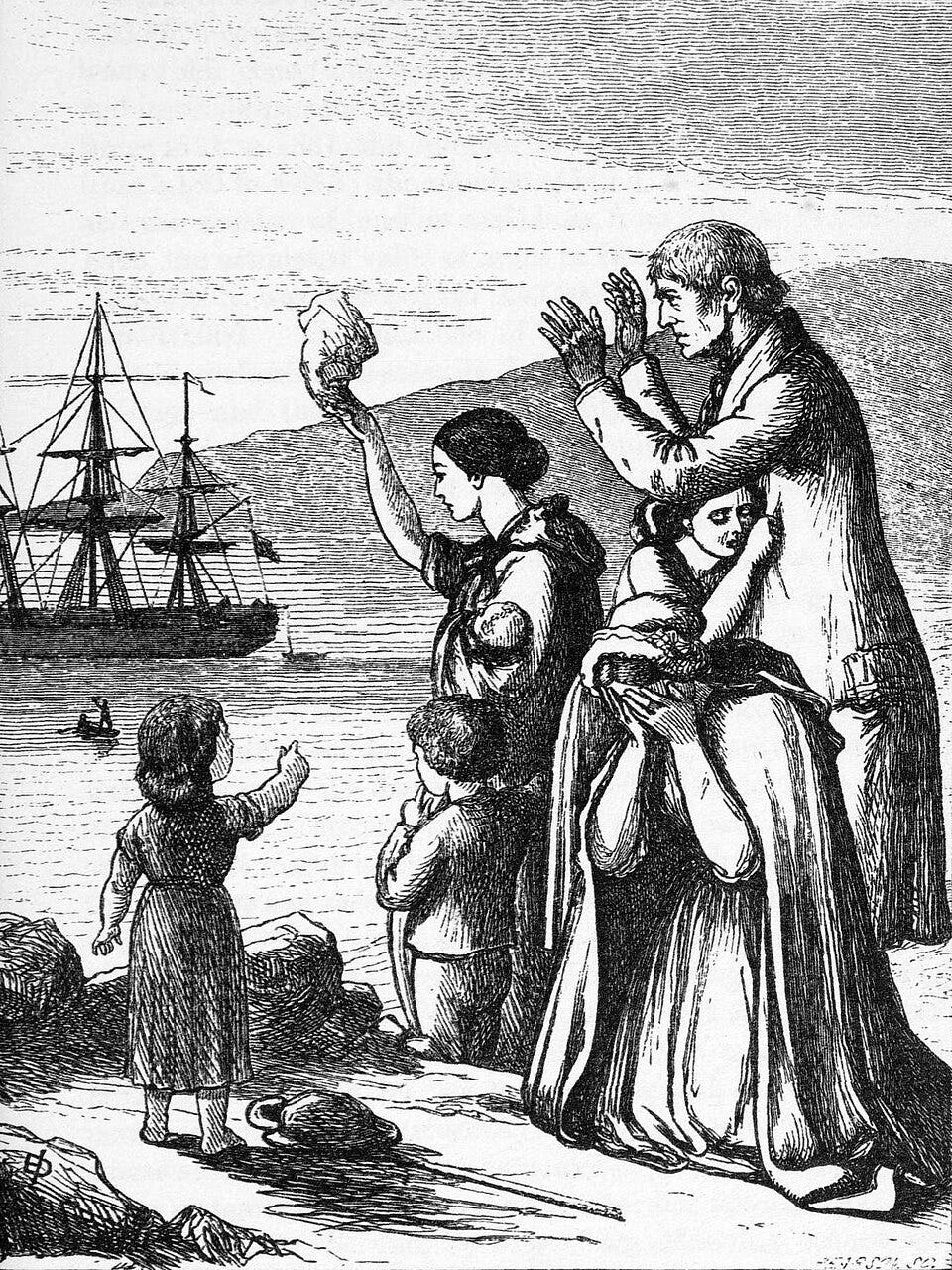
Yet for all the anger directed at the Conservative Party, Britain wasn’t alone, and in 2023 one third of OECD countries experienced their highest ever immigration totals. Lockdown accelerated global movement, in part because western governments panicked about wage inflation, but also because increased communications technology furthered the horizon of migrants. Whether it’s a simple mobile phone, WhatsApp or TikTok, tech increases an individual’s likelihood to move, by creating both a greater familiarity with the West and also a stronger link with the homeland for those who have moved, so reducing the homesickness factor. Gone are the days when Irish emigrants would have an ‘American wake’ before setting off, the likelihood being that they’d never see many relatives again. Yet many policy-makers remain stuck with an essentially nostalgic view of the process, when global migration in the 2020s is like nothing else before. The whole world is on the move.
The central fact of migration is that it is heavily path dependent, an idea laid out many years ago in Paul Collier’s Exodus. The number of people willing to move, in a world where travel is relatively cheap and safe, where wages are far higher elsewhere and established communities have already settled, is vast. This has already been illustrated by the natural experiment of North Cyprus, an unrecognised state in which citizens have the right to move to a richer country (Britain), and in which citizens of a poorer country (Turkey) have the right to move to. As a result, more Turkish Cypriots now live in Britain than in Cyprus, where they are outnumbered by Anatolian Turks.
This also has enormous consequences for the countries migrants move to, which start to resemble the country they moved from, and also suffer from increased social and political stress. To quote another great thinker who has tackled the immigration issue (me), in a world of open borders ‘people would begin to lose faith in the police, a difficult role in such a transient and diverse society, and politics would become increasingly unstable and aligned along ethnic lines.’ I wrote that in 2022; it’s arguable that we’ve seen this process accelerate just in the last four years.
