

The Left has a point about Elon Musk. You can believe in free speech, and still think it very unhealthy for democracy that the world’s richest man is able to buy himself a platform to promote his political views, often using incredibly incendiary language.
It was true of arguments made about press barons, too, but not to the same extent, because older forms of media had nothing like as much reach. Tech titans have a degree of power which democracies struggle to manage, democracies which were designed for 19th century communications technology.
Imagine that every telegram our Victorian forebears sent had to include a little message posted by the company’s owner to promote his pet obsession, and you perhaps get some idea of how strange it is. You go to wire your loved one that you are coming home from your travels, and your wife back home receives the message dutifully delivered by the telegram boy: ‘Ship delayed by storm. STOP. Arriving at Liverpool Tuesday. STOP. END WHITE GENOCIDE – ELON. STOP’.
Of course many of them are hypocrites, and when a progressive billionaire interferes in politics, they try to make noticing the fact a conspiracy theory. But being a hypocrite doesn’t stop someone from being right.
The means are bad but the ends are mostly good. Musk’s acquisition of Twitter allowed debates which otherwise wouldn’t happen, because journalists are either biased or too frightened of tackling uncomfortable stories. When not actively lying about events, they couch them in such a way as to give a misleading narrative.
No narrative was so dishonest as that behind the Black Lives Matter movement, which spread memes about policing and crime based on complete falsehoods. Journalists repeated untrue accounts of flashpoints incidents and statistically illiterate politicians popularised claims which only the ideologically-motivated might suspect. Most people, following the heuristic that if prestigious and influential people all say something, it’s probably true, went along with it.
Had Community Notes existed at the time, the Ferguson shooting would not have become a cause célèbre because social media users would have seen that journalists misrepresented the incident. Today, when politicians make claims regarding disparities, everyone can freely see that they don’t understand statistics. Post-Elon, a number of typical BLM-style stories have disappeared from the media narrative thanks to technological fixes, not just Community Notes but also police bodycams.
Indeed, as Ozempic’s destruction of the ‘body positivity’ movement illustrates, much of the turn from peak woke is downstream of technology, just as technology caused the Great Awokening in the first place. New forms of social media, with their conformity-inducing pressure, radicalised elite opinion in the US and reached a peak in the summer of 2020, which felt like being stuck in a global insane asylum, collective madness aggravated by the isolating effects of lockdown.
Britain’s MPs, always desperate to be involved in American politics because it’s so much more glamorous and consequential than ours, seemed very keen on interfering in that country’s affairs back then. Everyone had an opinion about injustice in America, including the current prime minister and the leader of the Liberal Democrats, and its application to life in Britain. Some British politicians were even calling for an arms embargo on the US.
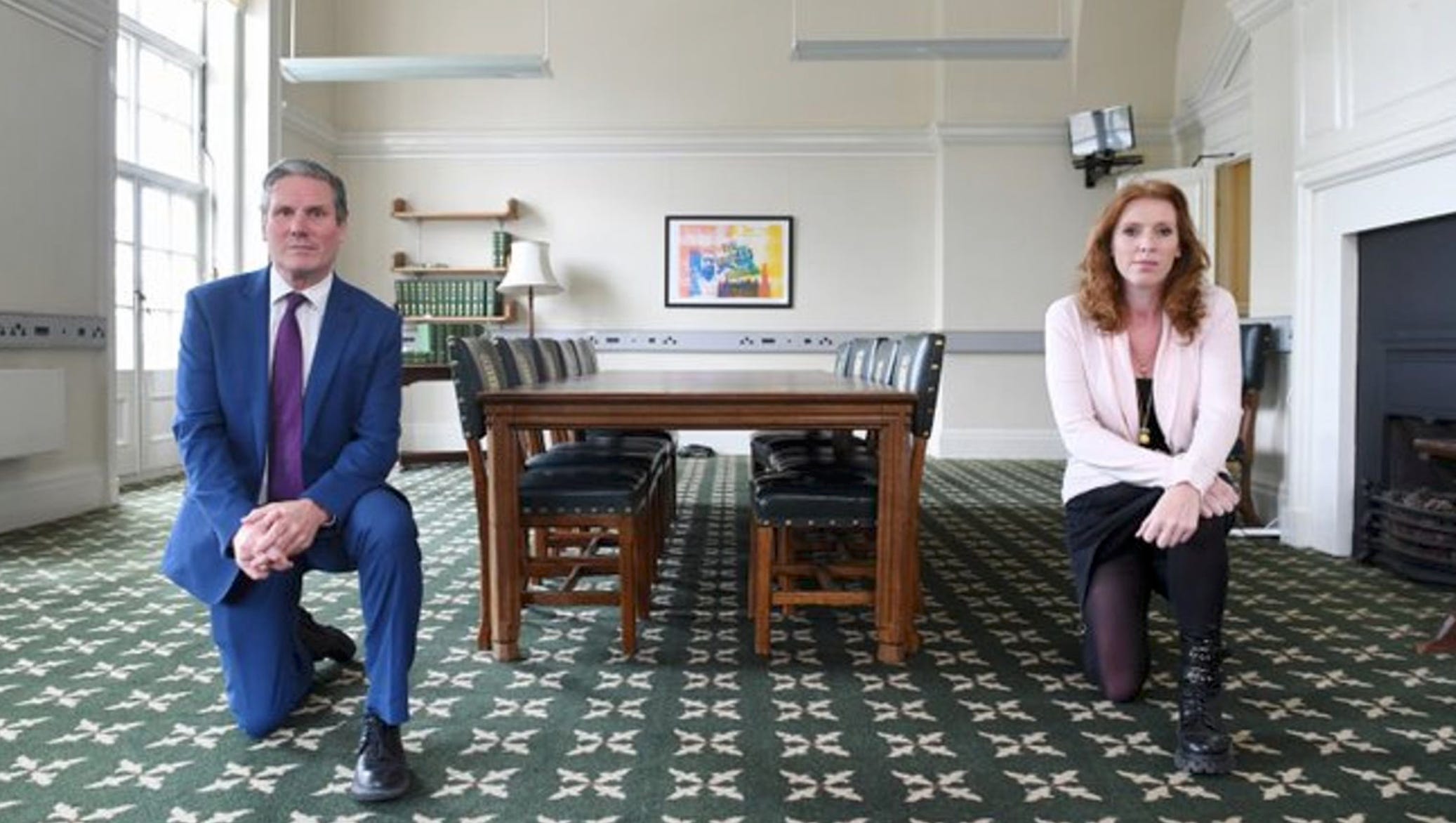
The great Colin Brazier, in the latest episode of his new Outpost Studios show, asks, among other things, why back in 2020 MPs held a meeting over a crime in another country over which they have no control. They even held a minute’s silence, a sign of the intense globalisation of politics in the new age.
George Floyd ended up becoming the most consequential person in British life in the 2020s. His death was met with a public response by a range of institutions, and led to huge changes in many, helping to accelerate a system deliberately designed to create equality of outcomes. This was the result of people spending too much time focussing on American politics.
Now that the American administration takes a keen interest in our politics, British MPs are hardly in a position to complain, although it’s arguably a useful framing for them. Many would like to shift the tale of Henry Nowak’s final moments into a story about MAGA-led foreign interference, when in reality the chief concern remains that British police handcuffed a dying teenager because they were instructed into quite extreme race policies, policies which all three establishment parties supported and promoted.
This is a real problem, and one that naturally interests Americans. Many, especially those with an ancestral link to our country, feel great sadness at what is happening and see Britain as a cautionary tale. It is true that in many cases the have a somewhat distorted view of British politics, most notably true of Americans who support Rupert Lowe’s Restore Party, or believe that Tommy Robinson was jailed for being a freedom fighter. Everyone gets a slightly misleading view of events far away, but nevertheless Britain is indeed something of a cautionary tale and this was far from an isolated case.
As former police officer and thinktanker Rory Geoghegan wrote over the weekend, the concept of equity is now deeply ingrained within the police establishment. He noted how even the Independent Office for Police Conduct, which is currently investigating Hampshire police, have ‘in their own investigations… routinely presented the previous stop and search history of police officers in a desperate bid to suggest that any racial disparities can only be evidence of an officer’s racism.’ It’s not just the police; the health service is riddled with this belief, while across a range of institutions discriminatory hiring policies have been implemented.
This was allowed to happen in part because British politicians were swept away by the hysteria of 2020. Politicians and activists saw George Floyd’s death as a chance to push for change; politicians from the other side now hope that Henry Nowak’s murder will roll them back. It is the nature of politics that shocking events are a catalyst for reform in a way that more consequential underlying problems are not, but it feels jarring to hear people criticising the ‘politicising’ of a murder when they have spent huge amounts of energy doing likewise.
The primary issue is not foreign interference, nor immigration specifically; both the killer and victim were products of migration, and the murder was not representative of any deeper trend within the ‘community’. What needs addressing is the harm caused by anti-racism, which certainly influenced the police in Southampton and played a role in the Southport and Nottingham tragedies. It is obviously true that Britain’s moral leaders, still stuck in 2020, take racism more seriously than other wrongs, including actual crime. It is seen in the same way that the Greeks saw asebeia, an unspeakable blasphemy worthy of hemlock.
But much has changed since 2020, one factor being the internationalism of the Right. Nowak’s death was marked by small vigils across Europe, impossible until recently and a trend obviously downstream of Elon’s huge influence - although there are still cultural peculiarities. At the unruly protests in Southampton last week, which inevitably ended with bins being thrown, one eccentrically dressed young man turned out to be from a small far-right group straight out of The Code of the Woosters, or as some wit observed, an amateur dramatics stage adaption of Indiana Jones. It’s reassuring to know that what George Orwell called the Gilbert and Sullivan tradition of British fascism is alive and well, but everywhere else the trend for the political right is towards globalisation and homogenisation.
Globalisation makes the Right stronger, and for all that Elon’s power is troubling for democratic norms, one suspects that European politicians would like to shut down his website because it would hamper opposition to their project of social engineering. It’s also understandable why British politicians – and the general public – dislike Musk, and indeed Donald Trump. But, to paraphrase Captain Blackadder, I hardly think that we can be entirely absolved of blame on the foreign interference front. You can’t spend your political life opining about US politics and be surprised when the Great Satan takes an interest in you. You might even say that they have awakened a sleeping giant.
.....any racial disparities can only be evidence of an officer’s racism.’ It’s not just the police; the health service is riddled with this belief, while across a range of institutions discriminatory hiring policies have been implemented.....
True, and this is one of the most destructive concepts. It is a fundamental, no debate allowed, belief of the left. It's foundational to the DEI movement, and so much more.
In any case, would Henry Nowak’s murder have gotten this much media attention without X? People outside of the UK might have never heard about it