

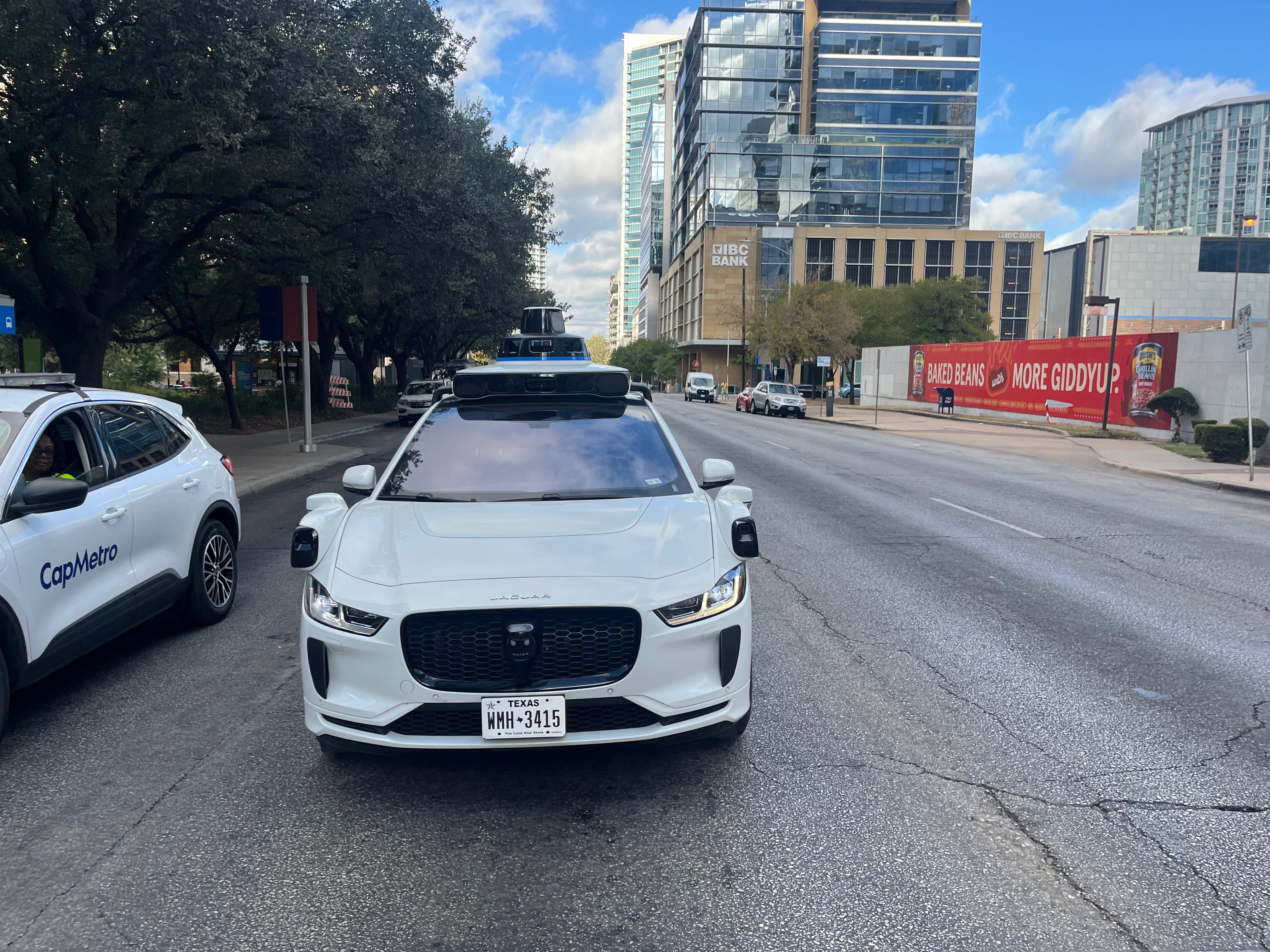
The first thing that struck me when I tried a driverless taxi in Texas was the lovely, calming music, the sort of thing I’d imagine in a euthanasia booth in the future. The car glides to the side of the road - you know it’s your ride because it displays your initials on the characteristic LiDAR sensor on the roof - and your phone unlocks the door. Once inside, you strap in and press the start button, and then the steering wheel starts turning. I couldn’t help but laugh; like one of those Bond films where a stunned onlooker spots our hero’s latest gadget and throws aside the bottle of spirits he’s drinking. The car is driving itself!
Soon we’ll be experiencing this wonder here, with Waymo arriving in London early next year - and while the vehicles will be a big talking point of 2026, they’ll soon move on from amusing novelty. So much of our lives are dictated by the whims of human drivers, and this dictatorship is so strong that we have lost the power to imagine the alternative, so that the arrival of AI-driven cars is going to be genuinely transformative, and liberating.
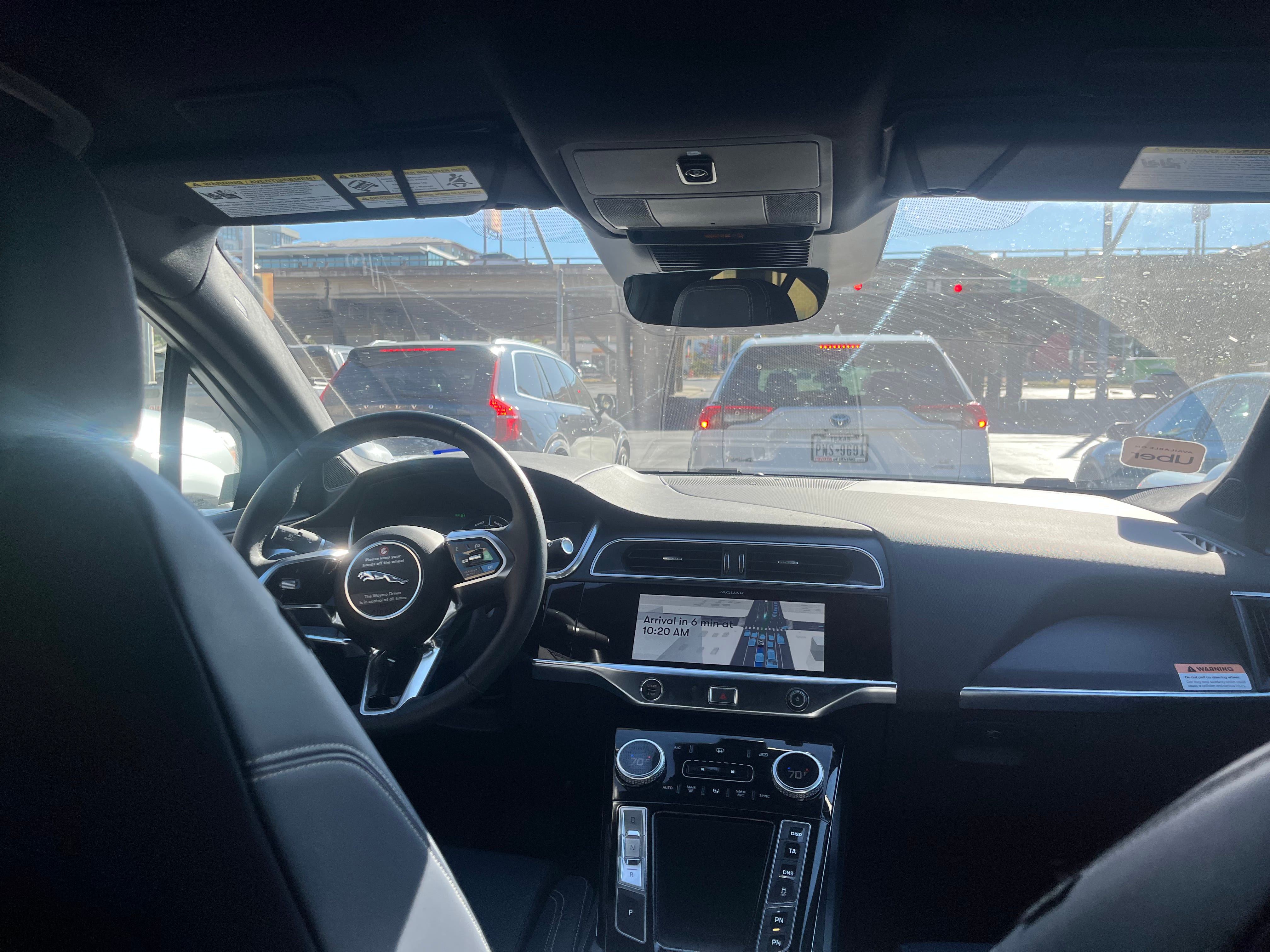
The trial cars can already be seen around London, and it’s not just Waymo - Lyft and Baidu will partner to bring robotaxis to Britain before the end of 2026. Very soon, you will see fleets of driverless cabs making their way across busy intersections, as is common in many American cities. Their numbers will quickly proliferate, and Waymo has already surpassed Lyft in total rides and is on track to pass Uber in next 12 months. Tesla has launched a Robotaxi, and it’s not just cars: San Francisco already has autonomous delivery e-bikes.
My sense of the general mood is that most people are quite gloomy and pessimistic about AI, and even fearful. When I came back from the States recounting my tales of being driven around by robots, the first question that many people asked was whether I felt safe in them. I never felt safer, a feeling helped by the fact that the San Francisco streets I was getting picked up from were usually filled with mad people, and in one case the Waymo rescued us from a homeless man who was muttering about having murdered someone. Outside the world may resemble Dawn of the Dead, but inside your vehicle there is only the soothing futuristic voice that might as well be telling you ‘Welcome to the off-world colony.’
Indeed, robot cars are incredibly safe, and initial fears are clearly downstream of sci-fi, and the natural tendency to imagine human malice in machines. On her substack, Kelsey Piper pointed out that large minorities of voters in most cities want to ban driverless cars, citing ‘safety’ reasons, yet they cause 90 per cent fewer pedestrian injuries than human-driven vehicles. They are a godsend to road safety, especially in the United States, where pedestrian deaths have been going in the wrong direction for years.
As Piper pointed out: ‘Nearly 40,000 Americans died in traffic accidents in 2024. Worldwide, traffic accidents kill more than a million people a year. For young people, traffic accidents are one of the leading causes of death.’ Indeed, ‘If you were to cut U.S. traffic accident deaths by 80%, you would save more than 31,000 lives every year — more lives than you would save if you magically prevented all U.S. homicides.’
While Americans in particular tolerate vast numbers of traffic deaths as a price worth paying for their cars, humans in general find the idea of a robot-induced fatality uniquely horrifying. The CEO of Waymo was recently asked if society will ‘accept a death potentially caused by a robot’, and she thinks it will; I hope so, but it was notable that a fuss was kicked up in San Francisco recently because a Waymo cab killed a cat, and the death of ‘KitKat’ caused one politician to try to get them restricted. This is despite the fact that an estimated 5.4 million cats are killed by human drivers every year in the US.
Of course the technology will have downsides; all technological change does, in particular the loss of jobs, the most troubling aspect of the coming AI revolution. But roads will become vastly safer as a result, and the relationship between pedestrians and drivers transformed for the better. As the proportion of human drivers falls, so we will start to claw back some of the childhood freedom eroded by car dominance.
While the people most likely to oppose Waymos are the elderly, think about how much their lives will be changed for the better: old people are the most reliant on cars, yet are often too frail, blind or nervous to drive, and because of slower reaction times, have the most accidents. The arrival of driverless cars will give many immense freedom. Maybe some people will miss the human touch, and may find this all a bit dystopian, but most will get used to it, and the line between utopia and dystopia is often unclear.
The new technology might also change the essential human geography of our islands. Post-industrial societies have been transformed in recent years by the growing economic power of large graduate-dominated cities, with rural hinterlands in much of the western world falling behind economically. These regions lack the agglomeration benefits of the major cities, have far worse public transport networks, and are more reliant on cars, and so will benefit most from the AI revolution. It’s likely that driverless cars will have a big impact on cities like Manchester and Leeds, and will narrow the gap with London, which is far less suited to road traffic.
Driverless cars may especially benefit rural areas in the British Isles, where the pub is very much the centre of social life in an alcohol-dominated culture. Drink-driving is obviously very dangerous, but its prohibition cut many people off from their main source of socialisation, three pints at the local. While driverless cars will improve social life in rural areas, the major benefit to cities will be in reducing the huge amount of land wasted by parking spaces - after all, your car can simply toddle off to the edge of town after dropping you at your destination.
As a final note, imagine your family holiday in the future. While visiting a friend in San Francisco, he showed me how his Tesla effectively drives itself, so long as he keep his eyes on the road in front of him; if he looks away, it makes a beep and forces him to take control, but otherwise it will keep the car within its lane and at the appropriate distance from the vehicle in front. This allows him to make the six-hour drive to family in Los Angeles without burnout, vastly decreasing the risk of accidents. I was amazed, but since then he has upgraded to a new model which fully drives itself.
So picture a future where we have driverless camper vans. You shut your front door, jump in the back, press ‘Folkestone Eurotunnel’ and take some beers from the fridge; after arriving in Calais, you prepare to bed down for the night and wake up refreshed and relaxed in the south of France, and tell the car’s voice-recognition unit to head for a local bakery in Provence just in time for the morning croissant.
And then, the car replies, I’m sorry, Dave. I’m afraid I can’t do that.
In cities at least I'm hoping that this also means that we no longer have half the width of every street taken up by parked cars. Instead they can all sit in (underground?) multi-storey car parks and be summoned at need.
There should be far fewer of them needed, too - at any given time what proportion of the cars in the UK are actually being used? And having them managed as fleets should unlock economies of scale as we all stop maintaining our own vehicles.
I’m as enthused as you are Ed, about the future of driverless, however a several points of clarification and observation on your piece:
1) Uber and Lyft each have logged billions of cumulative rides, whereas Waymo has about 20 million. Waymo has surpassed Lyft in annual rides in San Francisco but to date the ride sharing companies overall have market share that is many orders of magnitude greater than driverless.
2) Waymo operates still in a sort of ‘trial’ mode where thousands of live human operators are monitoring rides from remote operating centers. Remote operations represent a drag on operating margins and as long as they persist, Waymo will be unprofitable and therefore cannot scale beyond select pilot markets.
3) from the standpoint of the user, to a large degree uber & Lyft already offer a ‘self driving’ experience. Absent Waymo’s soothing music and the Jaguar upholstery (BTW Waymo must surely be keeping Jaguar alive?) I can do anything in the back seat of an uber that I can with Waymo. Well…
A major difference is the convenience of very long rides like you envision on your vacation to France but even then I predict algorithms will prevent you from taking a journey to a destination where the probability of find a return customer is low…
4) finally, it is worth mentioning that major differences exist between the technology approaches of Waymo and Tesla. If Tesla’s vast library of roadway video interpreted by AI proves a viable substitute for Waymo’s hardware intensive LIDAR system, driverless will take off (and Waymo will fail) If not, ubiquitous driverless is likely to remain a long way off..