

This week I talked to Louise Perry about the life, legacy and death of Ann Widdecombe, the political veteran who was murdered in her home last week. As always, the audio is below the paywall.
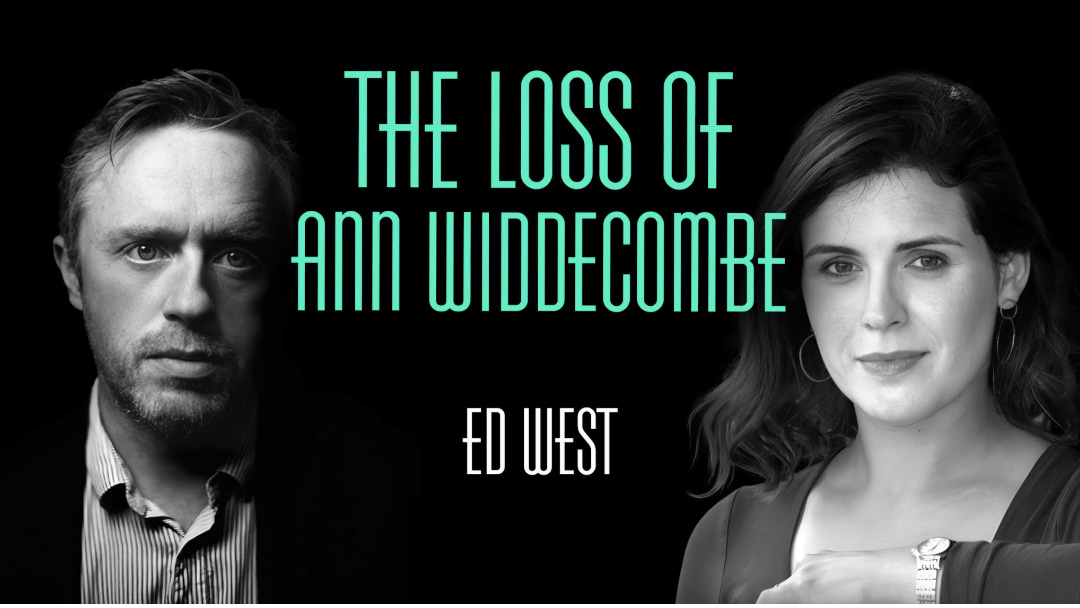
Many paid tribute to Widdecombe, a former Tory MP who enjoyed a second career as a television star on Strictly Come Dancing, and who later joined Reform to become their immigration and justice spokeswoman.
Among them were her old boss, former Home Secretary Michael Howard, with whom she famously fell out; her description of Howard, that ‘there is something of the night about him’, entered the English lexicon.
‘Ann and I later made up’, he wrote, and we ‘were able to come to terms with the events which by then had begun to fade into the past. The terrible circumstances of her death should not be allowed to overshadow the remarkable contribution she made and the extraordinary human being she was. She leaves a hole in our national life which will never be filled. She will be greatly missed.’
Journalist Michael Crick recalled how a former BBC colleague told him: ‘Of the hundreds of high profile politicians I dealt with as a floor manager Ann stood out as one who was unfailingly sweet and personable.’ And Sky’s Sophy Ridge wrote: ‘I interviewed Ann Widdecombe for my book on women in politics and a lot of what she said stayed with me. It’s easy to forget what a trail blazer she was.’ She noted how, after being nicknamed ‘Doris Karloff’, Widdecombe took to answering her phone with ‘Hello, Doris speaking?’
Perhaps the most moving reflection came from Brexit Party veteran Gawain Towler, who described how:
During that first campaign I found myself driving the country with my son in tow, then twelve years old. We arrived at one rally, at Fylde FC, four hours early, and the poor chap faced an afternoon of terminal boredom in an empty football club. The only speaker already there was Ann. My son was in awe. This was the woman from Strictly. She saw my predicament at a glance and waved him over, and for the next three and a half hours she played with him. She helped him with his homework. I would pop by every now and then to find the two of them engrossed in a book, or laughing uproariously, and at one point playing some strange version of visible hide and seek, the former shadow home secretary and a twelve-year-old boy, in the bowels of a lower league Lancashire football ground.
Widdecombe was certainly an archetype, and it’s hard to avoid the sentiment that she represented a vanished world. The Britain into which she was born was unimaginably different to the one she left, in such horrific circumstances. Even the prurient interest in her celibacy illustrates just what a different age she came from, before the great change.
Mary Harrington was accurate in describing Widdecombe as ‘Britain’s last battleaxe’, noting how once upon a time British ‘civil society was run by people like her. The daughter of a military man, raised between ever-changing military postings and a convent boarding-school in Bath, she embodied a stoical “buck up” attitude that was pervasive in imperial-age Britain, and lingered well into my childhood and youth: one in which private suffering was simply something to be borne.
‘All of 19th-century British civic life was dominated by women of Widdecombe’s stripe, from the National Union of Women Workers, the Mothers’ Union, and the Women’s Institute, to church groups, Sunday school classes, schools, charities, and social reform bodies. Unkindly satirised even in her heyday as “Mrs Grundy”, the Battleaxe dedicated her life to improving, organising, cleaning, educating, and uplifting the world around her, whether or not it wanted to be improved. But the Britain they ran is no longer the one in which we live. The reasons for its demise are complex, though the end of the British Empire, the arrival of TV and radio, the sexual revolution and, latterly, de-industrialization and the internet all contributed.’
Or as one Twitter account put it: ‘Ann Widdecombe embodied a basically vanished type of worldview and manner, one with a totally assumed sense of integrity, an avatar of an unsentimental Englishness belonging to rotund girl guide leaders and lay parishioners. Eccentricities and individualism, RIP’.
I think most people above a certain age will remember the Battleaxe; you were scared of them, and resented their disapproving tone, but as you grew up you came to see that it was driven by love and compassion. After a period of rejection, you also came to see the wisdom in their moral worldview. The problem today is that many people don’t grow up from that intermediate period; they’re stuck on stage 2 for their whole lives.
You also came to understand the layers within. As Niall Gooch put it, people on the left sometimes fail to ‘to understand the strengths and the subtleties of this sort of person; despite a rather strident and brisk exterior, they are (/were) often deeply kind and charitable in a quiet, unsentimental way.’
Widdecombe was a noted social conservative, the real deal, and at the same time a good friend to many gay men. She was driven by compassion, and voted against blood sports for that reason; as an animal lover, she took the correct British side in the Holy Land dispute – supporting neither the Israelis, nor Palestinians, but the donkeys.
Towler observed that:
None of this kindness was soft. It came from the same place as the convictions, a belief that people matter absolutely, that duty is not negotiable, and that sentimentality is what you get when feeling is not backed by action. She opposed what I did not oppose and held lines I would not have held, and she would have considered it a poor sort of tribute to pretend otherwise. She did not require agreement. She required seriousness. Grant her that and you had her loyalty for life, and her loyalty was a fortified position
She once said on a chat show sofa that “we get one go this side of eternity”, and the phrase carries more weight than the setting suggested, because she meant both halves. One go, and she used every hour, the Commons, the Parliament she helped Britain leave, the stage, the page, the donkeys in the Holy Land, the boy in a football club in Lancashire. And this side of eternity, because her faith was the bedrock under the rock, and she was certain that the tide which goes out is not the end of the story. She has gone to the judgement she never doubted, and I would not care to be the advocate opposing her.
She was a serious person from an age that took things seriously, before the country became soaked in overbearing irony and silliness. But you can be a serious person and still bring laughter to people’s lives.
Listen to the episode below…
