

Ukraine is one of those places I’ve always wanted to visit. There seems something so monumental about the Steppes, and something epic about the history. You’re at the edge of Europe’s twin civilisations of Greece and Rome, and beyond is this vast expanse of grassland from where terrifying armies of horsemen will appear from time to time.
This huge, fertile country was the homeland of the Indo-Europeans and later the Scythians and Sarmatians. Then came the Slavs and their eventual overlords, the Rus, Viking adventurers who were the subject of Ibn Fadlan’s observations about human sacrifice. These hardy rowers – likely the etymological origin of their name – had travelled from Scandinavia down to the Black Sea and Constantinople and, after conversion to Orthodox Christianity, founded the state we call Kievan Rus’.
This is the civilisation from which Ukraine and Russia both trace their descent, a subject of great interest to history buff Vladimir Putin and which featured in his interminable thousand-year monologue to Tucker Carlson. It was perhaps his interest in reading about history during lockdown which prompted Putin to launch the Russian invasion of his neighbour on 24, February 2022, four years ago today. It was an event that seemed almost surreal at the time, a sci-fi reworking of the short 20th century - hundreds of thousands have died since, and there seems to be no end in sight.
However, while I would love to visit Ukraine, I have to admit that I wasn’t planning to visit in the immediate future. I’m way too cowardly to be a war reporter, and I would never go anywhere near the front lines of this or any other conflict. But I have a friend who works in the security industry and he suggested that I pop over when he’s next in town. He also has an accent like a British Airways pilot, which I always find reassuring, so while there was a small risk, he said, you’d have to be very unlucky to be the victim of a direct hit.
Also, and to look on the positive side, getting killed by the Russians would finally grant me the centrist respectability I’ve always secretly craved. Perhaps a passing reference by a Times columnist or a mention on The Rest is Politics. Some people on Bluesky might even have something positive to say.
While last summer’s Russian strikes on the Ukrainian capital were especially deadly, the attacks haven’t stopped. There was a lethal drone strike on the city on 9 January, killing four people. Morale had taken a turn for the worse since, as Russian targeting of electricity stations had left most people with just three hours’ power a day - during a cold spell fierce even for this part of the world. Some are dying from hypothermia in the Ukrainian capital.
The Russians had also recently struck a passenger train, killing five civilians. Although that was in the east of the country, my mind couldn’t help but think about the incident as I first saw the trident logo – the tryzub - on the train platform in Poland, its destination in Cyrillic reading Київ. I did start to wonder what I was doing.
‘Yes, West’s death was tragic, but let’s not whitewash his problematic views on immigration’ - The Guardian, 36 hours after I’m blown to bits by a Russian air strike.
Because Ukrainian airspace has been closed since February 24, 2022, we flew to Rzeszów, a tiny airport in south-east Poland served by O’Leary’s finest, followed by a taxi to the small, pretty town of Przemysl. Here, we stood in line in the snow for a night train largely filled with refugees coming home to see relatives, with a few westerners claiming to be diplomats jumping the queue.
It was below freezing in Poland and it was only going to be worse where we were going. Ukraine had seen temperatures dip to minus 20c, colder than the North Pole, although luckily it was a balmy 10 below freezing by the time we arrived on the Monday morning
Before entering the country one is advised to download the Air Alert app, registering your oblast (region or county); when a missile or drone is heading your way it will start to scream in your pocket, and then you’ll hear the sound of air raid sirens across the city. There is no place for technophobes in a war zone.
Soon after the train leaves, a guard in military fatigues comes on and checks our passports. He repeatedly flicks through my document, eyeing up the stamps suspiciously, the first time this has ever happened and which makes me feel far more interesting than I actually am. When he asks where we’re going, I mess up on the first hurdle by saying ‘Kee-yev’. I’m very reluctant to call it Kyiv, since ‘Keev’ doesn’t sound anywhere as nice to English ears, and I’m against abandoning exonyms, but this was just force of habit rather than obstinacy. They feel more strongly about the issue than I do, after all, and I don’t want to fail the shibboleth.
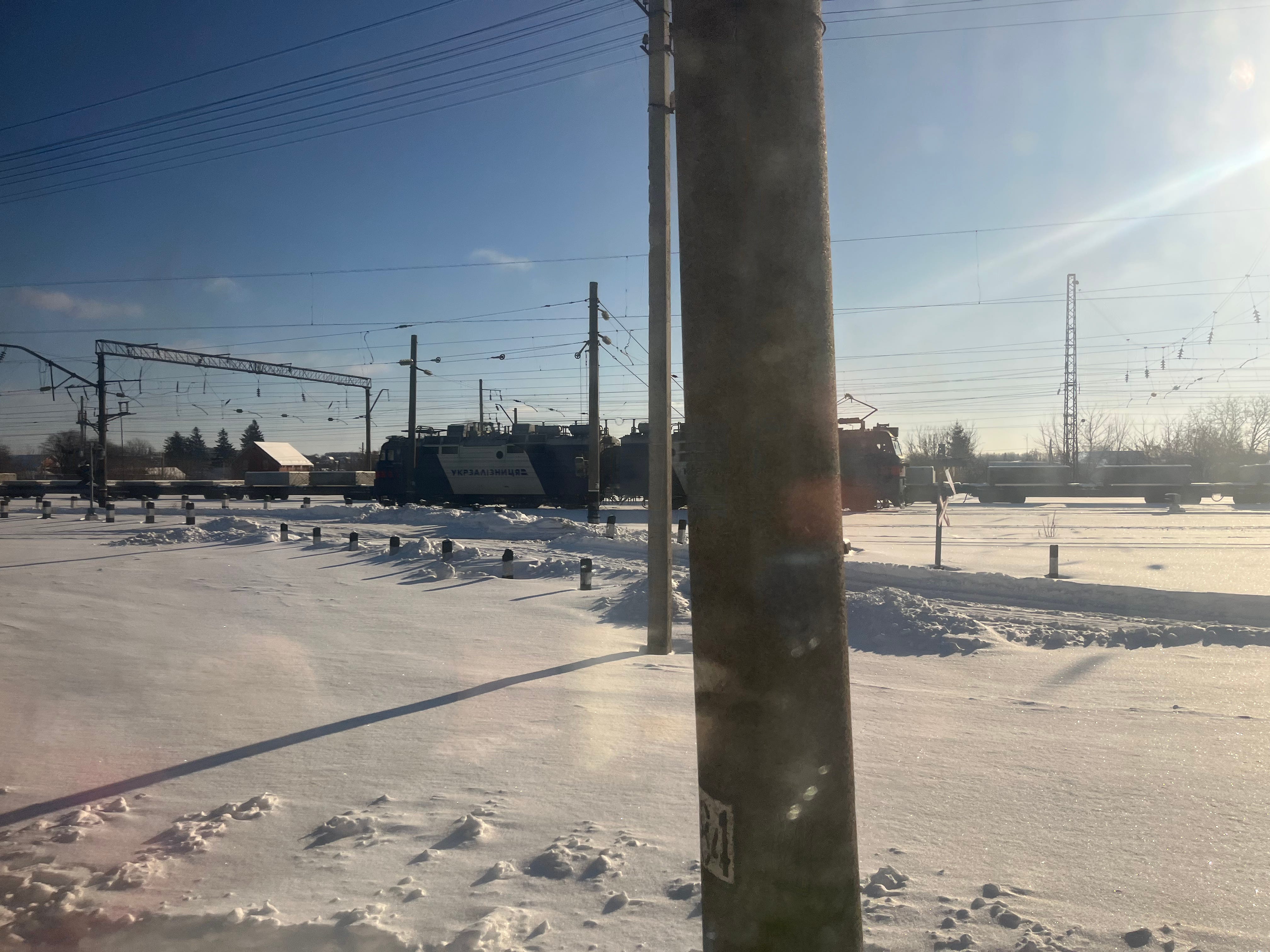
Ukraine’s train network was widely praised following the start of the war, run with a sense of dynamism and able to move millions of people across the second largest country in Europe, while overseeing a gigantic workforce. Any attack on the network is fixed very quickly and the trains are soon running again.
It trundles slowly for the first two or three hours, making its way to Lviv, western Ukraine’s largest city and relatively safe in comparison (although since my trip, it has been attacked by a terrorist – no guessing who was behind it).
I eventually sleep, having an anxiety dream that we’d brought all the kids to Ukraine on holiday. When I look outside the window again it’s daylight, and the earth is blanketed in thick snow, which contrasts with the old black locomotives and industrial rolling stock by the side of the track. It feels very 20th century, in a bad way.
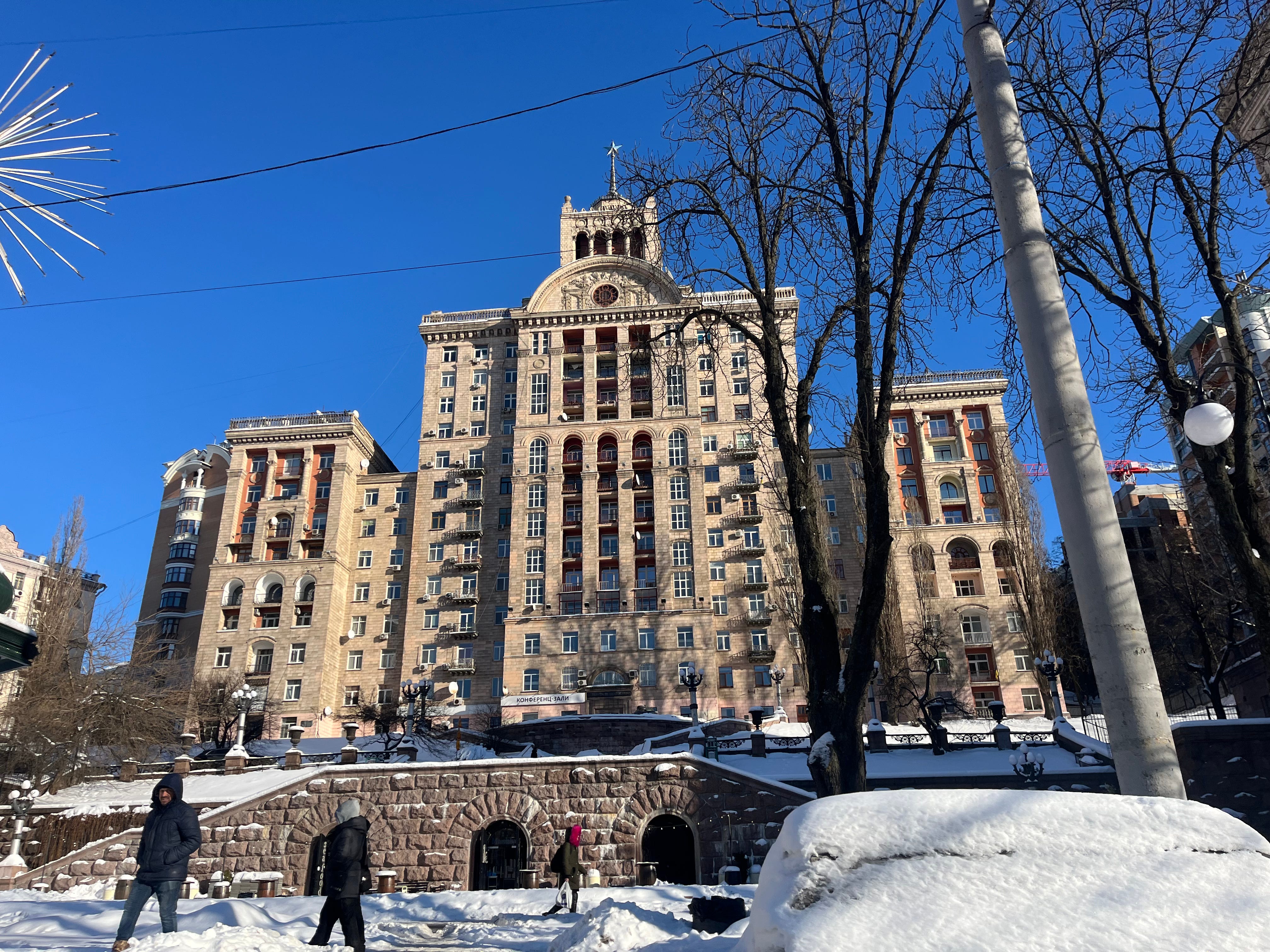
Kyiv was annihilated in the Second World War and it shows; after exiting the pretty domed foyer of the railway station, with its elegant Stalinist classicism, one comes out into a scene of post-war tower blocks and what looks like a factory pumping out smoke or vapour. And, of course, a McDonald’s.
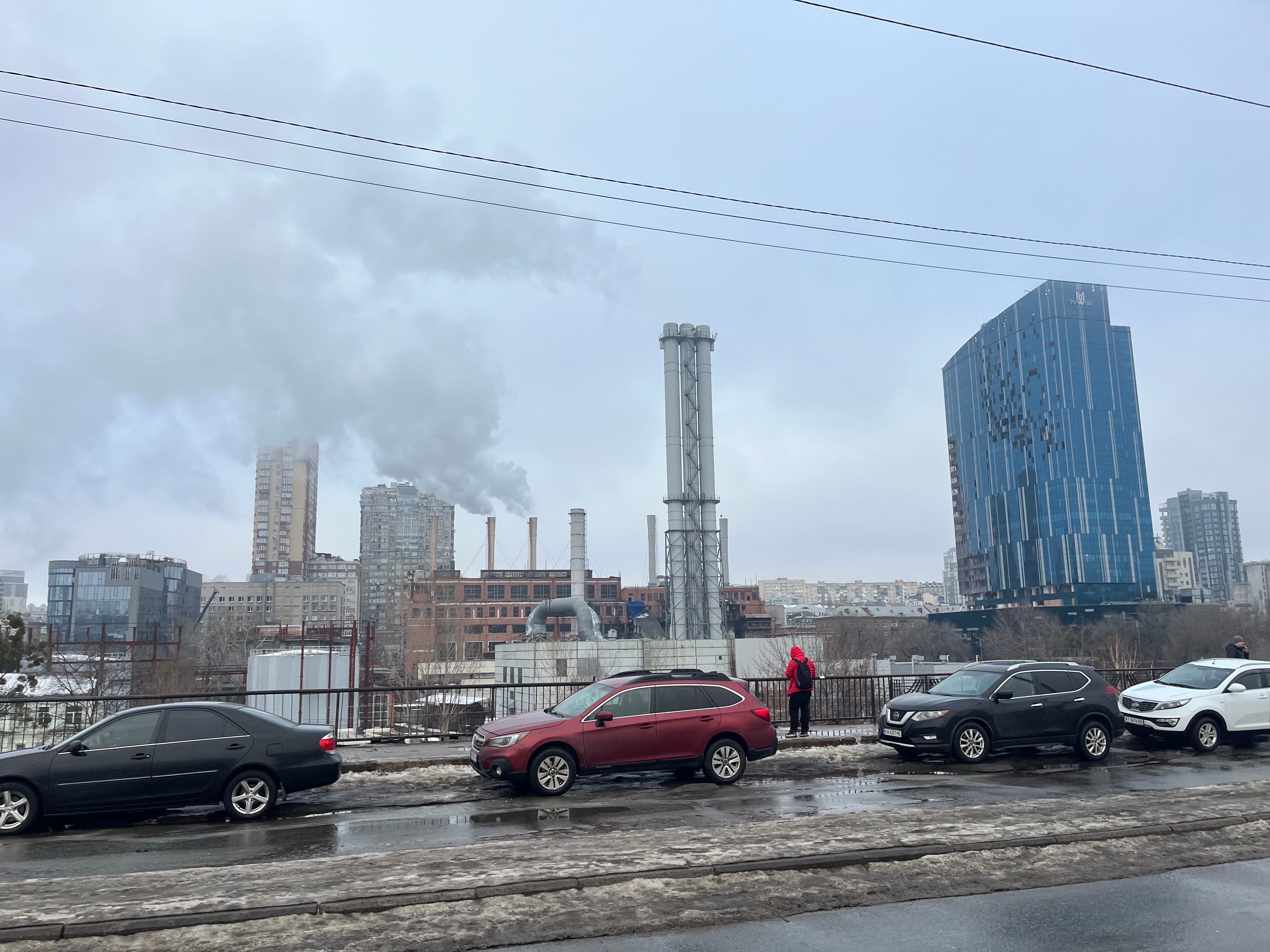
The city centre is quite safe, as the Russians don’t want to hit an embassy or cathedral, but the neighbourhood to the west where we’re staying does occasionally get bombed. It’s just a numbers game, my host reminds me, and it’s riskier on the left bank east of the Dnieper, where the air defences are weaker.
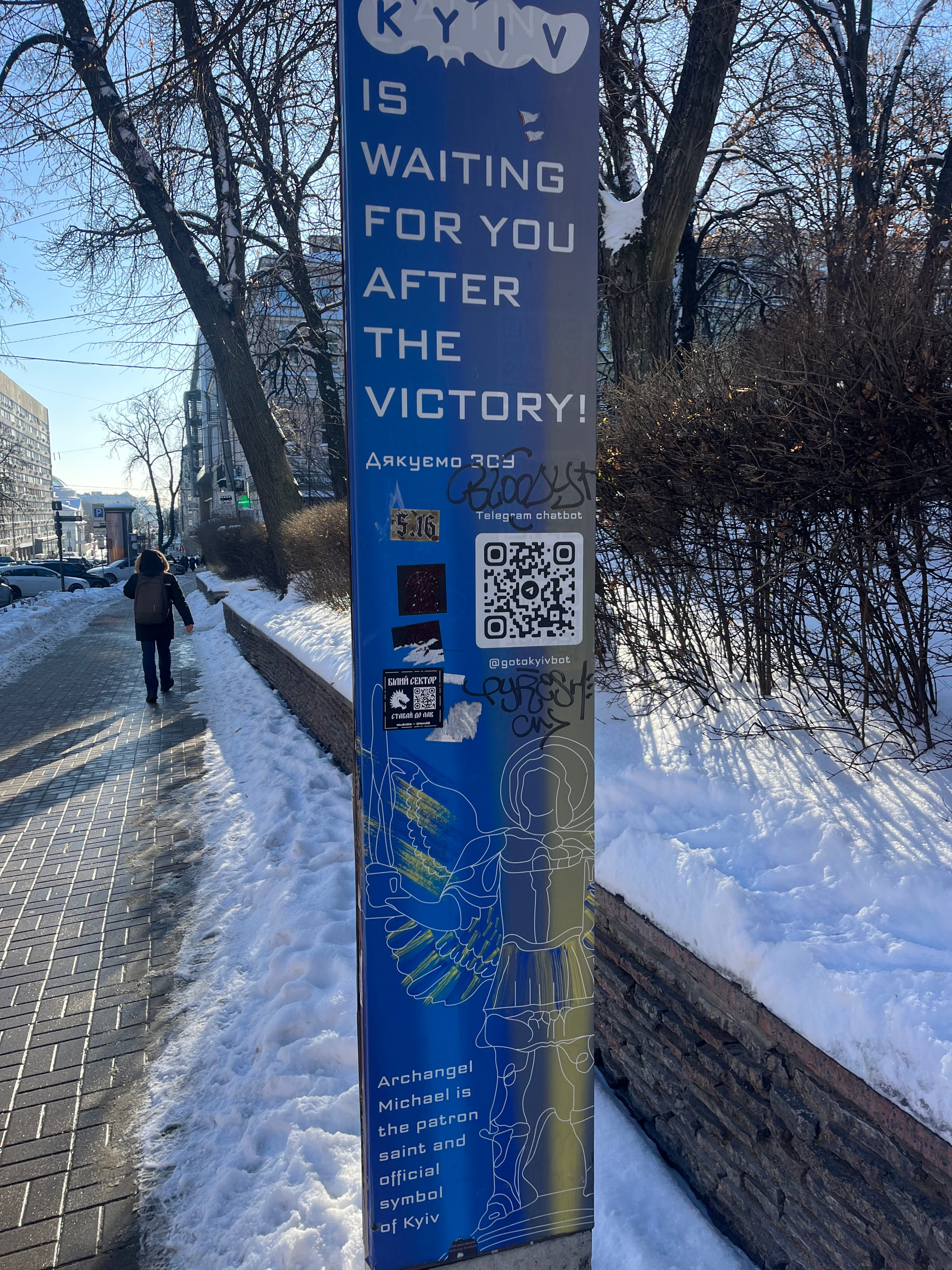
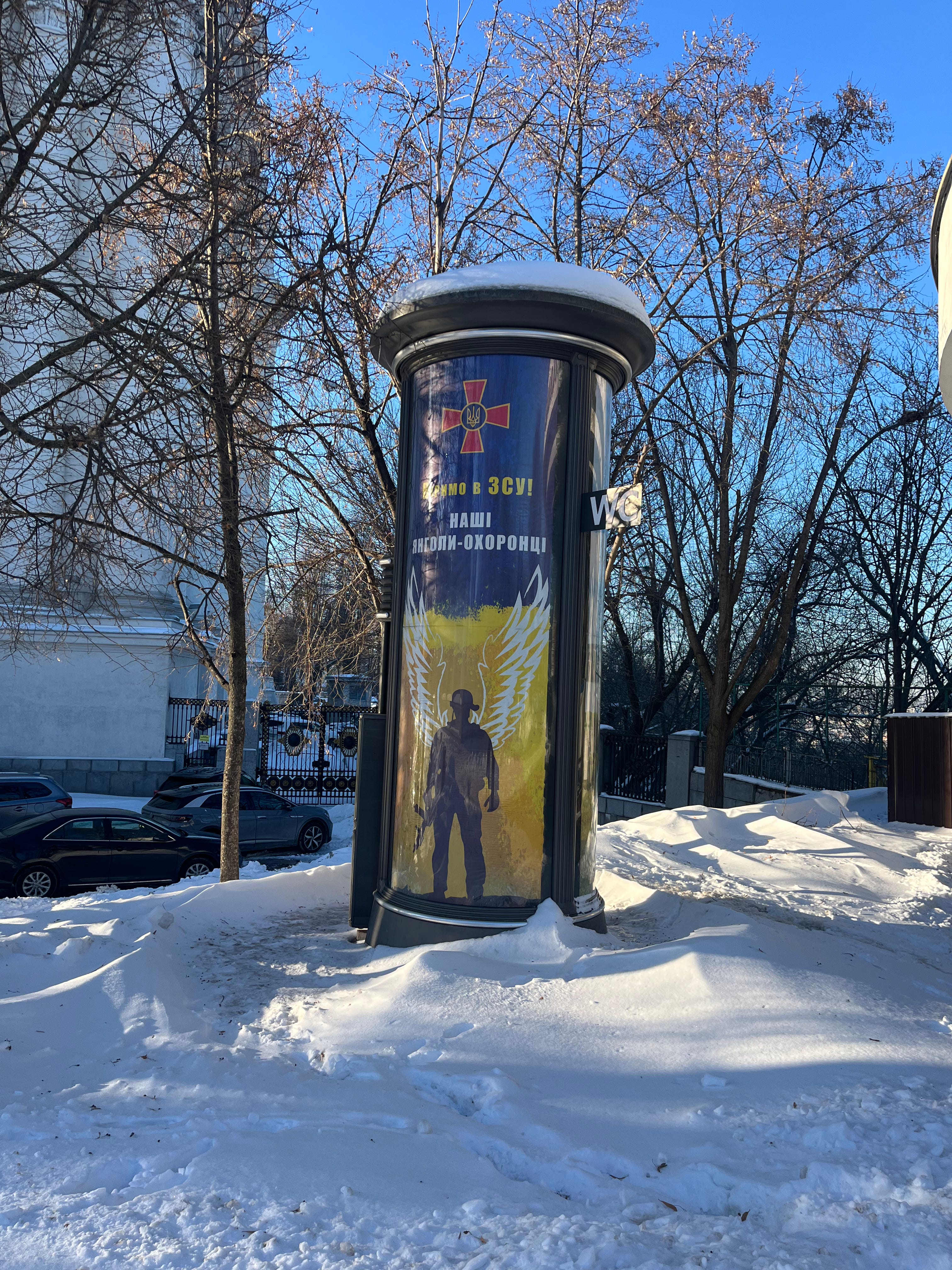
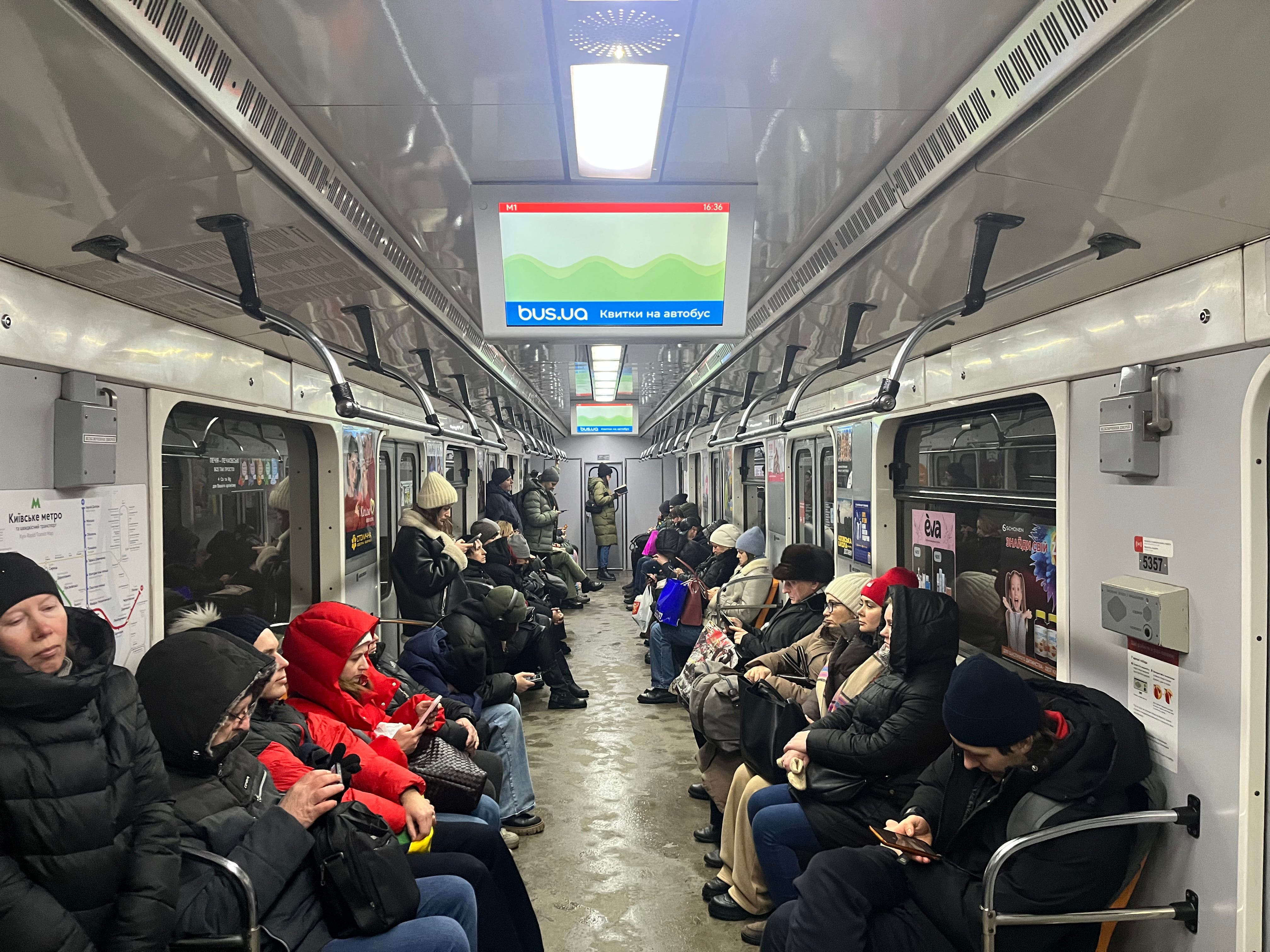
This combination of being in a modern European city amid signs of war typical of the mid-20th century is quite surreal. There are adverts for Minecraft or Valentine’s Day-related treats, and next to it a call to join the army – indeed everywhere there are appeals for men to join up, with different units competing to attract people. On the underground carriages, videos alternate between consumer goods and instruction videos telling people where to hide in the event of an attack. But it’s nothing like regions in the east of the country where the air-raid alarm sounds for 23 hours a day. It’s pretty normal.
You see a lot of men in military fatigues, some of them a lot older than me. This is an old man’s war, and military service is expected until one’s 60th birthday, starting at 25 (it had been 27 until recently). But some even older men join up, joining a sort of dad’s army of volunteers. You see a few guys on crutches, although I only saw one with a missing limb. Some men sitting on the metro, I notice, have a thousand-yard stare.
On the first day I get a lift into the centre of town where I meet MP Oleksiy Goncharenko at a coffee shop. As we start talking, I notice that on the next table is a man who looks like a bit of a bruiser, half staring at his mobile phone, and I first feel a bit uneasy before it occurs to me that he is Goncharenko’s security.
He has long been an enemy of the Kremlin and during the invasion took up arms against the invaders. Believing that the Russians were going to poison him, as they had done other Ukrainian politicians, he once turned up to a meeting in Brussels wearing rubber gloves, and it was reading this story that gave me my first pre-trip anxiety dream about the Russians poisoning me.
Heading off to Munich the following week for the security conference, Goncharenko didn’t have a hugely optimistic air to him, but it’s been a trying few weeks for the country, the conflict having now dragged on longer than the Great Patriotic War. He was curious to know about the travails of the Labour Government in Britain and I gave him my totally one-sided interpretation.
He reflected on the deep hatred now felt by many here for the Russians, and how this will remain for generations. It’s genuinely sad, and these fratricidal conflicts are very hard to overcome, as we know in these islands. Putin has forever destroyed his goal of uniting the two countries, and the only way it is now possible is through force and terror (which, I guess, is fine with him).
The Russians are also losing huge numbers of men, but they hope that they can endure for longer than their enemies and that their European allies will not be able to re-arm in time (the United States under Trump is completely unpredictable). They grind them down, with night attacks on critical infrastructure, which have a secondary effect of depriving the population of sleep (it’s also harder for air defences to tackle the incoming weapons in the dark).
Certain things function as normal. Our nearest supermarket was very well stocked, fancy even, like a Waitrose or one of those posh regional supermarkets like Booths. Tucker would be very impressed. But the corridors of the shopping centre in which it sits are all dark, as are most buildings.
Other aspects of life are no different to western cities. On one occasion I was walking back from the station, along a sort of urban A-road where people drive at crazy speeds, and saw an Uber delivery driver struggling up a hill on his moped through blankets of snow. This is why neoliberalism will win - because we love convenience more than they love death.
The first air alert sounded in on Monday evening. It’s a bit unnerving and, to a war tourist, a bit thrilling. I guess it wouldn’t be if you lived here and had spent four years enduring it. The initial alarm is generally ignored, since the warning gets sent to all the regions in the path of the approaching missile or drone; if it’s definitely heading your way, a second alert will sound twenty minutes later. Otherwise, everyone just continues as normal, shuffling on through the snow. A further alert will sound to notify that the raid is over, ending with the words ‘may the force be with you’, and while I normally find Star Wars references quite cringe-making, under tension the levity is welcome and fun.
This is part of the dynamic of a terrifying, sci-fi war in which Ukraine is now a leading global innovator. The country’s tech industry has accelerated to a startling degree, and has also become more integrated with the west, again proving the law of unintended consequences common to war.
Much of the tech war is driven by the same people who are into tech anywhere - young men and women with dyed hair and tattoos, who enjoy popular culture references. The difference is that while in London or Berlin their political energies might be focused on having 37 genders, here it is devoted towards the national cause.
In a recent piece for the Financial Times, former Google executive Eric Schmidt wrote about how he had invested in Ukrainian tech firms. He noted how drones had made the front line dangerous in a way that was not true of previous wars: if you get as close as 20 kilometres you risk getting droned in the ‘kill zone’, which creates a First World War-style stalemate. Any advance is likely to result in horrendous casualties, with the individual risk of being killed from the air as high as one in three. Russia lost as many as 35,000 soldiers in December, more than even this giant can recruit.
While Russia has developed faster Shahed drones, firing up to 1,000 a day, Ukraine has countered this with ‘intelligence, surveillance and reconnaissance (ISR) drones, an expansive radar network and AI-enabled systems’ to collect and analyse data. Ukrainian technology has advanced so fast that their armed forces defeated two NATO battalions in just one day during exercises last year.
Schmidt suggests that the war will conclude with a ‘drone wall’ between the countries, ‘where omnipresent automated drones monitor the border like an intelligent electric fence’, creating a hard border that is both miles wide and miles high.
On the second day I met a former JP Morgan trader called Roman Sulzhyk for a coffee. Six hours later we were hugging goodbye, having covered hundreds of yards, hundreds of years of history, and a traditional Ukrainian meal.
Sulzhyk was already an outspoken anti-Putin voice in February 2022 when a friend in the security industry warned him that his name was on the lists carried by Russian strike teams in the city, or death squads as they might better be called. He has since returned, married and become a father, the ultimate signal of optimism, although on a societal level the country has suffered not just from an exodus of refugees but catastrophically low birth rates. You see some children, but not many, and one wonders how many will return when the war ends.
After a while, he says, you get used to what he describes as ‘Monaco by day, Afghanistan by night’. Occasionally you get heavy raids that make your house shake, and you put your family in a bunker. You get used to the sounds and smells of war. He recalled an attack on Podil, a nearby downtown area, and the strangely familiar smell - then he remembered that it reminded him of being in New York on 9/11.
Roman runs a firm called Resist.ua which invests in military tech start-ups. There are now 3,000 in Ukraine, often at the very cutting edge of technology, and global investors are pouring a lot of money into the country’s military innovators. He describes one such venture in Bucha, a town north of Kyiv which became notorious in 2022 after Russian troops killed hundreds of civilians, where ‘a kid who started designing a rocket to shoot down Shahed drones’ was able to get a €1.5million investment, helped by a 19-year-old girl who designed the fuel system. He describes an ‘unbelievable ecosystem’ in the military tech sector.
Roman is hoping to attract more foreign investment once the war ends, while avoiding the risk of creating market distortions, and the traditional pitfall of corruption – he wants direct investment by western firms, backed by their governments. Corruption has been a big problem in the past and in the 2000s and 2010s Ukraine was especially notorious. Former president Viktor Yanukovych, now in exile in Russia, led a group of associates known as ‘the Family’ who embezzled as much as $37 billion.
As Roman takes me on a little tour of the city, he buys me a ham from a market vendor who wants him to transfer the money to her account as a way of avoiding tax. He insists on paying directly by card. ‘Even if she only pays 5 per cent, it’s important that everyone pays’.
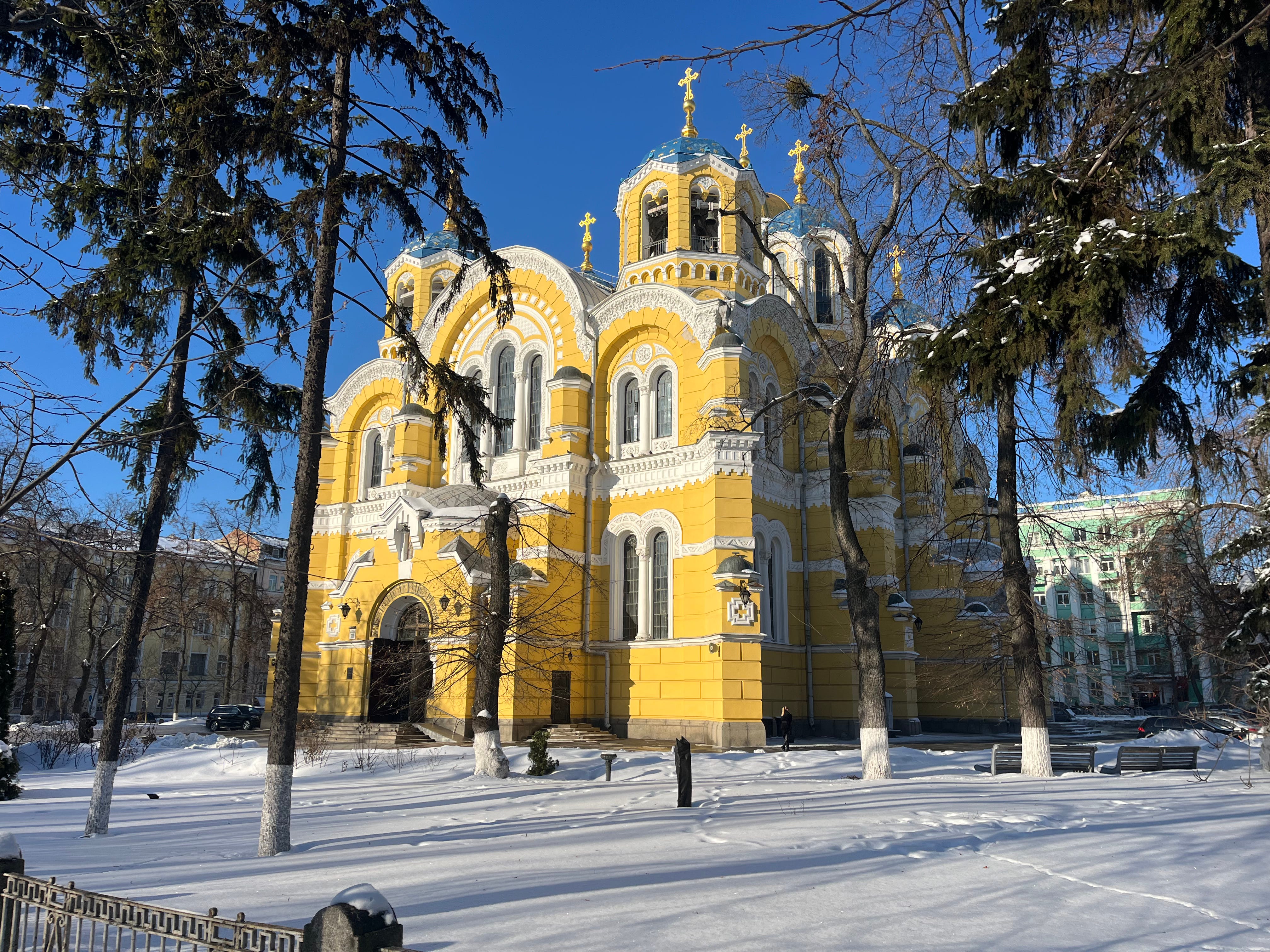
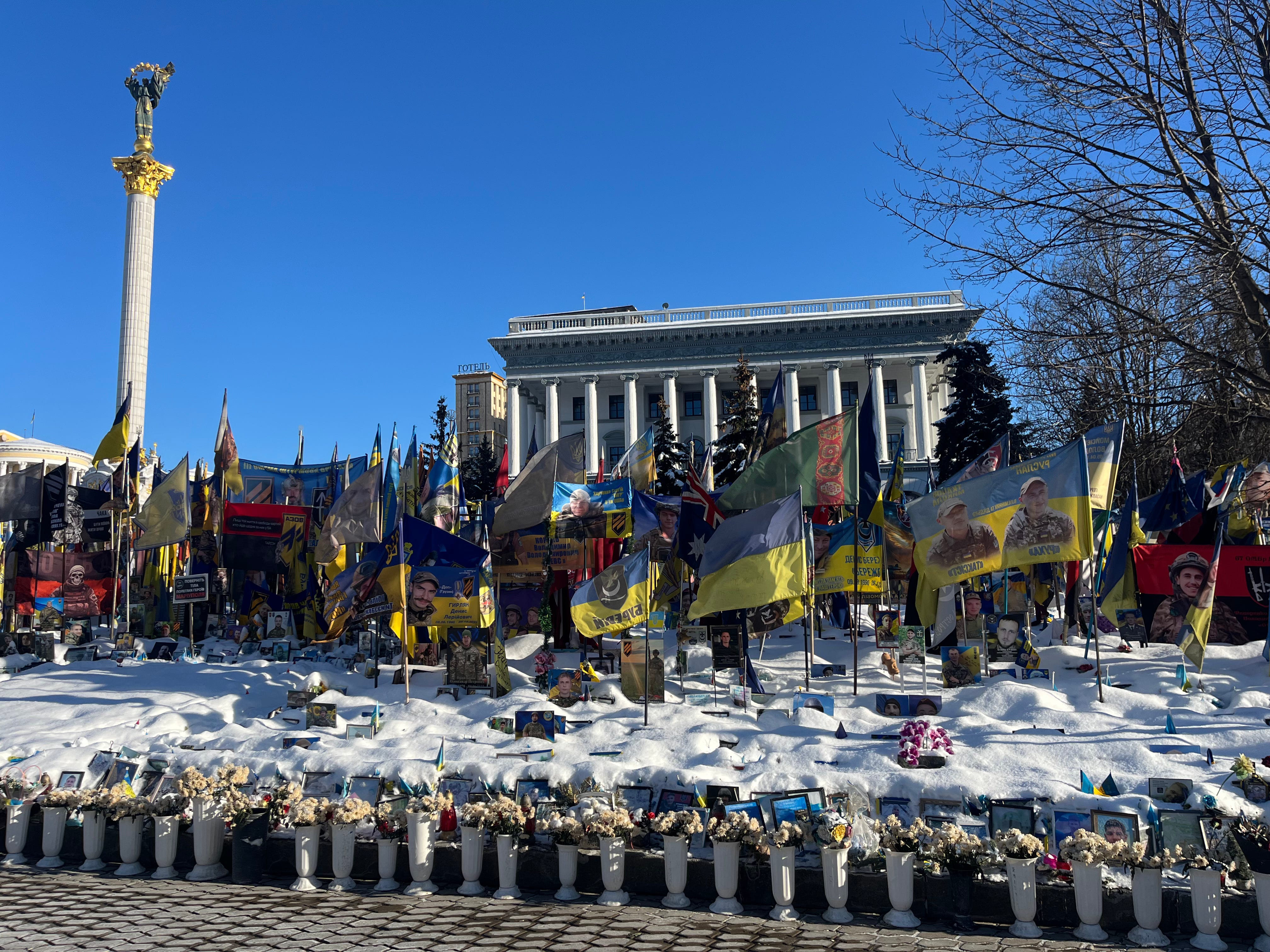
In Maidan Nezalezhnosti, or Independence Square, he recalls his memories of taking part in the ‘Euromaidan’, the protest which began in November 2013, leading to the resignation of the Kremlin-aligned Yanukovych and, soon after, the Russian takeover of Crimea. That was the start of the long war in the east of the country. During the 2013-4 revolution over 100 protesters were killed, and many of the wounder found shelter at St Michael’s Golden-Domed Monastery, one of the city’s many beautiful religious buildings, and dating back to the early 12th century. Roman’s son was baptised here, and we light three candles each. The first, he says, is for Ukraine.
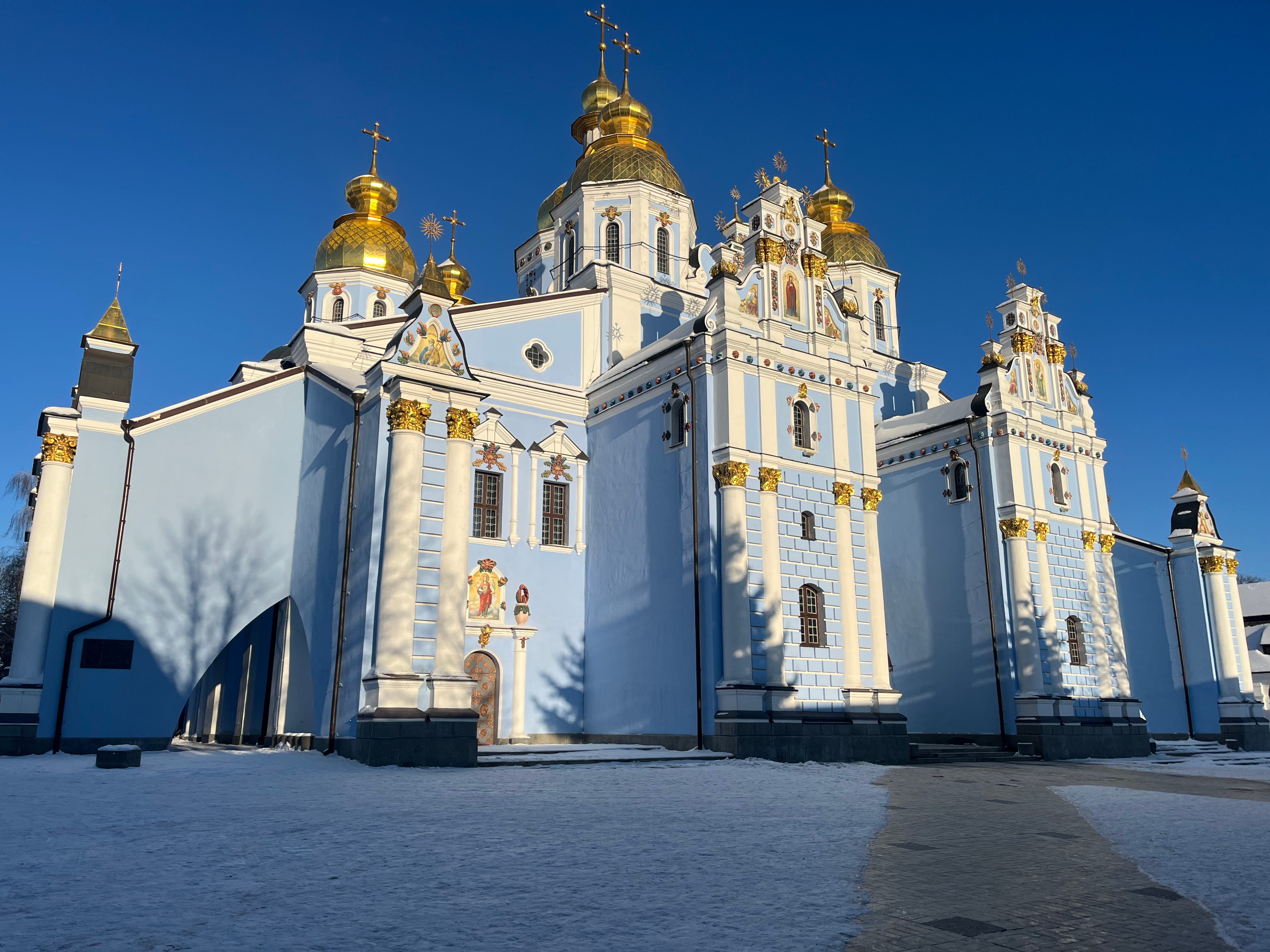
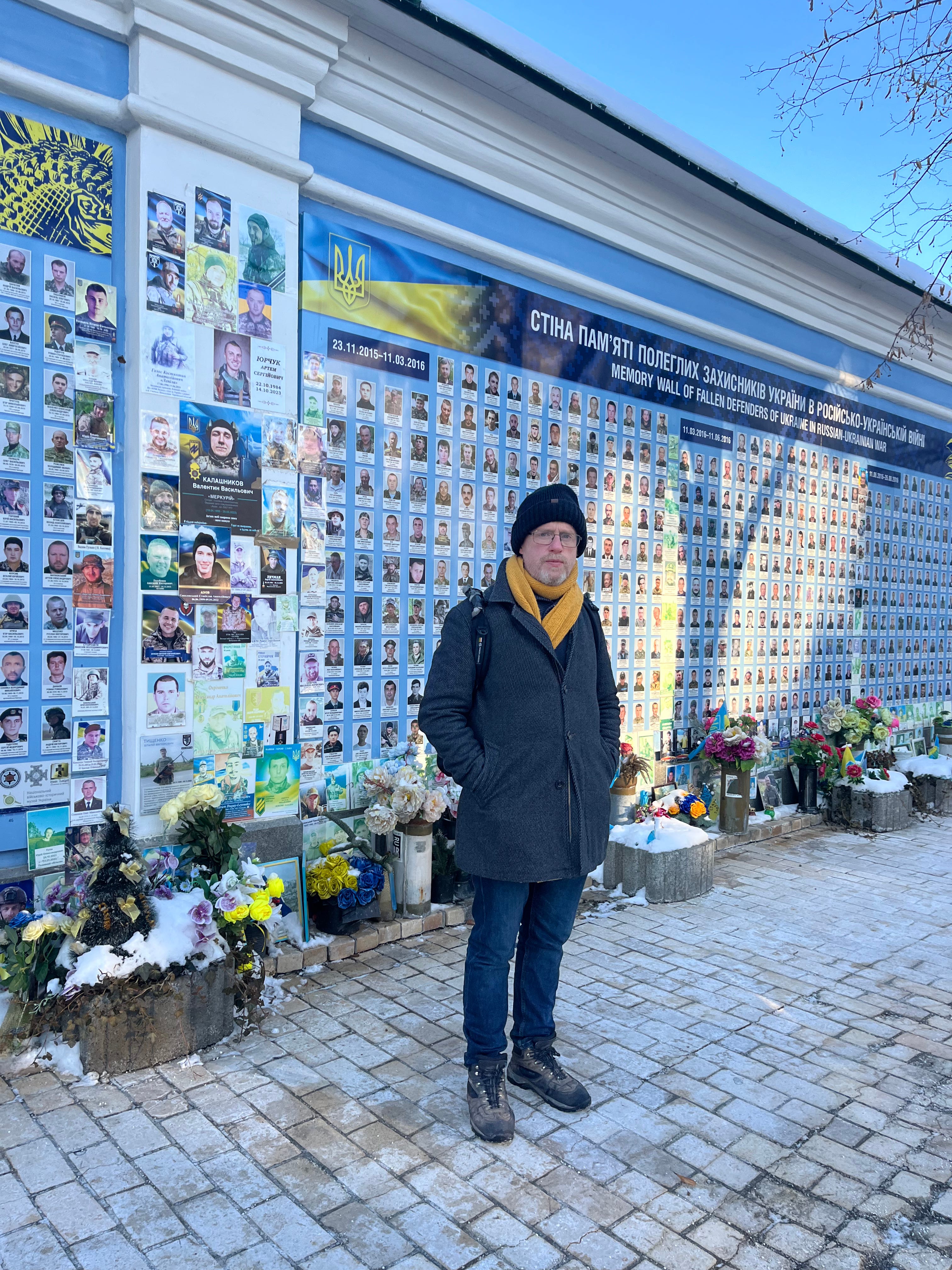
The church is actually new, having been demolished by the communists in the 1930s and rebuilt after independence; some small elements of the original structure remain, including subterranean remnants from its original foundation. By the entrance to the compound is a monument to the Holodomor, Stalin’s man-made famine, which took the lives of maybe 4 million people here. On the other side is the Wall of Memory of the Fallen for Ukraine, a display of photographs for every soldier killed since the war started in 2014; no one is forgotten, and it now stretches endlessly along the edge of the compound. Boris Johnson came here and stood with Volodymyr Zelensky in the summer of 2022, a time when Britain was leading the western nations in financial and military support for Ukraine.
Everyone I meet makes a point of expressing their profound gratitude for Britain’s help. Apparently, if you had a British accent back in 2022 people would come up and thank you, and back then you could also find plenty of Boris Johnson merchandise, with his Churchill biography prominently displayed in every shop (Ukrainian was the first foreign language it appeared in).
During our tour Roman shows me the old citadel, from where the people of Kiev – sorry, Kyiv - watched the approaching Mongol army in 1240 arriving from the vastness of Eurasia, to rape, pillage and murder. The historical comparisons hardly need to be spelled out.
‘They’re descendants of Mongol hordes,’ he says: ‘they’re orcs,’ repeating an insult one hears a lot (one car I saw even had the words ORCS MUST DIE on the side.) But he also sees the bright side. This has happened before, but ‘for the first time in 300 years, we have an army and the world is behind us.’ He is also optimistic about the future: ‘We will rejoin the European family… The quality of life will be great compared to that concentration camp next door.’
The war has accelerated the process of westernisation: ‘Before the war I’d have said there was a 10 per cent chance of joining the EU by 2080. Now I’d say it’s 100 per cent by 2040, and I hope to live that long.’
Like many Ukrainians, he’s very keen on the idea, because the West means freedom. Roman grew up in the Soviet Union, where he and his school friends were subject to endless state propaganda about the west, about the evils of the United States, and until moving to England knew nothing else. He reflects at one point that ‘people don’t know they’re free until they’re free’.
The war has pushed the Ukrainians west in other ways. Before the war, he says, Ukrainian was spoken in Kyiv maybe 5 per cent of the time, but now it’s very common to hear, although as the conflict has dragged on many have returned to Russian by default. Russian is his first language, but they speak only Ukrainian around the house.
We end our tour with a traditional Ukrainian meal at a charming restaurant called Kanapa. We have herrings and borsch followed by a special local delicacy, a chicken fillet rolled around in butter and then fried in breadcrumbs. I think it may catch on.
At one point I remember briefly forgetting that there is a war on, and I’m not just on some eastern euro city break with Ryanair. I wouldn’t exactly recommend Kiev as a tourist destination right now, but it doesn’t feel unsafe to a visitor. It helps that the metro stations, built in the neo-classical style of the 1930s, are incredibly deep - you can spend ten minutes on the escalator. On my way to meet Fr Ihor Shaban, a priest from the Greek Catholic church, I’m stuck in a station because of an air raid, a scene that naturally makes me think of the Blitz. Would people object if I start singing The Lambeth Walk?
The Greek Catholics are a minority mainly concentrated in the West, while most people belong to the Orthodox Church, although that has mostly broken off relations with Moscow (although it gets complicated, and some parishes haven’t).
Fr Shaban’s church works to help people affected by the war, and the priests here have all sorts of horror stories, of children traumatised by drone attacks on their apartments, of the terrifying sounds these war machines make. This particular church is feeding 200-300 people each day, normal families without light or heat. As if to emphasise the point, the light goes out as we’re talking.
All the priests in Kyiv stayed put during the invasion, and two of their number in the east were imprisoned by the Russians for two years. Some Russian Orthodox have a particular hostility to Greek Catholics, who follow an eastern Rite but are in communion with the Roman Catholic Church, but the war has heightened old tensions. Fr Shaban accuses the Russian Orthodox Church of ‘weaponising religion’ by declaring ‘that all soldiers will go straight to heaven if they die in battle’. This does feel rather pagan.
The Greek Catholic Church here also helps Russians POWs, many of whom entered a war zone without much understanding of what they were doing. As for the conditions of the thousands of Ukrainians in Russian captivity, they don’t know; they know that some are being held in Chechnya, and I personally can’t imagine anything worse. The Tartar community here has helped by putting out feelers to the Islamic world, but one can’t be sure, and Ukrainian POWs have been known to come back in a wretched state.
Before the invasion Ukraine had been historically divided between east and west, and religion was a factor; indeed, it was one of the civilisational fault line states that Samuel Huntington described as being the source of future conflicts. The east tends to be more Russian speaking, and also inhabited by large numbers of people of Russian descent who moved to the big industrial cities; the west is more nationalistic, the epicentre of opposition to Soviet rule throughout both the murky wartime period and long after. The Soviets carried out their last execution of a Ukrainian nationalist as late as 1989.
Until 2014, national elections showed a noted east-west split, but even some previously Russian-orientated people have sharply turned against them. Often this has divided whole families. One young woman I met, who now works as a translator, was typical of this trend. Her grandfather was the youngest of seven children, three of whom had died in the Holodomor, and three in the Second World War. She had grown up in the east as a Russian speaker, has family in Russia and friends who have moved there since the occupation. They don’t speak to her anymore.
That evening there is talk on the Telegram military channels of a big attack, my host tells me matter-of-factly, reassuring me that it’s unlikely we’ll be hit. He’s as phlegmatic as a BA pilot calmly telling us that, despite the engines having trouble, we are damnedest to get them going again; it’s nothing to worry about, he assures me, and he’s right. They do indeed strike the city in the early hours, on the Left bank, luckily killing no one, and I sleep through the entire thing - so from a purely journalistic point of view a total failure.
I had brought with me Yarolsav Hrytsak’s beautifully written history of Ukraine, and I have to admit that the chapter covering 1914-45 starts to get a bit depressing: a series of endless massacres, Ukrainians against Poles, Poles against Ukrainians, peasants against landowners, everyone against Jews, Bolsheviks against nationalists, Stalin’s famine and, in 1941, the invasion of the Nazis.
Some older Ukrainians, remembering the German occupation in the First World War, looked forward to their arrival, unaware that these were not the same people. I paid a visit to Babi Yar, now an inner suburb to the west of the city, where the Nazis murdered 35,000 Jews in one day, and that was just the start; the totalitarian Soviet-era monument nearby, as well as the rusting industry with Cyrillic writing, adds to the chilling age of hatred aura.
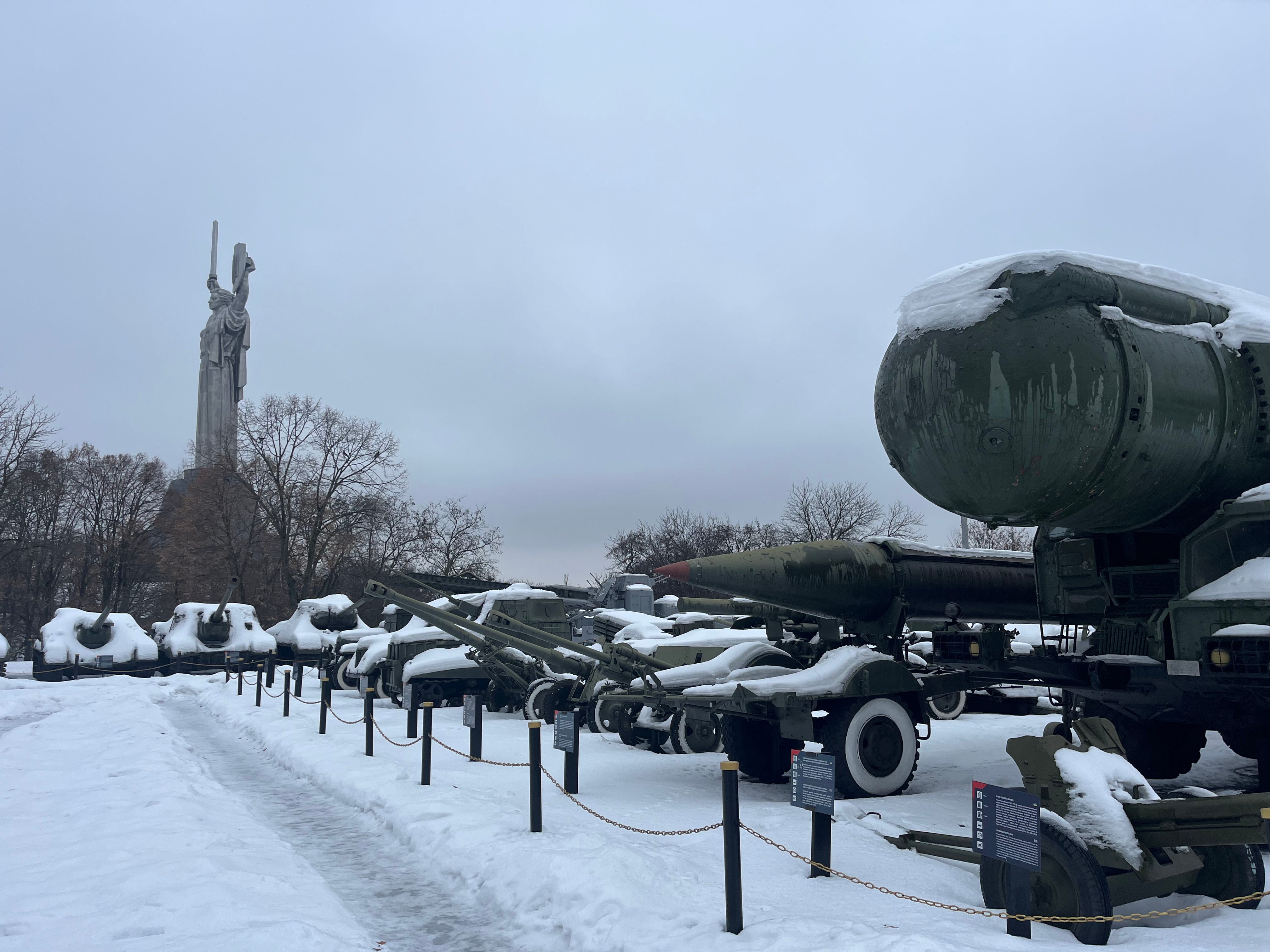
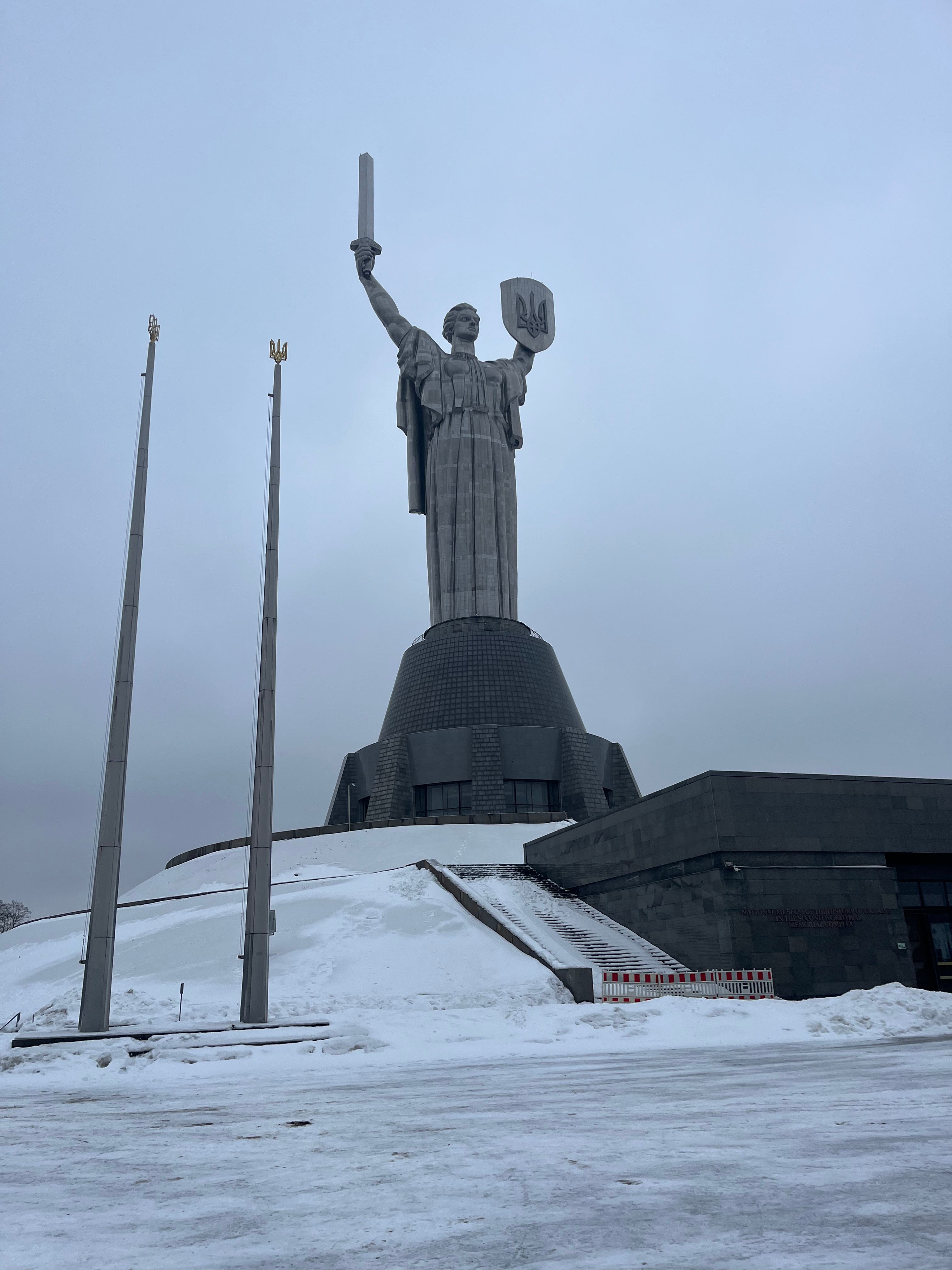
Visitors to the city should visit the Second World War Museum, close to the famous 200ft-tall Mother Ukraine Monument. On my way, walking through the city, the air raid siren goes off and my Google Maps is all over the place; annoyingly, while it tells you where the nearest bar or restaurant is, it doesn’t point to a metro station.
After paying my entrance fee for the museum, I walk in to find that it is completely dark inside, but I’m too embarrassed to leave, so aimlessly stumble around following my phone light. Near the entrance, the museum features biographical sketches of the many foreigners who have fought, and in some cases died, for Ukrainian freedom. I pay silent respect to one young British man who volunteered, a psychology student called Samuel Newey who died for his beliefs, and I reflect on the adage I once read that, to wage modern wars, a nation must sacrifice its best.
This is, sadly, what is happening to Ukraine, even if aided by a large number of foreign volunteers, including a corps of Russians opposed to Putin as well as some Chechens. Russia, running out of men, has increasingly become dependent on mercenaries.
The front line here sounds like sheer horror, and soldiers get far less leave than those fighting on the 1914-1918 western front did; there just aren’t enough men. On my final day I met Olha Kucher of Veteran Hub, an organisation which helps servicemen. A thaw has come, and as I walk to my destination there is a constant thud of melting water from buildings, and occasional chunks of frosted snow. The puddles go up to the ankles.
The organisation is helping about 2,000 servicemen in any month, as well as looking out for the tens of thousands of Ukrainians held captive by Russians. Again, she thanks the British – they receive a lot of help and advice from the embassy here – but they had their support pulled from under them when the new regime in Washington cut US Aid (it wasn’t all about funding queer theatre and gender studies in Kampala). A Canadian charity stepped in to take up the slack.
I was all set to head west when, as I was being dropped at the station at 7.30pm, the siren went off again. The woman in charge of the metal detector started closing the barrier and saying that I can’t go through, but my train was leaving and I went against all my English instincts to not cause a fuss and pretended not to understand.
Looking for Platform 1, at the other end of the station, I found myself getting slightly anxious. I’ve never caught a train during an air raid siren, and all the signs were in Cyrillic; frantically shouting ‘train Polska’ at some baristas probably didn’t help. On board, it was a huge relief to see on my phone that we were heading west.
At around 4am guards in military uniform came on to collect all the passports, and after a while he returned to ask me what I was doing in Ukraine and whether I’m a ‘volunteer’, going through all my bags asking about military souvenirs. Not only are weapons smuggled west for criminal or terrorist purposes, but some people apparently think it’s a good idea to bring back grenades as mementos - with hilarious consequences.
Arriving in Poland shortly after 7am, it’s a huge relief to see the Latin alphabet again. The contrast is striking. British visitors to Poland were once used to seeing a very poor, second-world country, and are now struck by how it has changed for the better. The roads are in perfect shape, the cars are new, the people look wealthy and confident. It’s a direct model for Ukraine to copy.
At customs there is a gigantic queue for Ukrainians and a small one for EU and EFTA citizens, which my host had instructed me to walk straight up to; no one on the border of Ukraine regards Britain as being outside of Europe in any sense. In the queue, a woman in her sixties or seventies sees my ruddy face and spots me for an Englishman, asks which airport I’m heading to, and I guess is angling for a lift. She offers to contribute but obviously I refuse.
Sofia originally came from Irpin, just north of Kyiv, right in the path of the Russians as they made for the capital four years ago. She saw the fighting first-hand; a missile landed in front of her house, and she tells me how she fell down to the ground in terror: ‘I prayed to God and God preserved me’. Part of Britain’s Ukrainian refugee programme, she now lives in Exeter and is very happy with her new home; she’s made friends, everyone has been kind, and she is especially pleased with her bus pass. ‘England, very good country’, she says. I’m glad that my country has taken care of her, and when I leave her at the airport I wish her good luck and board the flight home.
When I arrive back at Stansted there’s a bus replacement service.
They hit Kyiv again on Sunday night, launching dozens of missiles and hundreds of drones, killing one person in the capital. A sort of anniversary present from the Kremlin. There doesn’t seem to be much prospect of peace anytime soon, especially as the proposed deal being offered would leave the country critically vulnerable to further attacks. There aren’t any good options, but few expected Ukraine to survive for four weeks and they’ve still fighting for their lives four years later. I wish them well, and a better future - in Europe.
Excellent writing, adorned with detailed that only a novelist could craft!
This made me laugh; “Also, and to look on the positive side, getting killed by the Russians would finally grant me the centrist respectability I’ve always secretly craved.”
The Times: Ultra-right Blogger Finds Redemption in Ukraine Front Line Death
Ed West, a former Journalist who wrote for reputable (if inferior) publications including The Guardian, The Week and Nuts Magazine, before becoming an ultra-right blogger on the disinformation ridden internet platform Substack, has been killed on the frontlines of the Ukraine Conflict.
West merits note for choosing to go to Ukraine and criticise Russia, despite in the past having spread far-right conspiracy theories suggesting that prior to 1945 Britain was ethnically homogenous and judges are too lenient on criminals. In this he showed admirable integrity, for a blogger, and has achieved a partial redemption