

Another reminder that I will be pausing the substack for a couple of months from next week. Payments will automatically go on hold, so if you’re a paid subscriber, you will not spend anything during this period. If you have questions, please contact me via email, Twitter or the substack direct message function, and I’ll be happy to deal with any problems or queries.
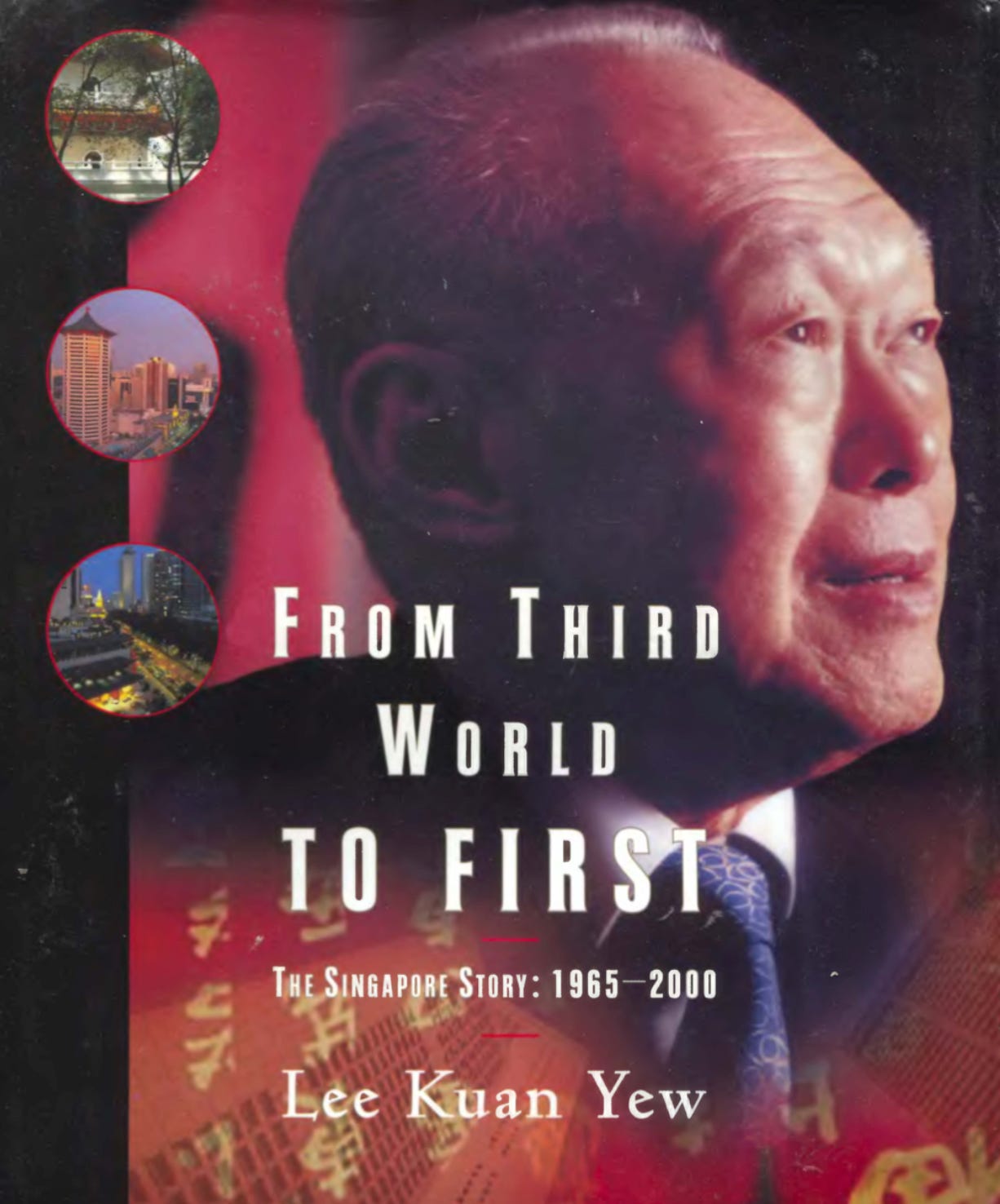
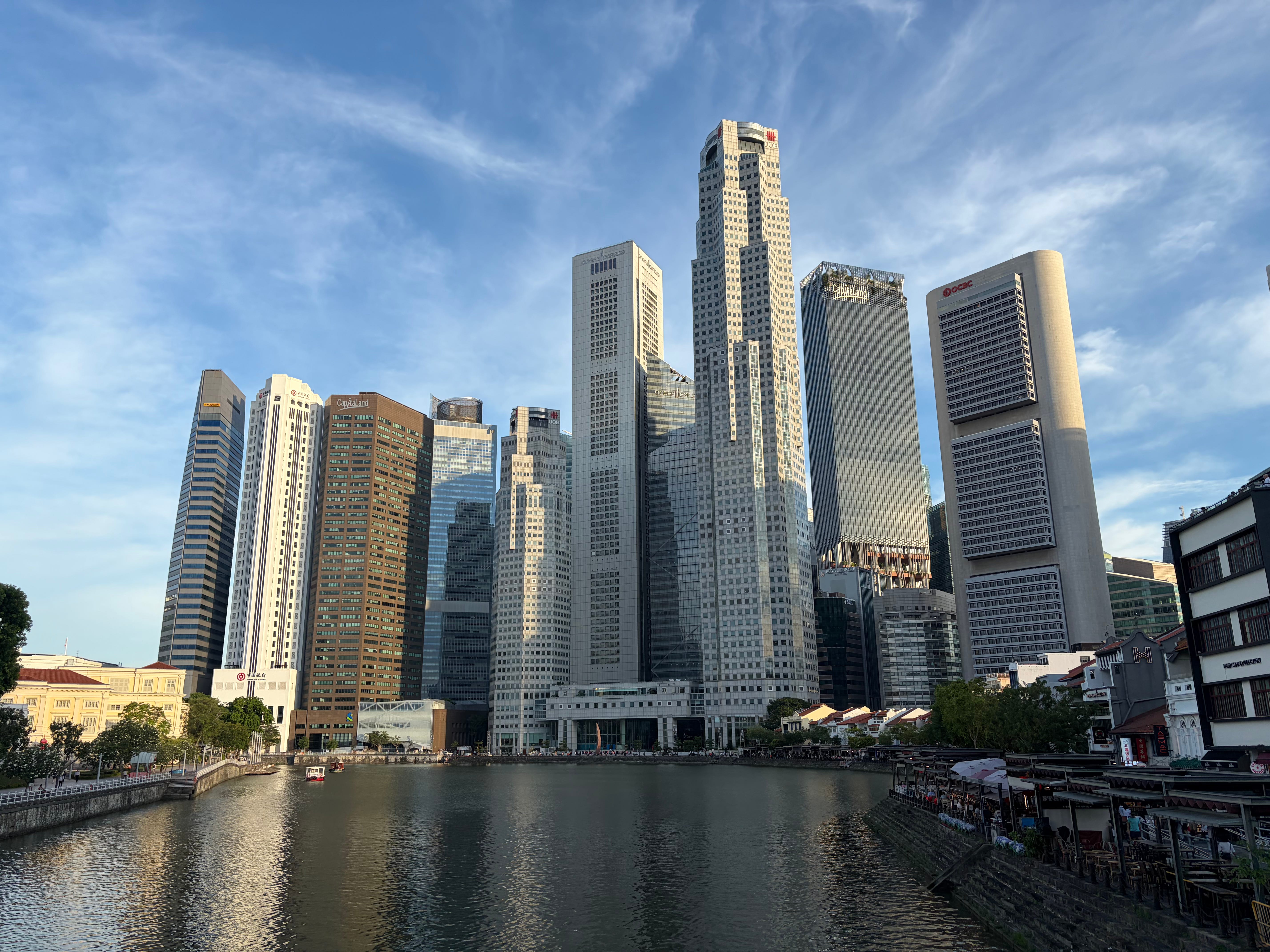
There are few political memoirs as readable as Lee Kuan Yew’s From Third World to First, but then there were few politicians like him. Arguably the greatest statesman of the post-war era, Lee led Singapore out of a failed federation with Malaysia, turning a poor and precarious little nation into a dazzling success story, now twice as rich as Britain, its former colonial ruler.
While many things have been written about Lee, the most interesting are by the man himself, with his early years covered in The Singapore Story, published in 1998. The sequel mixes memoir, analysis on international affairs, his own personal philosophy and a how-to guide to statecraft. As he puts it: ‘There are books to teach you how to build a house, how to repair engineers, how to write a book. But I have not seen a book on how to build a nation out of a disparate collection of immigrants from China, British India, and the Dutch East Indies…’ It’s safe to say that he’s cornered that particular market.
It is a strangely cinematic story, almost fit for Hollywood: a man battling to save his small nation against the odds, who must feel that all is lost but struggles on and ultimately wins. Singapore’s identity, unlike that of most young countries, was not forged on the battlefield with swords and guns, but by markets, driven by a determined belief in economic growth, social order and hard work. Only these goals would allow it to overcome its severe demographic challenges, and avoid the violent fate of many post-colonial societies. Defying what experts thought was the direction of history, it became the most successful, and significant, city-state since the Renaissance.
The situation to start with was desperate, and Lee can be seen crying in black and white video footage from August 1965, when he announces that his city has been kicked out of Malaysia, a rare case of a state achieving independence against its will. As he puts it: ‘Some countries are born independent. Some achieve independence. Singapore had independence thrust upon it.’
Singapore was poor and cursed by its combustible demography. Twice the size of the Isle of Wight - and roughly the same shape - it nestles at the bottom of the Malay peninsula and to its south, just an hour’s ferry ride, is the giant of Indonesia. Neither neighbour was friendly, and Indonesia’s declared regional policy of Konfrontasi – Confrontation – was not reassuring.
Under Stamford Raffles in 1819, the British had founded Singapore as a trading post out of a collection of villages inhabited by Malays and a long-established community of overseas Chinese. Its position at a choke point was crucial for control of the sea lanes between the Far East and Indian Ocean, and under British rule it flourished as an entrepôt. Free trade was its foundational belief, and its hands-off rulers allowed the Chinese in particular to express their entrepreneurial skills; as its economy grew, Chinese migration increased, and by the time of independence they constituted about three-quarters of the population, with Malays accounting for 15 per cent and Indians the remainder.
Born in 1923 as the eldest of five, Lee was something of a father figure to his three brothers and sister, their actual father being a somewhat irresponsible and distant figure, and he certainly exemplified Adler’s birth-order theory, becoming the conscientious elder sibling to an entire nation.
The great-grandson of Hakka-speaking immigrants, Lee came from the somewhat Anglicised Straits Chinese elite. Often British in their mindset, Lee describes himself as ‘the last Victorian’ and this worldview would shape Singapore’s history. He attended the English-speaking Raffles College, where he met his future wife, Kwa Geok Choo, another lawyer and a formidable individual in her own right; the two often finished first and second in exams.
Lee would have gone on to great things in any case, but he happened to come of age in a notably turbulent period. If worldviews are indeed shaped by the events of an individual’s twentieth year, for the budding young law student it was the fall of Singapore in February 1942, the British Empire’s greatest defeat and humiliation. Lee noted at the time that, whatever happened next, this was the end of European rule.
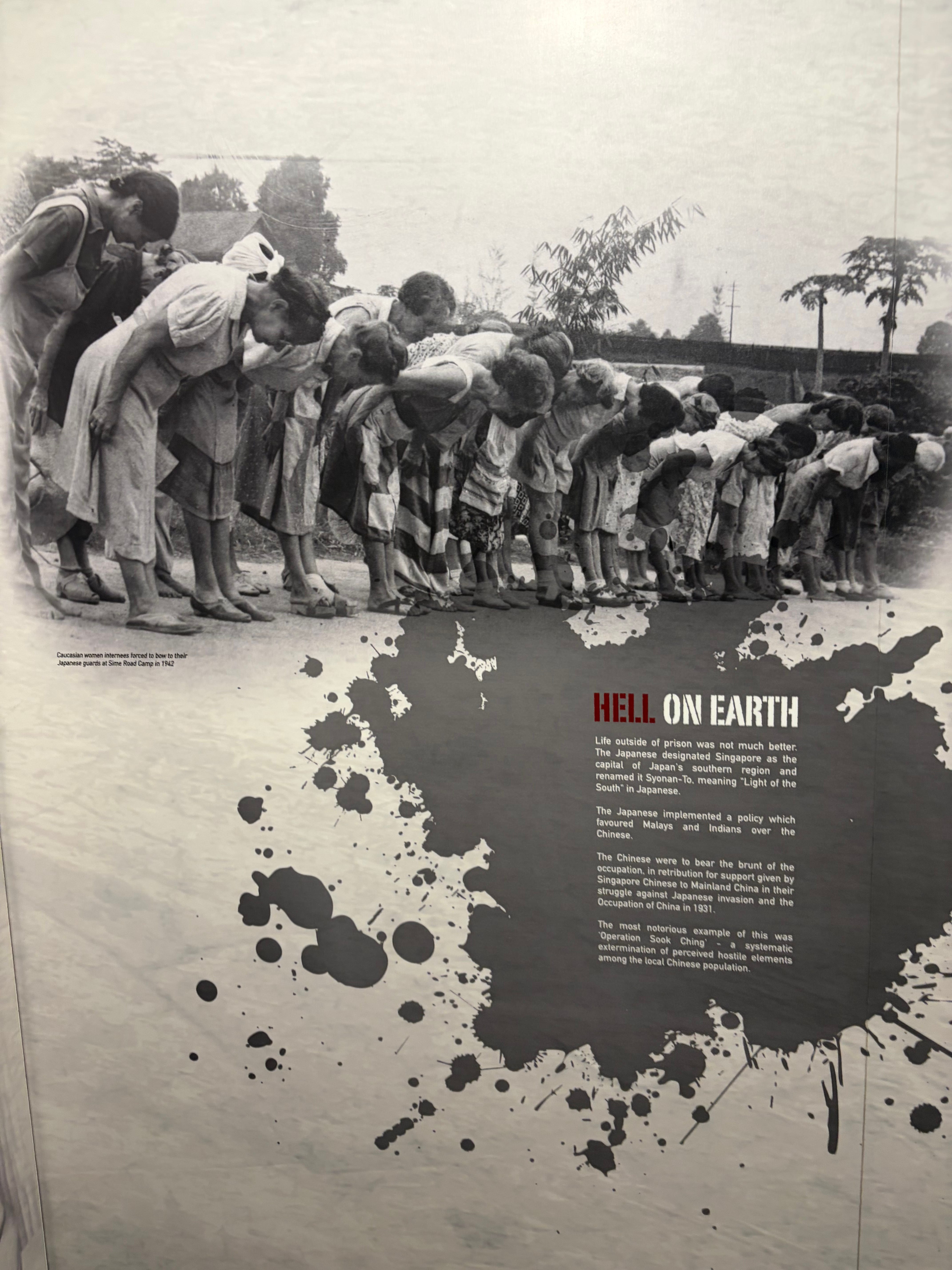
Yet the arrival of the Japanese impressed on him that there was always something worse around the corner. The conquerors murdered up to 50,000 ethnic Chinese, and Lee almost became part of that statistic: among a group told to assemble in a stadium, he developed a bad feeling, made some excuses and snuck out - the people who assembled were never seen again. The Japanese occupation left a bitter legacy, but it also set in course the wheels of decolonisation. When the British returned in 1945, they were a weakened force and even the ordinary soldier seemed a much-reduced figure.
‘The Japanese occupation filled me with hatred for the cruelties they inflicted on their fellow Asians,’ he writes. It ‘aroused my nationalism and self-respect, and my resentment at being lorded over. My four years as a student in Britain after the war strengthened my determination to get rid of British colonial rule.’
He studied first in London and then Cambridge, where he cultivated the persona of an English gentleman, drank Scotch and played golf; his British friends called him Harry, as they would throughout his life. As an anti-imperialist, he became a supporter of the Labour Party and would remain loyal throughout his life, even as his policies came to be diametrically opposed.
Like many colonial elites who stayed in the imperial capital, Lee developed mixed feelings, so that while a passionate anti-colonialist he also admired the British, for their system of law and justice, their sense of fair play and their lack of corruption. As he got older, he felt an increasing sense of sadness at the country’s declining fortunes.
Called to the Bar in 1950, Lee returned to Singapore, joined a union, formed the initially centre-left People’s Action Party and, with the withdrawal of the British, at 35 became the first Prime minister of an independent Singapore in 1959. Yet the end of empire is always a precarious times for minorities, especially merchant peoples, and a majority Chinese city surrounded by majority Malay regions found itself very vulnerable, both from outside and within. As he put it: ‘We inherited the island without its hinterland, a heart without a body.’
It was widely believed that Singapore could not make it alone, and under Lee’s rule the city went into union with Malaysia in 1963. Just two years later, and with the federation hit by race riots, Singapore was forced out. Although partly motivated by resentment at Lee’s success among ethnic Malays, the fundamental problem was demography: a united Malaysia would have included a Chinese minority dangerously close to parity with the Malays – 43 v 41 per cent - making the country dangerously unstable.
Singapore’s prospects looked bleak, and many experts predicted its collapse. Lee writes how ‘foreign press comments immediately after independence, all predicting doom, added to my gloom. One writer compared Britain’s withdrawal from its colonies to the decline of the Roman Empire when law and order collapsed as the Roman legions withdrew and barbarian hordes took over… I shared these fears but did not express them. My duty was to give the people hope, not demoralise them.’
Lee is often described as headstrong and uncompromising, but among his many qualities was a willingness to listen to useful advice. A key role was played by Dutch economic adviser Albert Winsemius, who had led a UN team looking into Singapore’s industrial potential and ended up working with their prime minister for 25 years. ‘I remember his first report to me in 1961 when he laid two pre-conditions for Singapore’s success: first, to eliminate the communists who made any economic progress impossible; second, not to remove the statue of Stamford Raffles.’ The communists were all powerful and ‘I laughed at the absurdity of his simple solution.’ Yet the point about the statues was equally important.
‘My colleagues and I had no desire to rewrite the past and perpetuate ourselves by renaming streets or buildings or putting our faces on postage stamps or currency notes. Winsemius said we would need large-scale technical, managerial, entrepreneurial, and marketing know-how from America and Europe. Investors wanted to see what a new socialist government in Singapore was going to do to the statue of Raffles. Letting it remain would be a symbol of public acceptance of the British heritage and could have a positive effect. I had not looked at it that way, but was quite happy to leave this monument because he was the founder of modern Singapore.’
He writes that his own great-grandfather wouldn’t have come from Dabu county in Guangdong Province without Raffles, and ‘the British created an emporium that offered him, and many thousands like him, the opportunity to make a better living than in their homeland which was going through turmoil and chaos as the Qing dynasty declined and disintegrated.’
Winsemius and Lee developed a close working relationship. ‘He once told me he could not explain why he felt a great affinity with [finance minister] Sui Sen and me and could only conclude that there was a “congruence of the Calvinistic and Confucian philosophy of life.” Whatever the reason, it was Singapore’s good fortune that he enjoyed working with us.’
As any good Calvinist would agree, Lee desperately needed his countrymen to acquire wealth, while avoiding what he saw as the curse of aid; he despised idleness, and once warned his own workers that ‘the world does not owe us a living. We cannot live by the begging bowl.’ He came to see that when political systems encouraged people into a life of idleness, it could be crippling for their morals and self-respect; for whole nations, it was catastrophic.
A word that Lee uses a great deal is ‘soft’. In one broadcast he declared that: ‘If we were a soft society then we would already have perished. A soft people will vote for those who promised a soft way out, when in truth there is none. There is nothing Singapore gets for free, even our water we pay for… There will be a throbbing and humming industrial, commercial and communication centre long after the British have gone.’
In October 1967 he told a group of businessmen in Chicago that Singapore had grown from a village of 120 fishermen in 1819 to a metropolis of 2 million because their philosophy was to provide goods and services ‘cheaper and better than anyone else, or perish’. The Americans had been expecting requests for aid, as they had received from every other third world leader, and were pleasantly surprised by his promise of profit.
Singapore’s situation was then quite desperate, and ‘in the early years any factory was welcome’. He describes visiting London in January 1968 to discuss the British military withdrawal, yet another economic blow for the country, when ‘Marcus Sieff, the chairman of Marks & Spencer’s, saw me at my London hotel. He had seen me on BBC television. He suggested that as the Chinese had nimble fingers, Singapore could go into making fishhooks and lures for trout fishing…. His retail networks could help market the goods. I must have looked forlorn on television for him to have taken the time to see me. I thanked him but nothing came of it.’
There’s something poignant about this scene, a British businessman taking his time to offer help to a third world leader in a state of desperation. This is the point of the story arc that scriptwriters call the ‘Dark Night of the Soul’, when all seems lost. Not long after, Lee recalls with relief that a Norwegian fishhooks manufacturer set up a factory, creating hundreds of jobs in a city facing severe unemployment. It was a start – but the greatest battles were yet to come.
Years ago, I remember reading this evocative article about the hugely charismatic Egyptian leader Gamal Abdel Nasser, wondering what might have happened had Nasser followed the Lee Kuan Yew path instead of pursuing his revolutionary and socialist policies!
The face of the Middle East might have been, at least partly, very different. Egypt had the potential, the institutions, and the history—but so much of that potential was squandered!
I visited Singapore in 1984 as a young naval officer. Already then it was very clean and orderly, unlike other Asisan cities I had visited. Crime was essentially non-existent and we were told that this was not the place to get too rowdy or get in trouble because it wasn't tolerated. You can get an idea of how safe a city is by noticing groups of school girls walking alone after dark. The food was fabulous and relatively cheap due to the strong dollar in those days. I have always thought of Singapore fondly and glad for their success.