

This is for paid subscribers: just another reminder that I will be pausing the substack for a couple of months from the end of next week. Payments will automatically go on hold, so if you’re a paid subscriber, you will not spend anything during this period. Any questions, please contact me via the substack direct message thingamajig.
One marker of my arriving at middle age was the realisation that Star Wars is actually something that people should grow out of around the age of 12. I now tend to share Malcolm Tucker’s view of the whole thing, and see a fondness for the space opera as a major red flag in any politician. I didn’t even watch the last one, and will happily skip Episode X, announced late last week.
All films reflect the recent historic memories and prejudices of the creators. Described as ‘Romans in Space’ by Ian Hislop, the sci-fi mega-franchise mixed elements of the American War of Independence, the Nixon administration, but more than anything else - our Trojan War and Paradise Lost - the rise and fall of the Nazis.
Most of all, Star Wars extolled rebellion and the cult of the underdog, the plucky band of rebels against the uniformed forces of cruel order. This is not new, obviously, and Robin Hood is among many stories that celebrated local outlaws, while national mythologies often have a similar dynamic - but George Lucas’s work projected it onto international (indeed intergalactic) conflict, as only someone of his generation could. Just as a bucolic love of the countryside only emerged once people had escaped its grim reality in the 19th century, so a veneration of rebellion became far more appealing among those who had grown up with America acting as the world’s policeman.
Empire and rebels, the powerful against the powerless: when I was a child this dynamic actually existed in real life, in my own country. In one corner were a plucky band dressed in surplus clothes, a group of volunteers who had once taken on the greatest empire in history. Opposing them the masses of paid-up uniformed troops from the imperial power, driving technologically advanced, menacing military vehicles, and led by men who sounded like Peter Cushing.
If you got on the wrong side of these forces of the empire you might be arrested, interned or even roughed up. In the hands of the plucky rebels who fought them, you would probably be tortured and shot through the head - if they thought you were an informer, or just came from the wrong neighbourhood. Or they just might massacre you in acts of straight-up ethnic violence.
More recently, and I’m certainly not the first to observe this hackneyed point, Osama bin Laden’s battle against the Great Satan has a striking resemblance to this modern-day epic. An old wizard living in the rocky hills, surrounded by Sand People, he battles against a technologically advanced empire in possession of awesome weapons, given support by his unwavering religious belief. Even this is not a new tale, and when Tom Holland wrote Persian Fire during the War on Terror era, he astutely retold the conflict between east v west to show the parallels between the Persian Empire and the Americans, facing a band of fanatics at the edge of civilisation. East was west, and west was east.
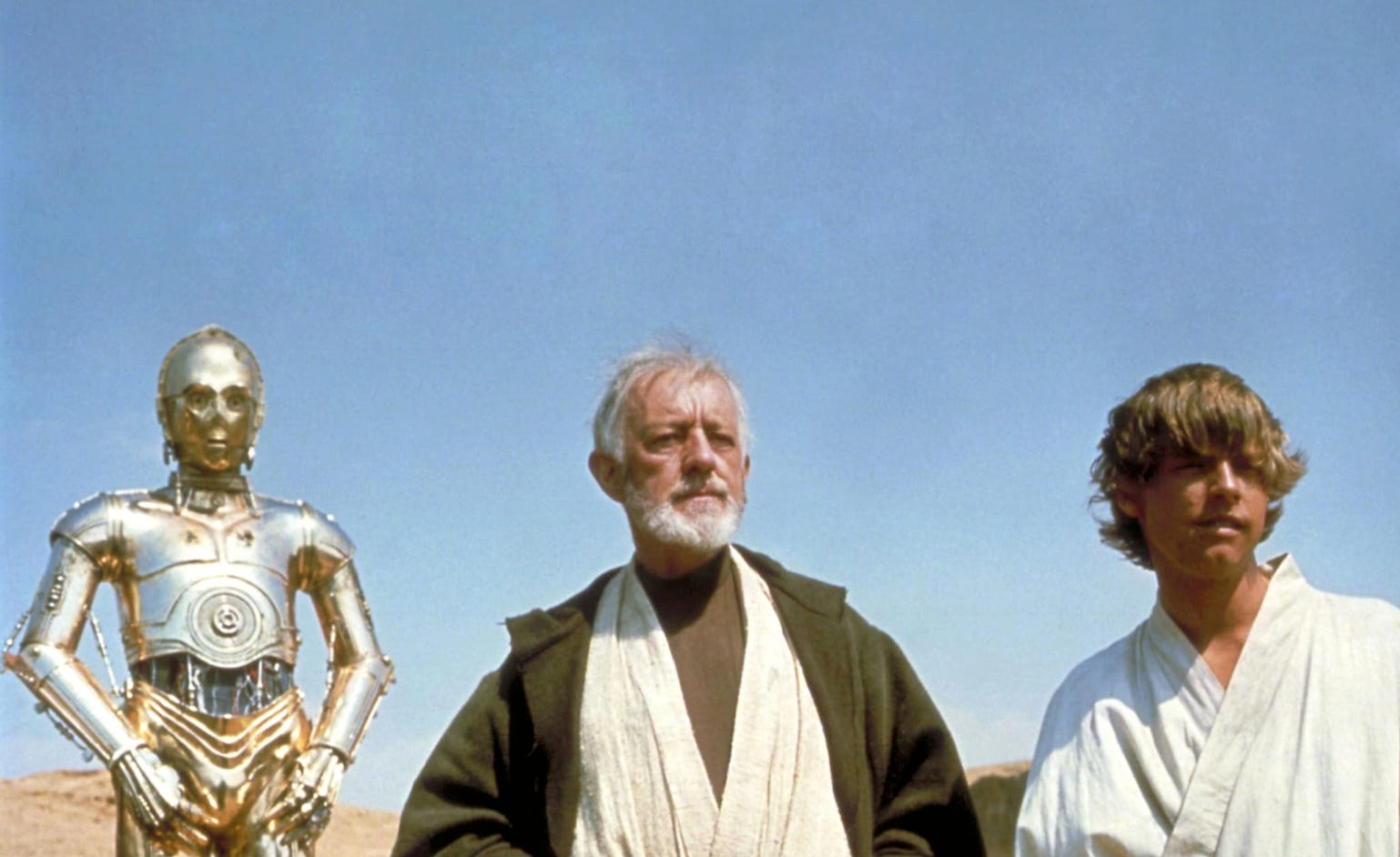
For the Persians, as for later empires, Russian, Ottoman, French or British, they gave the gift of order and civilisation to the people they ruled. When the world’s great empires fell, what followed was often massacre and exodus, yet in a post-imperial age Star Wars popularised the idea that empires are necessarily malign and those who rebel against the idea are plucky underdogs.
In real life most underdogs are morally ambiguous at best, and the track record of rebels in the post-war era is often one of appalling cruelty, yet this cult of the underdog inspired intellectual sympathy for gruesome anti-colonial murderers.
There are exceptions, of course, small plucky bands defying great empires. I remember being quite moved by the Lithuanian struggle for independence when I was 12 (yes, I was quite weird), but even the much-maligned Russians were not always obvious villains. The western-backed Afghan rebellion against Soviet rule, fought in the most Star Wars-like of human societies, was partly triggered by Russian attempts to enforce female education and to suppress cruel traditional practices, as they had in central Asia.
Perhaps Slovenia’s brief revolt against Yugoslavia, around the same time, might also fit the Star Wars moral dynamic, yet one didn’t need to look too deep into the Balkan horror to see that the story became morally ambiguous very quickly once Slovenia exited. As elsewhere, the underdogs committed fewer atrocities than the Serbs for the same reason, as P.J. O’Rourke put it, that a dog licks his own balls - because he can.
