

Good morning, and welcome to the Wrong Side of History. Thanks for subscribing.
‘No one but a blockhead ever wrote, except for money,’ Dr Johnson once said. I do like writing for its own sake, but I admit that I also do like money and would like more of it, and for my fellow writers too (he adds, insincerely). It’s for this reason I recently made the case for bundling substacks. (Arnold Kling may have been the first to suggest this.) I’m not sure that it would actually work, and the comments were mixed, but I’m all about maximising the customer experience.
The largest substacks in the US tend to be Democrat-aligned, although as I mentioned in this piece, centrists rather than radicals predominate. In contrast, six of the eight largest British substackers on the World Politics leaderboard are on the Right; it might be that conservative writers over here were quicker to adopt the platform, and that they will be outnumbered eventually. The reading public tends to be somewhat centre-left.
****
With Britain failing to join in Donald Trump’s war on Iran, I wrote about the ‘special relationship’, and I also looked at the importance of language on a shared culture. I produced another round-up of demoralising news reports from the UK and wrote about the meaning of replacing Churchill with badgers on our currency.
Niall Gooch suggested that the ‘growing reluctance of Official Britain to assert a concrete identity, grounded in history and the achievements of a particular people. Instead, we are told to embrace universal abstractions.’ Stella Tsantekidou made the case that it represents modern capitalist enshittification, a process where all beauty is eroded from public life, and I think there’s some truth in that.
Incidentally, I’m surprised by how much cash is still in circulation.
****
As part of my Ukraine homework, I recently read Ryszard Kapuscinski’s Imperium, which was published in 1993 and describes his travels around the former USSR soon after its collapse. The Polish writer sneaked into the disputed region of Nagorno-Karabakh disguised as a pilot, flew to Arctic mining towns where thousands had died in the construction of railways, travelled around the unforgiving deserts of central Asia, and stood on the ruins of a former Greek colony on the Black Sea coast in Abkhazia (also disputed). He met the first Tajik woman to receive a degree, in 1963, and describes how hundreds of women who had bared their faces were publicly executed by local men until the Soviets successfully enforced women’s rights on them. The former gulag towns were among the worst places, and he describes how in Yakutia:
Fiodorov speaks about terrible things. When criminals escaped, they would persuade one of the political prisoners – naïve and unsavvy – to go with them. This they did as insurance against death from hunger, which was always a threat. At a certain point they would kill the victim and divide up his flesh.
The good news is that you’ve escaped Stalin’s prison complex. The bad news is that you’re now a human larder.
The description of central Asia makes it sound irresistibly romantic:
Bukhara is brownish; It is the colour of clay baked in the sun. Samarkand is intensely blue; it is the colour of sky and water. Bukhara is commercial, noisy, concrete, and material; it is a city of merchandise and marketplaces; it is an enormous warehouse, a desert port, Asia’s belly. Samarkand is inspired, abstract, lofty, and beautiful; it is a city of concentration and reflection; it is a musical note and a painting; it is turned toward the stars. Erkin told me that one must look at Samarkand on a moonlit night, during a full moon. The ground remains dark; the walls and the towers catch all the light; the city starts to shimmer, then it floats upward, like a lantern.
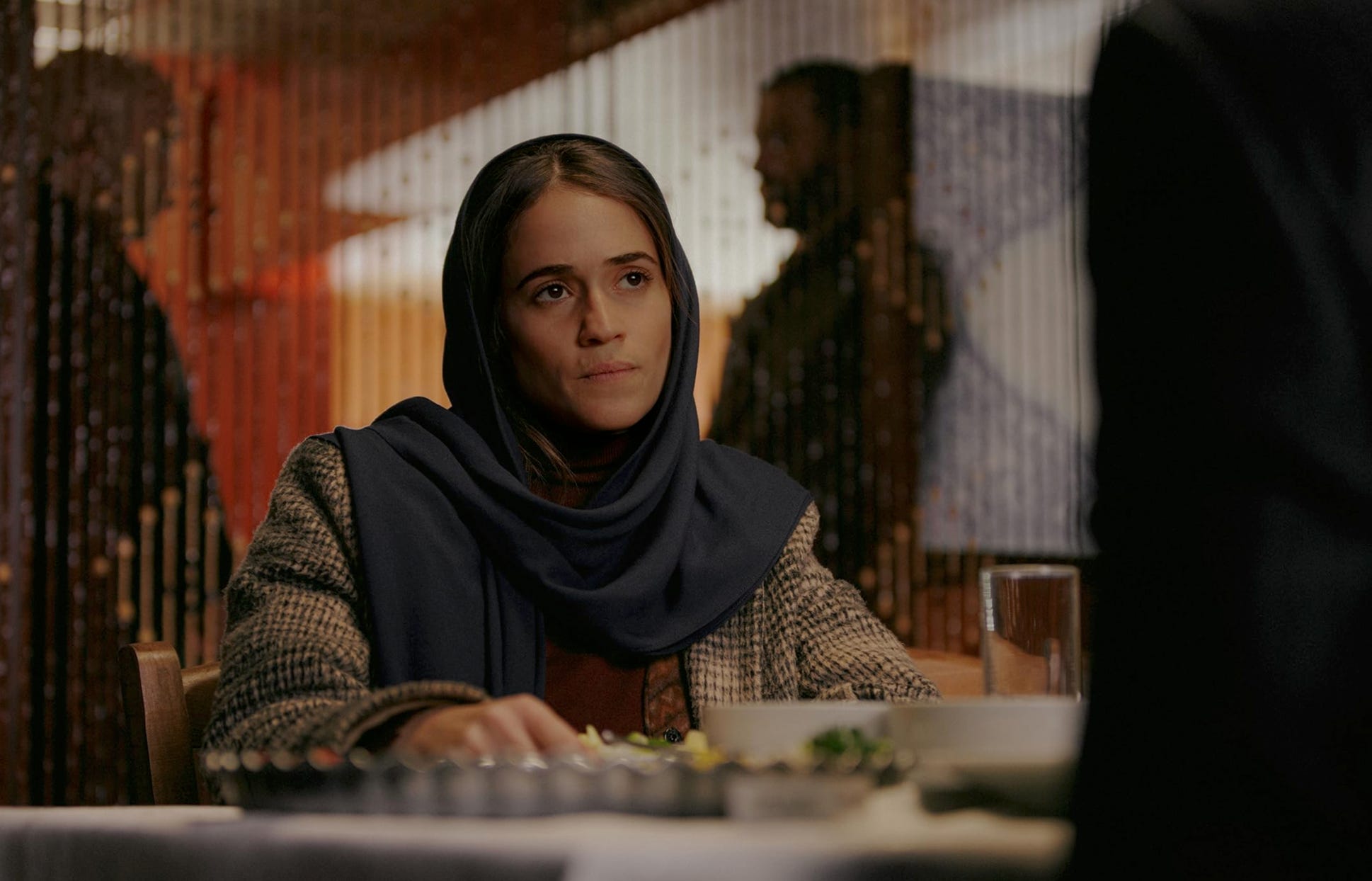
I’ve started watching the Israeli television series Tehran, after hearing it mentioned on The Rest is History – and it’s fascinating to realise how accurate some of it is. As this detailed account of the plot to kill Khamanei recounts.
When the highly trained, loyal bodyguards and drivers of senior Iranian officials came to work near Pasteur Street in Tehran — where Ayatollah Ali Khamenei was killed in an Israeli air strike on Saturday — the Israelis were watching.
Nearly all the traffic cameras in Tehran had been hacked for years, their images encrypted and transmitted to servers in Tel Aviv and southern Israel, according to two people familiar with the matter.
Long before the bombs fell, “we knew Tehran like we know Jerusalem”, said one current Israeli intelligence official. “And when you know [a place] as well as you know the street you grew up on, you notice a single thing that’s out of place.”
The fact that Israel can target anyone on the street in Tehran with drones is very sci-fi, both impressive and quite disturbing. Pity the poor obsessives with schizoid paranoia about the Zionists controlling the world, and what this is doing to their minds. They probably can read your thoughts now, mate!
Apparently Khamenei’s son and heir is in a coma following the airstrikes and has no idea he has become supreme leader. If things go well for the Iranian opposition, this could be the basis for a remake of Good Bye Lenin!
****
John Bew writes sagely about Britain’s decline.
In his 1975 book on political thought in the Atlantic world, JGA Pocock introduced the concept of a “Machiavellian moment” to describe a point in time in which a republic confronts its vulnerability and instability in the face of decline, decay, internal tumult or external threats. Importantly, he also described how the most effective responses to such moments came through a careful interrogation of the lessons of history and an appeal to the civic religion that binds us together in a shared fate.
So as one world collapses around us, what are the shape of things to come? Here are some hard truths. The current social contract – particularly around welfare, health and pensions – is unsustainable on current levels of growth. A domestic and international legal system that does not allow us to control our borders has lost legitimacy at home. We have the highest energy prices in the Western world, just at the moment when energy is vital to our ability to take advantage of relative national strengths in technology. And there is currently no route to higher defence spending – which is inevitable unless the nation is content to continue on a path towards greater insecurity and irrelevance – without major cuts elsewhere in the public spending stack.
****
Fred Sculthorp explores the huge drop in recruitment in the northeast of England, historically - along with Scotland - one of the most fertile grounds for the military. In Sunderland, where he visited, numbers had fallen by 40% over the past decade.
To help hit targets, there are plans to lift caps on Commonwealth soldiers from places like Ghana and Fiji. The desperation for squaddies is not unfounded. Last year, according to the local MP, the entire city of Sunderland, which boasts the largest Remembrance Day service outside of London, sent just ten people into the British Army.
“You used to have ‘Marra’, this word that means close friend,” says Bonallie. “That sort of talk, that’s all gone. There’s no one saying those words amongst the young’uns now.” He points to how visibly the military has receded from the city: recruiting stations have closed and the air show has fallen victim to the city’s push to be carbon neutral by 2040.
****
This is very interesting: Daisy Christodoulou on the democratisation of cheating.
I used to be a secondary English teacher, and remember one student submitting an essay that was copied and pasted from SparkNotes. What gave him away? He hadn’t bothered to delete the advert for teeth whitening that was on the webpage.
Another time, a student submitted an essay with a series of paragraphs in the middle that had been copied and pasted from Wikipedia, with just a couple of words tweaked.
In 2014 a university lecturer complained about students who overused the thesaurus function on their word processors and ended up with absurdities like ‘sinister buttocks’ replacing ‘left behind’.
Large Language Models have changed all that…
Institutions can cope with elite rule-breaking. When everyone breaks the rules, it causes a crisis. It is theoretically possible that there will be students graduating with good degrees this summer who have not written a word of their own during their entire degree course. What should universities do in response?
It’s a set of circumstances which is capable of destroying institutions. In the 16th century, the sale of papal indulgences was democratised by the printing press. This led to a focus on the theological first principles of sin and forgiveness, which upended religious institutions across Europe. Theologians ended up with their own validation problem: did indulgence certificates or purple vestments or beautiful buildings or polyphonic motets say something meaningful about the state of your immortal soul? Or were they just proxies whose link to reality had been broken – worse, proxies that not just failed to measure good behaviour, but actively rewarded bad behaviour?
Martin Luther’s use of the printing press to create viral pamphlets is often seen as the emblematic example of how technology sparked the Reformation. But Luther’s pamphlets were a reaction to an earlier and equally innovative use of the printing press: the indulgence certificate template. This was a printable pro forma that dramatically expanded access to indulgences and enabled Luther’s antagonist, Johann Tetzel, to raise money for the grand building project of St Peter’s Basilica.
So many system failures, including those afflicting welfare and asylum, are down to far larger numbers of people being able to game the system thanks to freely available communication technology.
****
Sally Rooney’s comments in this Brendan O’Neill piece were telling.
‘These people who long to crush our valiant efforts to save Gaza are the “same forces” who are driving “catastrophic climate change” and “destroying the very basis of our shared survival”. “By standing in solidarity with Palestine, we are learning how to fight for life on earth”, she said.
‘She told her fawning audience that Palestine solidarity is the great cause of our time because: “What else… can give us a reason to go on, to fend off despair, to live with ourselves, and to fight for our future?” Standing with Palestine is the only thing that can “make our lives endurable”, she said.
This is what Hadley Freeman called the ‘omnicause’, and it also points to a real underlying driver behind much of the activism we’ve seen in recent years – a search for meaning. This is obviously true of much political agitation, of left and right - a desire to fight for some noble and existential cause against overwhelming evil. It’s why the rapid decline in American churchgoing has led to a sharp increase in political extremism. Most great conflicts and not morally clear-cut, and there are no easy solutions as such; very few of these activists have actually thought through what Palestinian ‘freedom’ might entail.
As has been pointed out, this is a total vindication of Francis Fukuyama’s The End of History. In his book, often misunderstood, he warned that among the threats facing western democracies would be a lack of meaning driving people towards zero-sum prestige competitions, especially through thymos, broadly defined as a ‘desire for recognition’.
Men seek not just material comfort, but respect or recognition, and they believe that they are worthy of respect because they possess a certain value or dignity. A psychology, or a political science, that did not take into account man’s desire for recognition, and his infrequent but very pronounced willingness to act at times contrary to even the strongest natural instinct, would misunderstand something very important about human behaviour.
****
Joseph Heath on why Americans react badly to do-gooders.
America is sometimes described as the “land of liberty,” and yet a great deal of the “liberty” in question arises, not from a principled commitment to individual freedom as a political value, but merely from heightened tolerance for anti-social behaviour. Based on the belief that their institutions are capable of constraining a race of devils, they proceed to act like devils. I’ve always thought the most emblematic example of this is “rolling coal,” where the drivers of diesel trucks intentionally bypass the anti-pollution devices on their emissions system, in order to emit gigantic clouds of black exhaust upon demand. That way, when you pass a Prius (or perhaps now any EV), you can emit a cloud of pollution, helping to undo any beneficial effects of the other driver’s environmentally conscious driving habits.
The best way to understand the Trump administration is to see the major actors as rolling coal at a national level (their climate change policy – subsidizing coal, while blocking renewable energy projects – self-evidently so). Trump channels this ethos more clearly and profoundly than any other American politician. Whether it’s wearing a blue suit to the Pope’s funeral, staring straight at an eclipse, taking his mask off during Covid, or assassinating foreign leaders, the same underlying “fuck you” impulse is at work. For a lot of Americans, telling them that they are not allowed to do something just really, really makes them want to do it.
****
What demographic collapse looks like (via subscriber Akiyama)
In 1960, Yubari, a former coal-mining city on Japan’s northern island of Hokkaido, had roughly 110,000 residents. Today, fewer than 7,000 remain. The share of those over 65 is 54%. The local train stopped running in 2019. Seven elementary schools and four junior high schools have been consolidated into just two buildings. Public swimming pools have closed. Parks are not maintained. Even the public toilets at the train station were shut down to save money.
Abandoned houses are photogenic. It’s the first image that comes to mind when you picture a shrinking city. But as the population declines, ever fewer people live in the same housing stock and water consumption declines. The water sits in oversized pipes. It stagnates and chlorine dissipates. Bacteria move in, creating health risks. You can tear down an abandoned house in a week. But you cannot easily downsize a city’s pipe network. The infrastructure is buried under streets and buildings. The cost of ripping it out and replacing it with smaller pipes would bankrupt a city that is already bleeding residents and tax revenue. As the population shrinks, problems like this become ubiquitous.
****
Ruxandra Teslo on the consolation of equality
There are many other ways, in my mind, in which the disenchanted world makes things hard for the “losers” of this world. One obvious loss is eschatological. In the older, enchanted imagination, earthly failure did not exhaust a life’s meaning. The poor, the humiliated, the obscure could inhabit a story whose resolution lay beyond mortal time. Salvation, not success, was the final measure. An inversion of status, even, was heavily hinted at: “Blessed are the poor in spirit, for theirs is the kingdom of heaven.”
Michael Young warned that a system of ‘meritocracy’ would be far more psychological brutal towards the poor, and we’re still working out ways to resolve the fact that he was right.
****
Jeremy Jennings on ‘the West’.
Nonetheless, according to Varouxakis, it was the French philosopher Auguste Comte, writing in mid-century, who was the first to develop a comprehensive concept of the West, ‘both as a supranational cultural identity and as a proposed political entity’. Comte is now little, if ever, read, but his ideas attracted wide attention during his lifetime, attracting devoted followers (including in Britain). For Comte, the use of the term ‘l’Occident’ rather than Europe was a conscious decision and one integral to the introduction of the broad-ranging institutional reforms he was proposing. In geographical terms, Comte’s ‘West’ included most of the peoples of western Europe plus the peoples descended from them in the Americas and Australasia. Crucially, this new world order was intended to abolish European empires and replace them with an altruistic and peaceful ‘Western Republic’.
The tragedy underlying the increasing chasm between the mainstream and the populists in Europe is that both believe that they are fighting to save ‘the West’.
****
Alice Evans on Oxford, medieval England’s equivalent to Detroit or Baltimore.
London and York’s estimated rates of homicide were 20-30 per 100,000 inhabitants - on par with contemporary Mexico. By contrast, Oxford’s was 90-100 per 100,000 inhabitants. Though for context, it was only a small town of 6,000 souls, so that worked out as 5 or 6 killings a year.
Over 90% of victims were male. Most killings were executed by groups. As was common across pre-modern Europe, attacks sometimes involves disfiguring someone’s face, so as to destroy their honour.
Oxford students were indeed incredibly violent.
In brief
People born after the late 1970s are not becoming more conservative as they age, but the opposite. This was the thesis of my book Small Men on the Wrong Side of History, something I came to notice among contemporaries as I approached middle age. What people used to mean by ‘conservative’ was that they were ageing into the values of their society. That still happens, it’s just that the dominant values are post-revolutionary and ‘countercultural’. When young people violate those values by breaking anti-sexism or anti-racism taboos, the middle aged react in a way familiar to 1950s maiden aunts faced with gyrating rock and roll stars.
An amusing election in France, reflecting the great realignment.
‘Communities that lost more soldiers became less likely to produce patents in the decades after the war.’ Interesting new paper measures the tragedy of 1914-1918 in a new way.
La Marseilles sung on a nuclear submarine. Is anything more rousing?
American religious revival is a myth.
English language music is losing its stranglehold on the charts, according to new data from music streaming giant Spotify. Interesting, and counter-intuitive.
A clip from Ross Kemp’s documentary on incels where the host, to his credit, is open to the idea that the premise of the documentary is a bit of a myth.
Four newborns were christened ‘Bonnie Blue’ in 2024. I think they won’t thank their parents for that.
‘While the main reason for France’s low TFR was secularization predating the revolution, inheritance laws reduced the TFR further.’ If true, this must have been one of the most consequential laws of modern times.
Half of young voters in Britain will vote Green. I guess the brilliant Labour wheeze to give votes to 16-year-olds has really paid off then. Oh well.
Thanks for subscribing, and have a great weekend.
"As has been pointed out, this is a total vindication of Francis Fukuyama’s The End of History. In his book, often misunderstood, he warned that among the threats facing western democracies would be a lack of meaning driving people towards zero-sum prestige competitions, especially through thymos, broadly defined as a ‘desire for recognition"
Another remarkably prophetic quote (particularly in the context of COVID-19) was that elites may turn against the ideals of liberal democracy out of simple boredom and the need to struggle against something:
"But supposing the world has become “filled up”, so to speak, with liberal democracies, such as there exist no tyranny and oppression worthy of the name against which to struggle? Experience suggests that if men cannot struggle on behalf of a just cause because that just cause was victorious in an earlier generation, then they will struggle against the just cause. They will struggle for the sake of struggle. They will struggle, in other words, out of a certain boredom: for they cannot imagine living in a world without struggle. And if the greater part of the world in which they live is characterized by peaceful and prosperous liberal democracy, then they will struggle against that peace and prosperity, and against democracy."
https://www.goodreads.com/quotes/10161514-but-supposing-the-world-has-become-filled-up-so-tou
I couldn’t believe that even in the UK could a community be so insane as to cancel an air show due to climate concerns. I had to see it for myself and there it was:
https://www.sunderlandecho.com/news/people/update-council-confirms-no-plans-to-run-sunderland-airshow-in-the-future-as-2023-event-cancelled-citing-global-climate-emergency-as-key-factor-3883077#