

On June 7 a new milestone will be reached in Ukraine, the point at which the conflict will have lasted longer than the First World War. The similarities are stark and bleak; an initial push by the aggressor is stopped just outside the capital, leading to years of stalemate, a form of trench warfare made all the more hellish by the development of drone technology. Forward moving troops now face a one in three chance of death, and Politico this week reported that Russia’s recent assault resulted in 6,000 casualties in four days, meat grinder stats reminiscent of Verdun. These numbers are all the more shocking when one considers the demography of the two nations fighting: while the median German soldier in 1916 had four siblings, the median Russian today has none. This is a war of only sons.
It is this analogy which has often made me unsure of the ethics of Britain funding the war, if the end result was always going to be the same. Perhaps that’s where we’ll end up, but the blame for those deaths lies squarely with the country, and the man, who launched the war of aggression. Besides which, Ukraine has consistently proved wrong the analysts who predicted that they would fold or be worn down; their military tech sector has become a world leader, they’ve made considerable gains these past few weeks, and the Russians are suffering battlefield loses which they can’t replace. The Ukrainians have responded to invasion with a level of courage and determination many thought impossible, a national spirit that inevitably brings to mind heroic narratives from our own past.
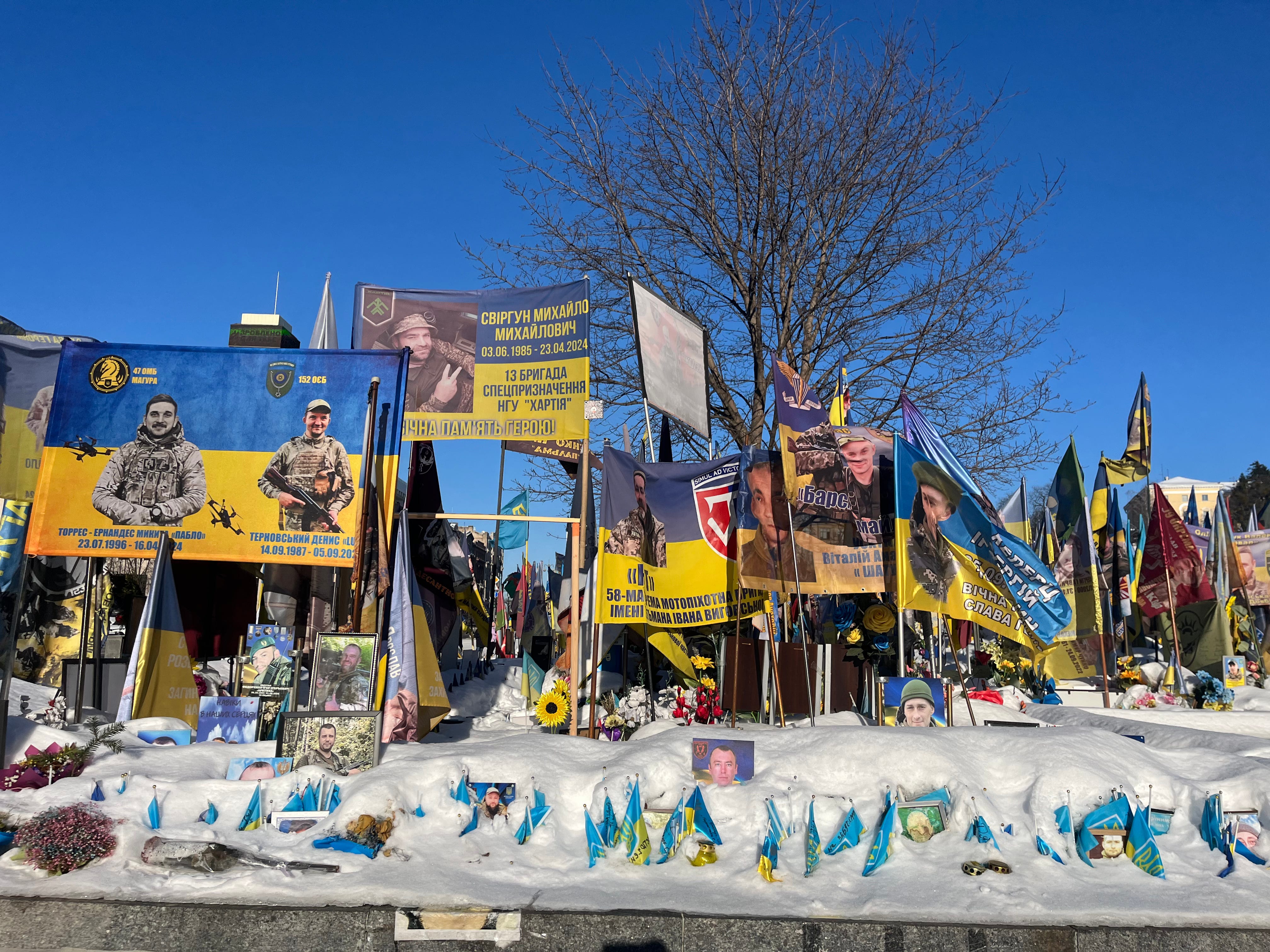
I recently visited Kyiv, and felt a deep sense of admiration and awe for the people. I don’t pretend that I came as an impartial observer; I wanted them to win from the start, and I still do.
As the conflict has dragged on, attention has waned, now competing in the attention economy with the war in Gaza. Judging by the number of flags outside houses, far more people care about Palestine. They don’t just fly the Palestinian flag everywhere - they vote in MPs who promise to speak for Palestine, as if someone in Birmingham or Blackburn could make any difference. Even London ignores what people in Blackburn think, never mind Jerusalem.
I admit that I’m not hugely invested in the Gaza War, chiefly because it’s too morally ambiguous. The side which is militarily stronger, and therefore capable of far greater violence, places more value on human life. I imagine that even the dimmest partisans would concede that if you’re an enemy civilian it would be preferable to be captured by the IDF than by Hamas - maybe not publicly, of course.
That conflict is also tied up with the disruptive population transfers that followed imperial collapse, rather than the simple colonial narrative many claim it to be. Some people see it through this lens because one side has a political and military elite dominated by people of European descent (the Poles won the Six-Day War, as people in that country used to boast) and because it has the backing of the world’s foremost military power. In reality, it’s far messier.
Ukraine’s struggle is closer to the righteous Star Wars fantasy of the modern western imagination, with a band of rebels fighting off a ruthless empire, a modern myth that fits with a Ukrainian identity tied up with the Cossack history of unruly horsemen: ‘May the force be with you’, as the air raid app announces each time the coast is clear. (Having said that, Ukrainians seem to much prefer the Lord of the Rings as a heroic myth.)
In Ukraine, the stronger, more violent side is clearly less ethical. You do not want to be captured by the Russians. You do not want to be their cannon fodder. The Ukrainians do not go into enemy towns and shoot civilians, as the Russians did in Bucha.
Nothing is entirely black and white, and there are analogies with Britain which might make the Russian case more understandable. Crimea should certainly have remained part of Russia; yes, I’m sure the CIA were involved in lots of things; and yes, NATO set a precedent by forcibly cutting off a region off Serbia, even if the Serbs were behaving rather badly.
Ukraine’s fight is also important to Europe’s security in a way that conflict in the Middle East is not, at least not directly. It’s unfortunate that comparisons with the 1930s have been overdone to boredom, because we do now face an aggressor in Europe, one riled by humiliation and defeat and with claims to co-ethnics in neighbouring countries. Russia has proved itself willing to act violently across Europe, and has attacked British soil. Ukrainian collapse in 2022 would have certainly made our continent more vulnerable, for which we owe them a debt of gratitude. As Kaja Kallas, then prime minister of Estonia, put it at the time: ‘what is our neighbour’s problem today will be our problem tomorrow. We are in danger when our neighbour’s house is on fire’.
There is another reason to care more about Ukraine than the Holy Land. Although the Palestinian cause gives meaning to many westerners, none of them have any realistic solution; there is no ‘victory’ for the current Palestinian administration in Gaza that offers a better future. Anyone who campaigns for a ‘democratic’ Palestine is condemning the people there to life under a little Afghanistan by the shores of the Mediterranean, as Salman Rushdie pointed out. (Some sort of emirates modelled on the UAE seems like a much better idea). Ukraine does have a path, and there is a reasonable prospect that it might one day emulate Poland, even if it faces awesome challenges.
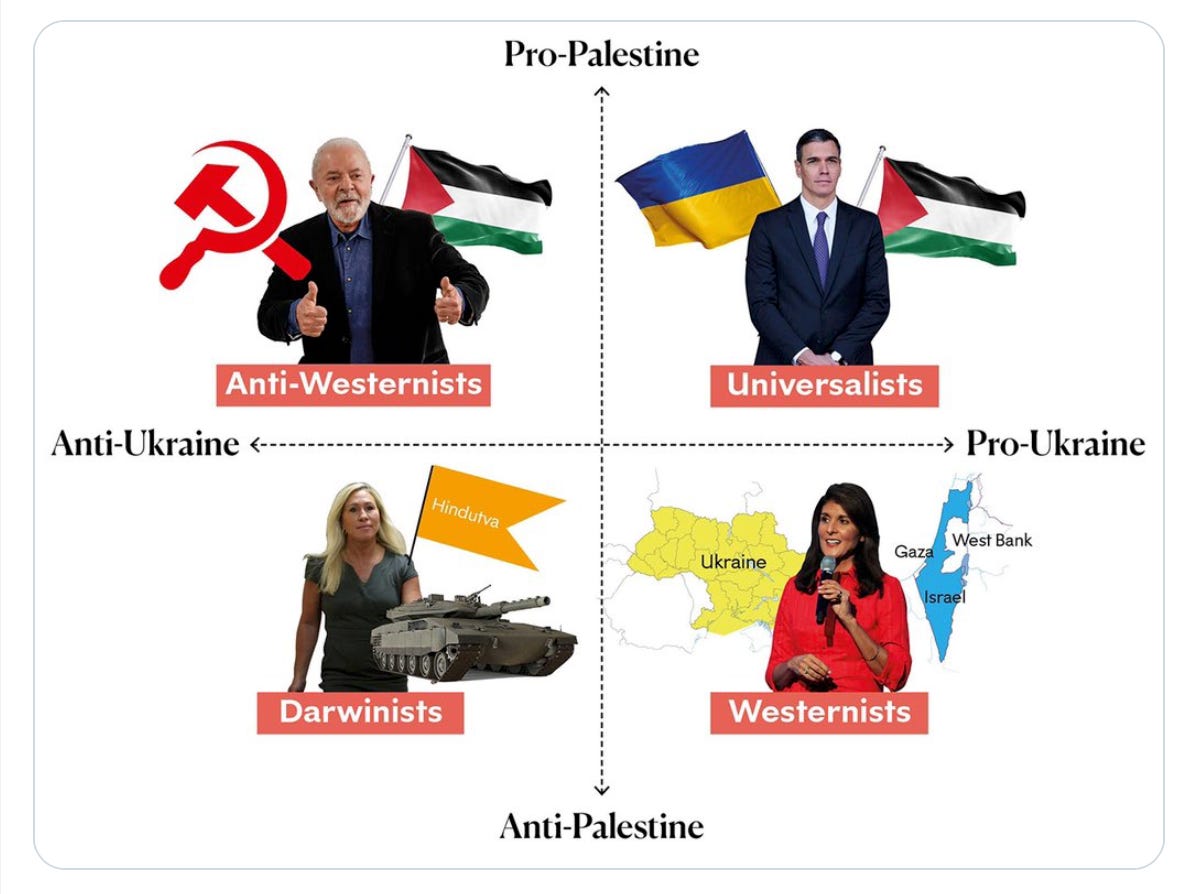
Support for Palestine and Israel has come to correlate quite strongly with the Left and Right in Britain, while the Ukraine/Russia split tends to be more one of centre v extremes. Sean Penn swerved the Oscar ceremony this year to hang out with Volodymyr Zelensky; Robert De Niro recently gave a talk of encouragement to the Ukrainians. I wouldn’t normally agree with the world’s acting community on political issues, and in the polarised political climate of the US it is natural that people feel suspicion about whatever their opponents support. Yet Republicans are only somewhat less hostile to the Russian regime than Democrats are, even if it’s notable how people follow partisan cues from their leader. In Britain, support for Ukraine is almost universal, and even Reform voters – the least anti-Russian- tend to favour continuing aid to Ukraine.
I like to think of the Ukraine question as a bit like the midwit meme:
Halfwit with an IQ of 90 who knows nothing about geopolitics except what he learned from James Bond movies and Rocky IV: Russia is bad.
Midwit with an IQ of 105 whose brain has been melted by social media: NATO expansion, CIA-backed colour revolutions, Russia a based Christian civilisation.
Genius with IQ of 130: Russia is bad.
Obviously, this fantasy flatters me, as the meme is always intended to. Maybe ‘slava Ukraini’ is actually the midwit position - it was certainly the ‘current thing’ when the invasion started.
Active support for Russia among the Right is actually quite a fringe affair, although heavily promoted by influential figures like Tucker Carlson, most notably with his interview with Vladimir Putin in which the Russian president went into a 1,000-year monologue on how Borislav the Bold’s victory in 1280 justified his invasion of a neighbour in the 21st century.
In reality, the ‘trad Russia’ idea, at least based on raw statistics, is totally wrong, and its hostile neighbour Poland is far more conservative by any real measure. There is certainly something deeply attractive and fascinating about Russia and its culture, especially its literature, although I always wonder if the complexity of the country’s psychology is overplayed. As Dominic Sandbrook once said, everyone talks about the ‘Russian soul’, but they never talk about the ‘Belgian soul’ for some reason.
Perhaps some Americans have a natural affinity for Russia as another great continental landmass of extreme weather and crazed religious mystics. In contrast, even before the Salisbury poisoning, there has long been a deep and pronounced history of Russophobia among the British, sometimes a bit hysterical and overblown, and the feeling was often mutual. The British were always up to some trick, cunningly manipulating subject peoples to do their dirty work, puppet masters of the world, a view the Russians still retain, much as we sadly don’t deserve such an accolade anymore.
It certainly represents something of a return to historical norm for my own family. My English grandmother’s people were old Liberals, of non-conformist origin, supporters of free markets and religious tolerance, and like many of their ilk regarded the Tsar of Russia as the supreme tyrant. (The Turks were also beastly, but at least they were charming.)
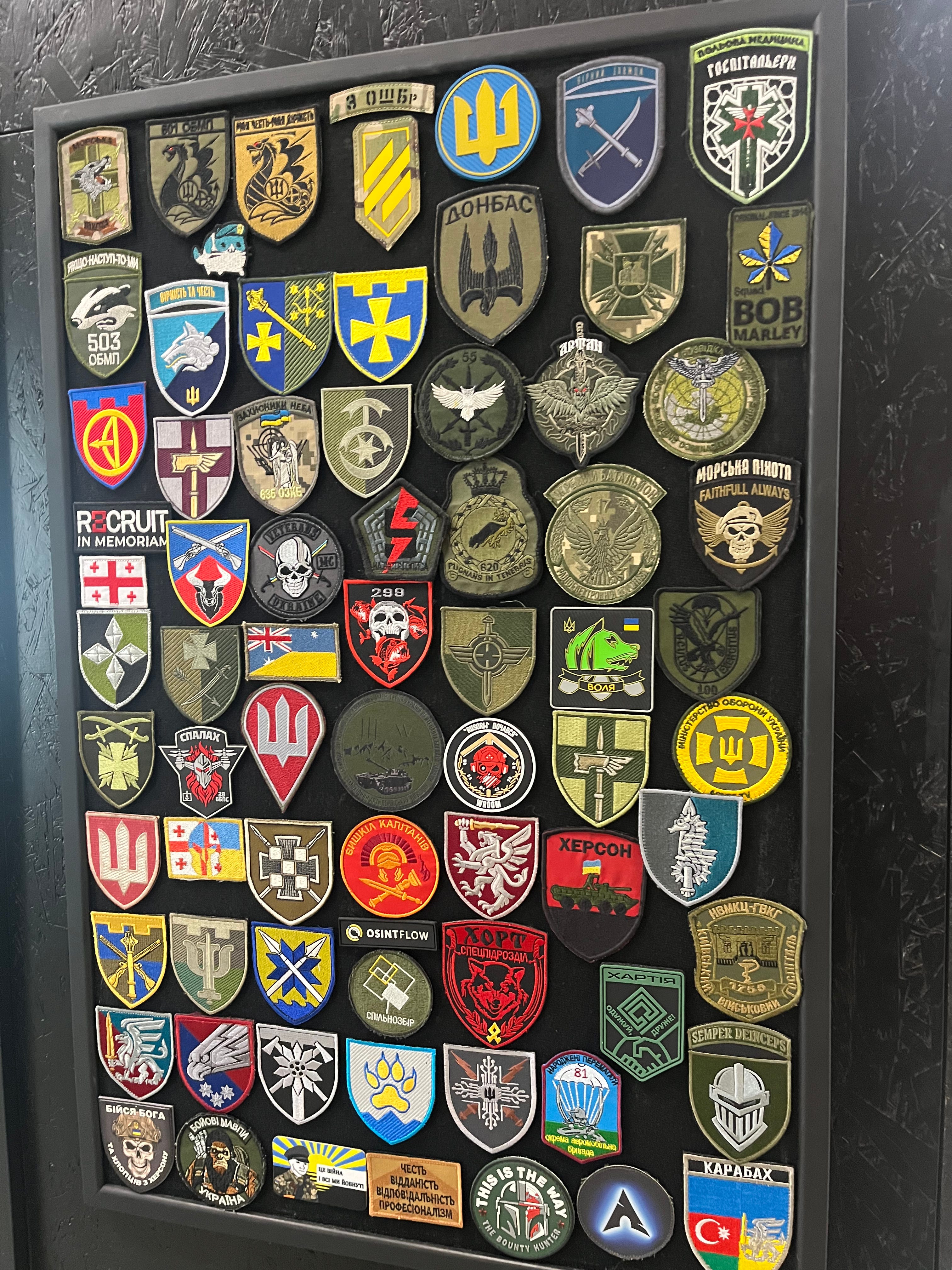
Anglo-Russian tension had been building for some time before the invasion, and during the summer of Covid, when Putin unveiled a new cathedral dedicated to the country’s armed forces, complete with material sculpted from German tanks, a video produced alongside music from Warhammer gave me a strange chill about what the 2020s heralded. This was not Christianity, but paganism from the Steppes, something that felt very threatening to my European ‘soul’.
During the visit to the Ukrainian capital I walked around the old citadel from where the people of Kievan Rus’ would have watched with terror the approaching Mongol hordes in 1240, and I couldn’t help but feel the continuity of history. That catastrophe, to many Ukrainians, is seen as a pivotal moment when east Slavic civilisation went two different ways: their nation remained part of Europe, even if its Orthodox faith cut it off to some degree, while to the east a new Slavic-Tartar entity arose in Muscovy. National stories tend to be simplistic, but they’re truthful enough to be compelling.
Today Ukraine wants to be part of Europe, not subject to a Eurasian empire, and I find it hard to understand why any westerners would not support them. When the Mongols invaded Europe, would you have supported the Kievans or would the Great Khan drinking from an enemy’s skull seem more ‘based’?
I brought with me two excellent histories on my travels, one being Serhii Plokhy’s The Russo-Ukrainian War. He described how Putin justified his actions by talking of a ‘genocide’ committed by ‘the forces that staged the coup in Ukraine in 2014… against the millions of inhabitants of the Donbas.’
Putin’s argument was that ‘the leading NATO countries are supporting the far-right nationalists and neo-Nazis in Ukraine, those who will never forgive the people of the Crimea and Sevastopol for freely making a choice to reunite with Russia.’ He compared the Euromaidan protesters with the ‘punitive units of Ukrainian nationalists and Hitler’s accomplices’, and talked of ‘denazification’.
This argument has often been used by Russian sympathisers, and was certainly not helped by the naive Canadian politicians who invited an anti-Soviet veteran of the Second World War to speak in the House of Commons. (Gosh, who was it fighting the Soviets on the Eastern Front again? Should we look that up?)
The first half of the 20th century in Ukraine was hell on earth, a period of pogroms and massacres, many carried out by Ukrainian militias, against not just Jews but also Poles and Germans too. If the country was a hotbed of anti-Semitism in this period, this was due not just to its position in the ‘bloodlands’ between competing empires but a quasi-feudal system characterised by ethnic niches: the Poles as landlords, the Ukrainians their peasants, and Jews as middle-men and rent collectors, a set-up almost guaranteed to fuel toxic hatred.
It is true that many of Ukraine’s most zealous fighters at the start of the Donbas conflict were ultra-nationalists; the Azov Brigade’s insignia certainly looks a bit ‘reminiscent’ to western eyes. Yet, as Yaroslav Hrytsak argued in Ukraine: Forging of a Nation, it is not the 20th century anymore and the Second World War no longer acts as a useful guide to current events.
He wrote how during the 1970s and 80s many Jewish and Ukrainian dissidents formed friendships in Soviet camps and prisons, both now seen as enemies of the state, and ‘the final chord in their convergence’ was the Euromaidan, which saw the formation of a new group: the Zhidobanderovtsi, a satirical name based on the Russian slur for Jews as Zhids and the derogatory term for Ukrainian nationalists, Banderites, synonym for ‘Nazi’. Hrytsak cited a 2018 poll which found Ukrainians to be the least anti-Semitic of post-communist countries; for a few months in 2019, it even had a Jewish president and prime minister. This is not typical of countries in desperate need of ‘denazification’.
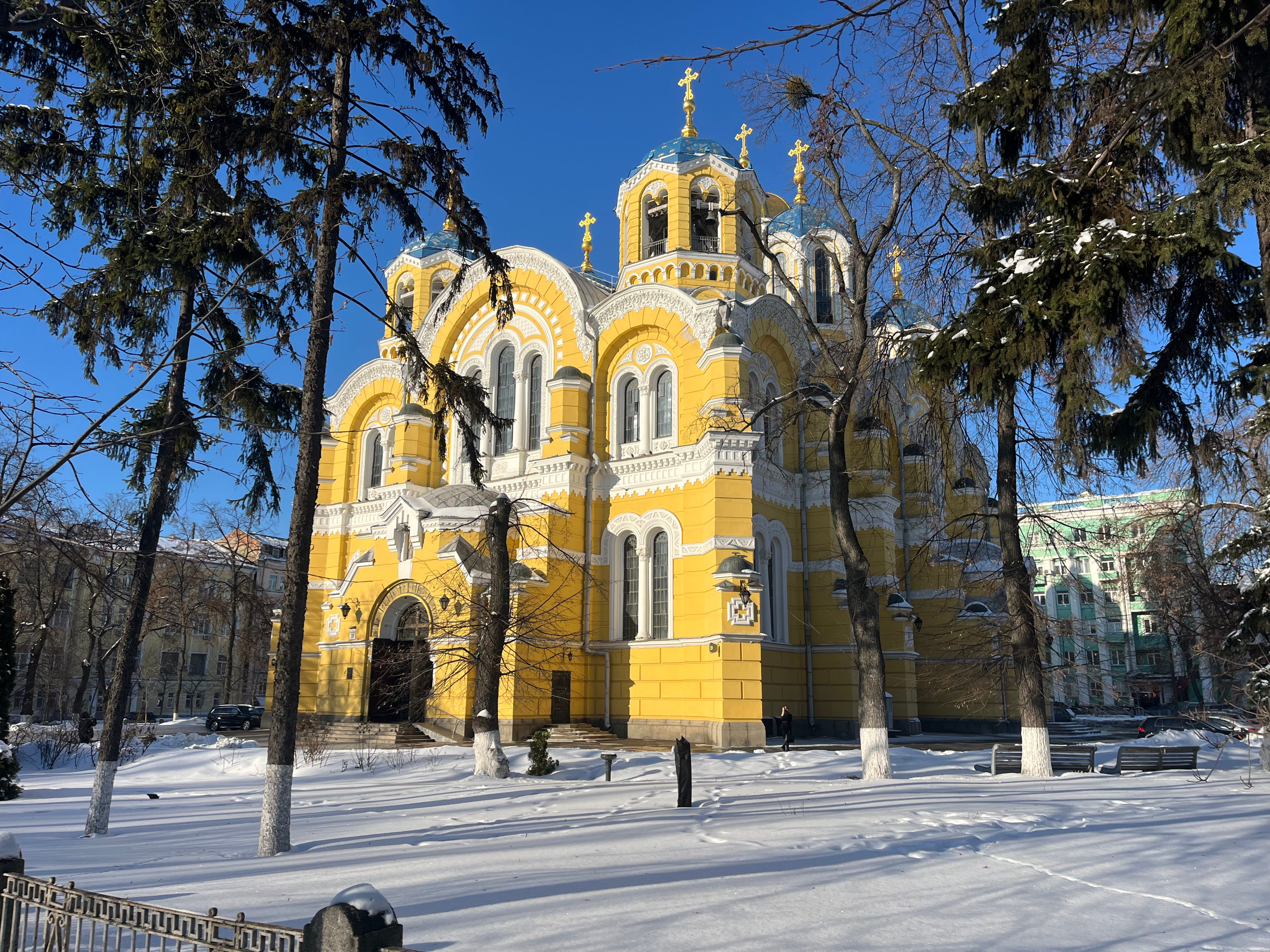
While many of the early Ukrainian volunteers certainly weren’t inspired by a universalist soft-left vision of the West, apparently even the Azov Brigade has become more moderate, partly because many of its more zealous fighters have been killed. I’m sure it’s all just non-stop gender studies seminars at brigade headquarters these days.
People who claim that their opponents are ‘Nazis’ are not always fighting the good fight, in Ukraine or elsewhere. Plokhy writes how before the war the US had warned that Russian intelligence were compiling lists of people ‘to be killed or sent to camps’. These included ‘Russian and Belarusian dissidents in exile in Ukraine, journalists and anti-corruption activists, and vulnerable populations such as religious and ethnic minorities and LGBTQI+ persons’.
When the Russian troops arrived, they had been told they would be welcomed as liberators, and when they weren’t, many – ill-equipped, hungry and scared – responded with violence. Several hundred were killed in Bucha, and among the many other atrocities, Mariupol theatre was struck despite a huge sign reading ‘children’ painted on the plaza outside.
Why did the Ukrainians resist? Because they saw their historical destiny as being part of Europe, and because they believed in the western idea of a nation state. Indeed, the conflict between Ukraine and Russia might be seen as a battle between nations and empires.
Hrytsak described how Putin was influenced by the ‘Eurasianism’ ideology rooted in Russian intellectuals exiled after the Bolshevik Revolution: ‘Eurasianism sought to re-create the former Russian imperial and now post-Soviet space on the basis of Russia’s imperial heritage, Russian culture, and Orthodox Christianity, which might integrate the non-Russian parts of the former empire into the present-day Russian Federation.’
Many Ukrainians saw things differently, and indeed had already begun to revaluate their own history as characterised by the ‘wrong turn’. He quoted the Ukrainian poet and dissident Vasyl Stus, who wrote that ‘I believe that the first mistake was the adoption of the Byzantine-Moscow rite which brought us, the easternmost part of the West, into the East. Our individualistic Western spirit, stamped by despotic Byzantine Orthodoxy, could not free itself from this duality of spirit, a duality that eventually became hypocrisy.’
Stus admired Poland, and predicted long before the fall of the Iron Curtain that the country would lead the way in bringing down communism, because ‘there is no other nation in the totalitarian communist world that has so passionately defended its human and national rights’. He wondered whether Ukraine would ‘follow the Polish example’ and, in Hrytask’s words, ‘he believed that Ukrainians were psychologically closer to Poles, but they lacked the most important thing: national pride.’
Despite the bitter history between Poland and Ukraine, intellectuals and politicians from the neighbouring countries made concerned efforts at reconciliation in the late 20th century, and when Ukraine declared independence in 1991 Poland beat the Canadians to recognise it first. In contrast, relations with Russia only went downhill as the two republic walked different paths.
Ukraine suffered immensely from the post-Soviet fall-out, with economic contraction worse even than that of Russia, as well as runaway inflation. It was mired in corruption and deeply divided along its east-west axis, politically, culturally and linguistically. As Stus had lamented, it suffered most of all from a weak national identity.
That changed with the 2013-4 Euromaidan protest, a popular uprising against a president who was both deeply corrupt and intent on drawing the country closer to Russia – the two things were usually linked. Most Ukrainians, and not exclusively those in the west, saw their future in Europe, and with the Russian annexation of Crimea and the Donbas these regional divisions didn’t grow, as the Kremlin hoped, but eased. Putin had written himself into the Ukrainian national story, though not in the way that he’d hoped - but then, of course, there is no script in wartime.
Hrytsak argued that ‘Ukraine’s Euromaidan was one of the few successful popular protests in the 2010s’, attributing this to the ‘quest for national identity’. He wrote how ‘revolutions that have a national and anti-global dimension are more likely to be successful. Euromaidan participants fought not only against Yanukovych but also against Putin and Russia. Anne Applebaum has written that democracy wins when citizens feel a deep sense of belonging to their own language, literature and history. The opposite is also true: regions without nationalism tend to be corrupt, anarchic, full of rent-a-mobs and mercenaries, like Donbas.’
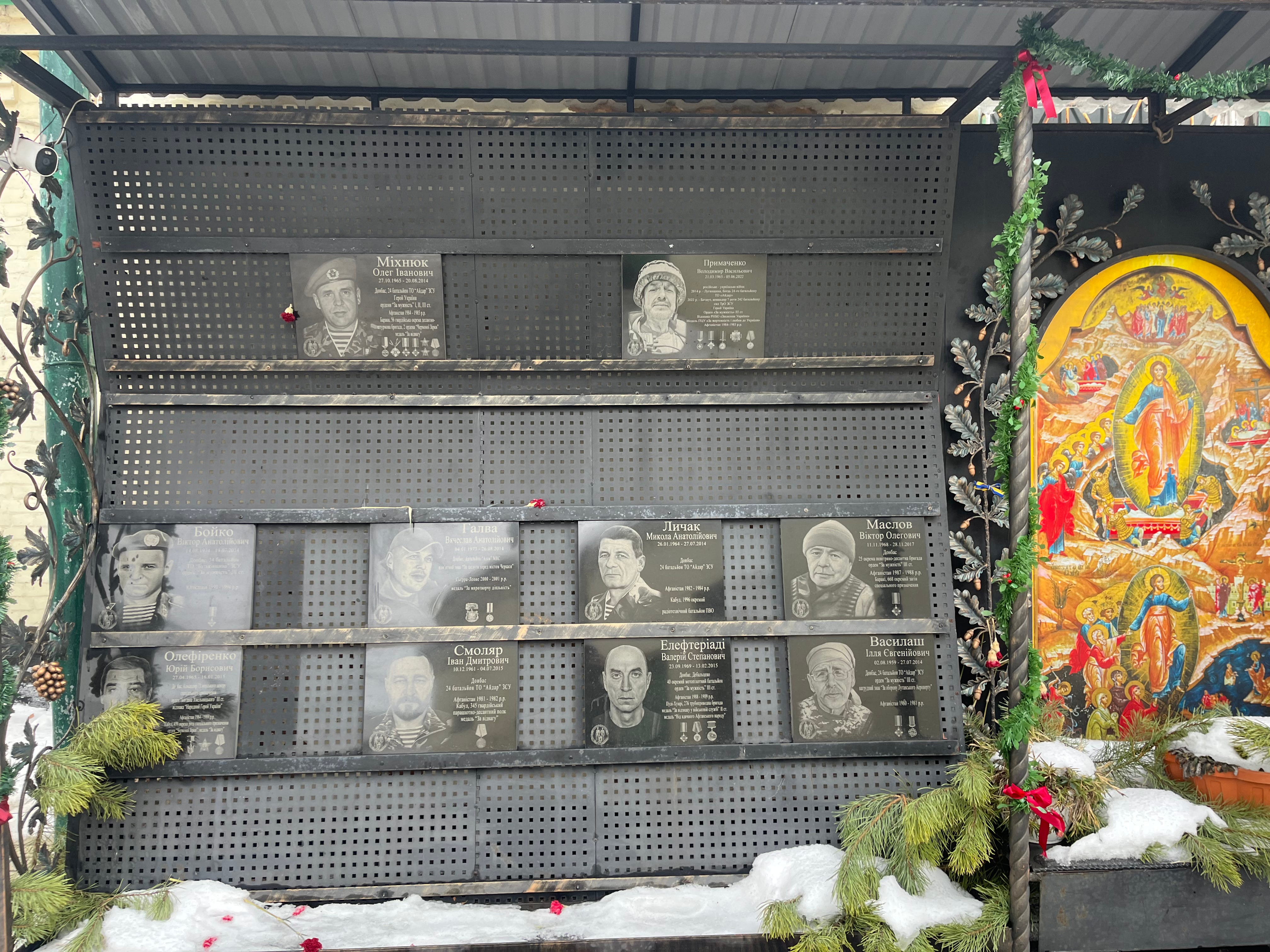
This national spirit has been demonstrated by Volodymyr Zelensky’s ‘without you’ speech, by the sight of victorious Ukrainian soldiers singing together their national hymn, and by their tributes to Winston Churchill, the embodiment of national defiance.
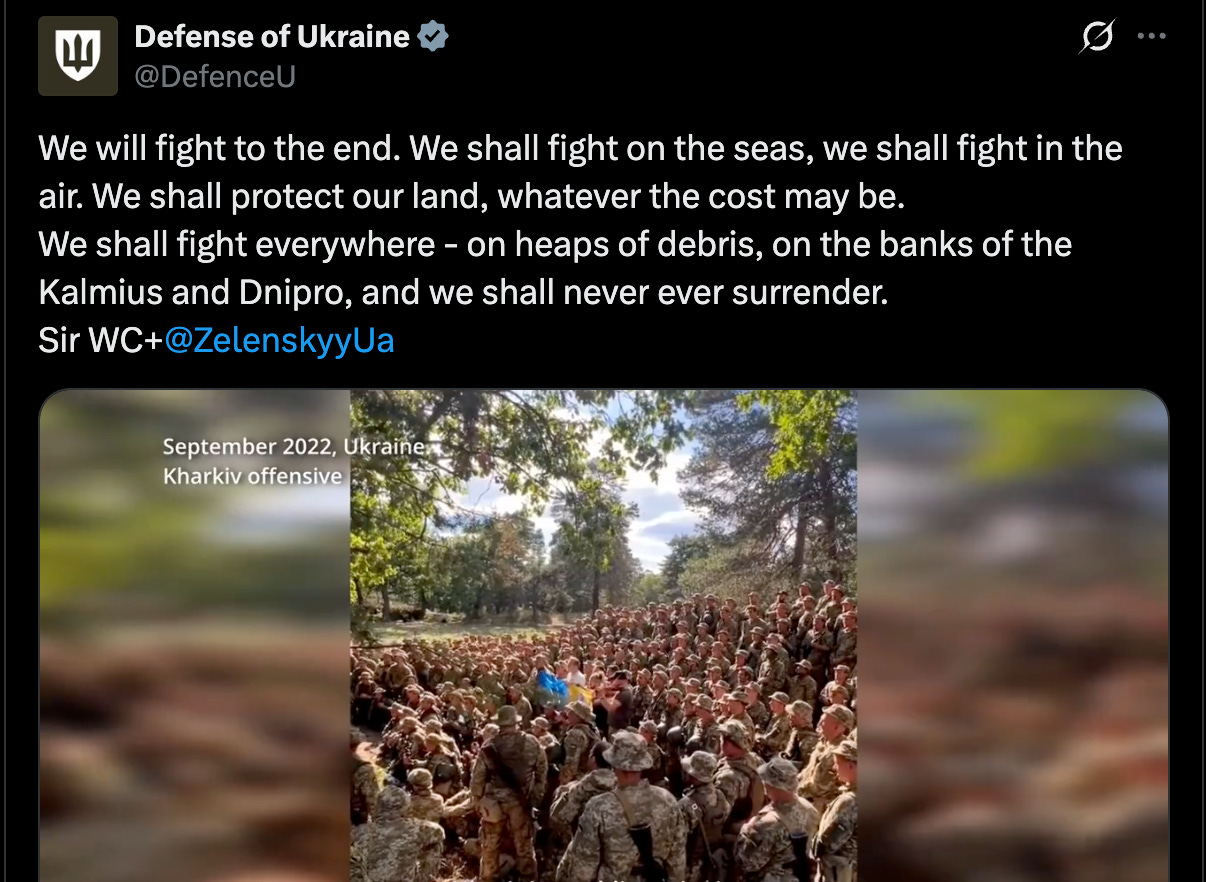
While nationalism can inspire terrible inhumanity, I believe liberal nationalism to be a force for good - it gives men courage to fight for their homes, and it gives them the honesty to build a country free from corruption. As I wrote the year the war started, ‘Nationalism is a belief that there is a “We” worth dying for, a sense of We forged in wars and celebrated in songs and stories extolling heroes. National identity is in part a story that people tell about themselves, and in Ukraine that story is still being written; whatever the military outcome, it seems unlikely that many Ukrainians will feel part of Russia after this, or that the desire for nationhood will ever now recede.’
I’m still optimistic about the future. The EU has offered Ukraine a path to membership, although there are huge obstacles along the way. As well as the corruption issue, Ukraine is far poorer than any country in the union, and it has suffered not just horrendous battlefield casualties but the loss of so many exiles who aren’t likely to return. Yet Ukrainians have faced down far greater challenges in the past four years, and their courage and patriotism has inspired even those in the West normally embarrassed by such feelings. Ukraine’s heroes have written their national story, and they might still win, because sometimes the goodies do. May the force be with them.
A well articulated piece.
Sadly, by agreeing with two thirds of the statement - "NATO expansion, CIA-backed colour revolutions, Russia a based Christian civilisation" - I confess to being one of those 'midwits with an IQ of 105 whose brain has been melted by social media'.
Although I did happen to visit Kiev shortly after the Maidan (to watch England away) and spent all night drinking with the Azov volunteers in an undergound bar off the square. They were committed, hardcore, articulate and unashamed white-nationalists with (to me) an unfathomably deep hatred of Jews.
The evening ended with a blood spattered bare knuckle fight to submission in the stairwell between two feuding volunteers while all the other punters in the bar had to sit in silence.
That, combined with being robbed and beaten by the police there has somewhat tempered my willingness to lustily 'Slava' the old 'Ukraini'.
Equally, perhaps the lies and failures - the shame - of Iraq war disaster has permanently altered my generations ability to conceive of wars as good and evil any more. Particularly when 'freedom and democracy' is used as a rallying cry.
That said, I respect anyone willing to fight and die for their own land. Naturally. But I remain unpersuaded that the uprising was spontaneous, legal, or 'popular'.
I am even less convinced it has anything at all to do with Britain.
"it is not the 20th century anymore and the Second World War no longer acts as a useful guide to current events." Thanks Ed, my Dad's crying now.