

October 31, 1971, and the British are saying goodbye to their military base in Singapore, the city where the empire endured its greatest humiliation. Three years earlier, an increasingly straitened former imperial power had announced its immediate closure as part of their withdraw east of Suez. For the recently independent city-state, this was a disaster, and prime minister Lee Kuan Yew had done his best to postpone the big day. The city already suffered from high unemployment, and Britain’s military accounted for 20 per cent of Singapore’s GDP, providing 30,000 direct jobs and 40,000 in support.
Yet retreat was inevitable, and when the day came British forces were given a ceremonial send-off, Lee writes in his memoir, the withdrawal carried out with ‘good intentions, goodwill and good faith’. After 150 years in the Strait, the British were gone, handing over the airbase to the colony they created for the symbolic fee of one dollar.
Lee had cut his teeth in the independence movement, but the city-state could not survive without protection. As with many small countries which had depended on the British, Singapore now shifted its allegiances to its successor state, the United States of America.
The imperial retreat presented a huge financial headache for the former anti-colonial activist, but increasingly a more personal sense of unease. ‘I feared that slowly but inexorably British influence would decline,’ he writes: ‘and American influence expand. For my generation born and bred in empire, it was not an easy change. I had to come to terms with American power without a British buffer. The British had enforced their will with a certain civility. The Americans were different, as I could see from the way they dealt with South Vietnamese leaders, and even with Thai and Filipino leaders who were not in as parlous a position as those in Saigon. America was a power on the ascendant, with bulging muscles and a habit of flexing them.’
Lee had built up a good relationship with both Harold Wilson and Edward Heath, and used this to delay the withdrawal for as long as possible. He had less luck in getting the British to help Singapore train their army, something they had done with Malaysia where the threat of communist insurgency necessitated it. Neither were most of the other newly independent states willing to help: Egypt’s Nasser recognised Singapore and sent good wishes, but ignored his requests for military aid. India’s prime minister Lal Bahadur Shastri also said no, so he turned to another small post-colonial nation surrounded by hostile neighbours. When a small group of Israelis arrived in November 1965, they had to keep their existence a secret to prevent unrest from the Malay minority. ‘To disguise their presence, we called them “Mexicans”’, he recalls: ‘They looked swarthy enough.’
The Chinese here traditionally shunned military service, ‘a historical legacy of the predatory habits of soldiers during the years of rebellions and warlords in China’. As trading people they looked down on the military as a career choices, and he quotes the Chinese saying ‘a good lad does not become a soldier, good steel does not become nails’.
Lee also had to negotiate the problem of ‘representation’ which mars all multicultural societies. Under the British, the city had been policed by Malays, often recruited from Malaysia itself, as well as the more neutral Gurkhas. Now ‘we had to find some way to induct more Chinese and Indians into the police and armed forces to reflect their population mix,’ otherwise they would not be accepted as legitimate. ‘We wanted the people to regard our soldiers as their protectors – a reversal from the days when army and police uniforms aroused fear and resentment as symbols of colonial coercion’.
Conscription, unpopular under the British, was reintroduced, and the authorities even set up military cadet corps in all secondary schools, although his colleague Goh Keng Swee reflected that ‘the Spartan approach to life does not come about naturally in a community that lives by buying and selling’. As with Israel, another small state formed by a market-dominant minority, they were forced to adapt their way of life to survive; yet rather than become the new Sparta, Singapore focussed on becoming the new Corinth, a commercial centre where great fortunes could be made. When the British finally withdrew, RAF Changi Air Base became Changi Airport, a transport hub which came to epitomise the city’s commercial success.
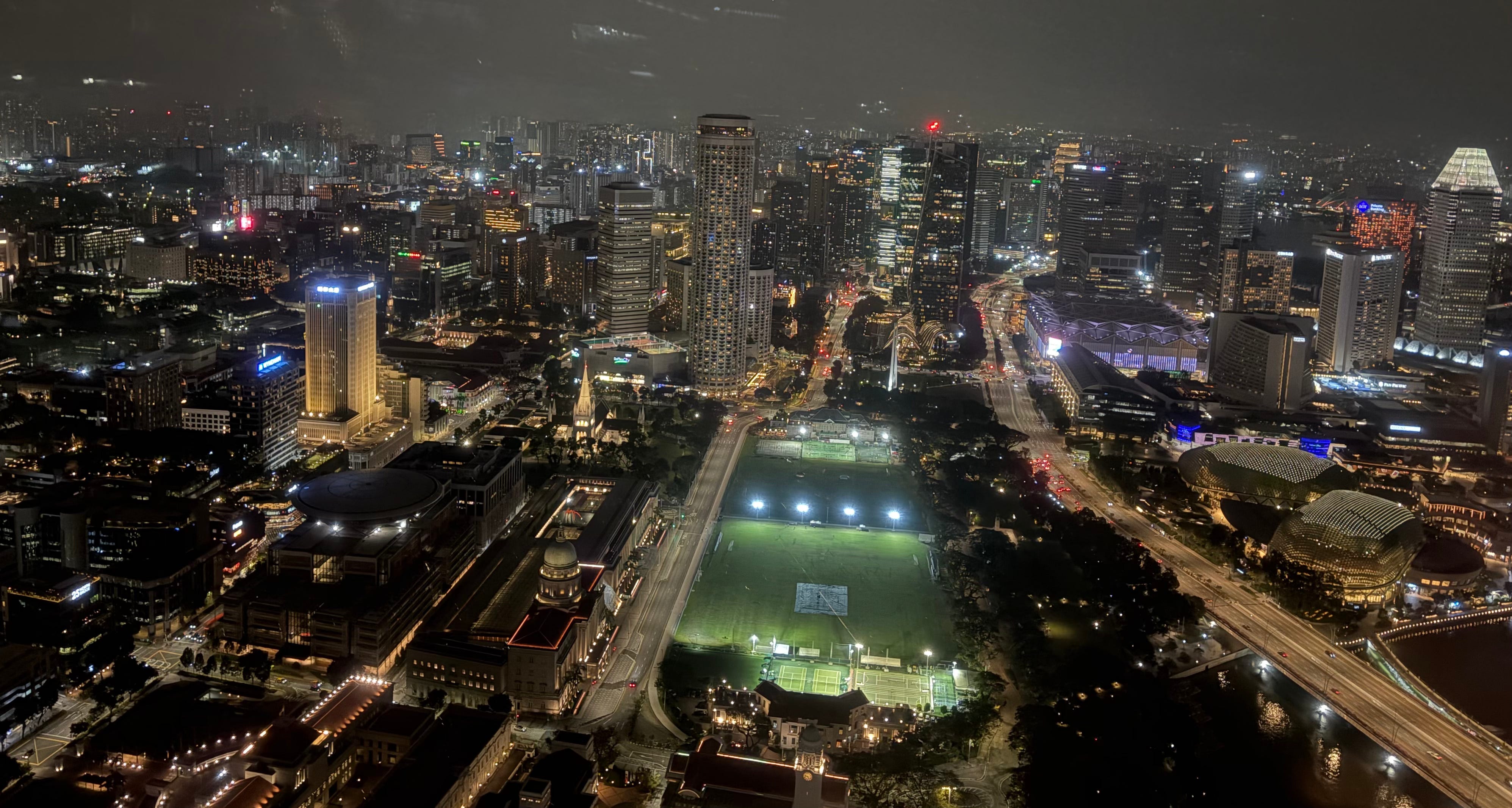
Lee lobbied hard to make their airport a refuelling stop between London and Australia, and writes with pride that civil servant Sim Kee Boon, ‘as a head of the Civil Aviation Authority of Singapore… made Changi into a world-class airport, winning top ratings in travellers’ magazines almost every year.’ People who endure the long flight to Sydney could at least enjoy its swimming pool, fitness centre and showers – or even take a stroll through the butterfly garden.
Lee visited a number of countries during his time as PM and came to place great importance on how things looked to visitors; if it was dirty, or if basic things didn’t function, like the baths in Moscow which had no plugs, it was a warning sign to investors.
He recalls how ‘for the Commonwealth prime ministers conference set for mid-January 1971, I rallied our officials to make that extra effort and give visitors a better impression of Singapore. We briefed the service industry, shopkeepers, taxi drivers, and workers in hotels and restaurants to exert themselves to be courteous and friendly.’ The feedback was positive.
With this in mind, he also set about a campaign of greening Singapore, driven by his belief that a country which looked rich would soon become rich. This was a ‘dramatic way to distinguish ourselves from other Third World countries’, and so the first Sunday of November would become Tree Planting Day. It’s likely that no other politician planted more trees in his life.
He also started a campaign to eradicate the Chinese habit of spitting. Singapore is now so famous for its sense of order that it’s worth remembering that this was not always the case. Once notorious for vice and organised crime, it also had lots of typically ‘third world’ social norms, not just spitting but the keeping of farmyard animals inside the city. Cracking down on corruption had been the first priority, and his party cadres wore white to illustrate their purity; he took the lead by having corrupt friends imprisoned. These habits would all have to change, and as he put it: ‘We are an immigrant people who have uprooted ourselves from our ancient homelands and are prepared to abandon old habits to make good in a new country.’
On his travels, Lee also came to see how other post-colonial states were progressing, or not as the case may be. His generation was unique, a group of leaders who had all been raised within a certain culture, often taught with the same British school books, speaking with similar accents. Yet they went down different paths, and he was often not impressed.
He described visiting Malta in 1967 and being ‘astounded’. Because Suez had closed, the British had covered the day-to-day costs and ‘this nurtured a sense of dependency, not a spirit of self-reliance.’ He noted how ‘dockworkers on full pay were playing water polo in the dry dock which they had filled with water. I was shaken by their aid dependency, banking on continuing charity from the British.’
He was highly critical of third world rulers who lobbied for aid, blaming the former imperial powers for their continuing poverty, while doing nothing to tackle the rampant corruption which held their countries back. He noted how Bangladesh’s leader turned up at a conference in a full-sized passenger jet, leaving it on the tarmac for the whole week when it could have been in service, a baffling waste of money. He also began to feel increasingly threatened by the global anti-colonial movement, and its implications for the Straits Chinese. After one conference on the Rhodesian crisis, he reflected that ‘like the peoples in Canada, Australia and New Zealand, I was a settler. If all immigrants were racists, then the world was in for a difficult time.’
Singapore had also lined up on the anti-communist side of the Cold War. After Britain’s withdrawal, the independence movement had split between the communists and anti-communists, and Lee reflects with sadness how he had to have so many communists arrested. I’m not entirely convinced that he was that sad about this, but he felt that what he did was necessary. He also points out – entirely accurately – that if his opponents had won, they would not have been so merciful.
He mentions the lamentable story of one communist, Lim Chin Siong, who was detained in 1963, tried to hang himself two years later, and then fell out with his comrades as he lost faith. In 1969 he requested permission to leave, and ‘I readily agreed and wished him well in his new life in London. He had wasted the best years of his life, ending up disgusted with his former comrades and bitter at their blinkered and unthinking refusal to face reality’. Lim was expelled by the communist party and denounced as a ‘spineless and barefaced renegade traitor’. When he died in 1997, the prime minister wrote an open letter of condolence to his wife.
Lee’s battle against communism further complicated his already complex relationship with his Chinese heritage, since many Chinese clubs, colleges and newspapers were overrun with ideologues. He arrested the editor of one Chinese-language newspaper for communist activities, and made a Chinese-speaking university switch to English for a similar reason.
He also enforced the use of English as the language of education, something which provoked huge resistance from Chinese parents, ‘deeply attached to their language and culture.’ For Lee, English was not just a neutral language but offered better job prospects, even if ‘it did seem to deculturise our students and make them apathetic.’ He also accepted that Chinese schools were often better, and was ‘impressed by their vitality, dynamism, discipline, and social and political commitment.’
Lee was elitist by nature, believing that the health of society depended on a small minority with brains and dynamism, while much of the population needed clear guidance. With this in mind, he was very astute in understanding that a globalised world would see states competing to attract a small and mobile talent pool, a competition which grew tougher once the US and other English-speaking countries opened up to Asian immigrants. The Singaporeans sought out entrepreneurs and highly skilled workers, and he notes with satisfaction how many of his people marry foreigners, both other Asians and westerners, and ‘their children are valuable additions to our talent pool’.
‘The old clear-cut barriers to interracial marriage have been breached by the intermingling of people as they travel to and work in countries not their own. We have to change our attitudes and take advantage of what was once considered foreign and not assimilable talent. We cannot allow our old prejudices to hamper our development as an international centre for trade, industry and services.’
If this makes Lee sound like the sort of progressive you’d happily invite to the proverbial north London dinner party, some of his other comments would have the guests choking on their sourdough. His talent search was driven by a view of genetics that western elites now see as taboo, and he cites The Bell Curve on more than one occasion. As Singapore’s wealth increased, and its fertility declined, he began to express fears that highly-educated women were not having enough children; his attempts to reverse this through a policy of eugenic child benefit was perhaps his one major failure, proving deeply unpopular with the electorate.
These changing attitude in the West were already clear in the autumn of 1968, when Lee had taken a sabbatical at Harvard. He had been in office for nine years ‘and needed to recharge my batteries, get some fresh ideas and reflect on the future.’ The Kennedy School of Government made him an honorary fellow and arranged breakfasts and dinners, as well as seminars. It was a useful education, one lesson being that American elites had adopted all sorts of wacky beliefs about the world.
At Harvard he picked the brains of ‘highly intelligent people who were not always right. They were too politically correct. Harvard was determinedly liberal. No scholar was prepared to say or admit that there were any inherent differences between races or cultures or religions. They held that human beings were equal and a society only needed correct economic policies and institutions of government to succeed. They were so bright I found it difficult to believe that they sincerely held these views they felt compelled to espouse.’ (Perhaps they didn’t.)
Even the prevailing economic beliefs within academia were, in his view, totally misguided. ‘The accepted wisdom of development economists at the time was that MNCs [multinational corporations] were exploiters of cheap land, labour, and raw materials. This “dependency school” of economists argued that MNCs continue the colonial pattern of exploitation that left the developing countries selling raw materials to and buying consumer goods from the advanced countries. MNCs controlled technology and consumer preferences and formed alliances with their host governments to exploit the people and keep them down. Third World leaders believed this theory of neocolonialist exploitation, but [deputy PM] Keng Swee and I were not impressed. We had a real-life problem to solve and could not afford to be conscribed by any theory or dogma.’
This form of neocolonialist exploitation was meanwhile making his country increasingly rich. Singapore attracted factories, became a major hub for revolutionary new super-containers that transformed shipping after the war, and then moved up the value chain to financial services. None of this would have been possible without aircon, a major innovation that Lee insisted on every branch of government using.
‘If I have to choose one word to explain why Singapore succeeded, it is confidence’, he writes at one point, by which he means investor confidence. His city-state would be an oasis of financial and legal stability in a turbulent and uncertain region. When the oil crisis hit in 1973, Lee informed the petroleum companies that he would not stop them taking their oil out of the country. This was a risk, but ‘if we blocked export from those stocks, we would have enough oil for our consumption for two years, but we have shown ourselves to be completely undependable.’ Their deferred gratification was rewarded, and by the late 1990s Singapore was the world’s third largest oil refining centre, after Houston and Rotterdam, and the third largest oil trading centre behind New York and London.
Lee was successful because he understood the basic problems that afflicted badly-run states: short-termism, sentimentality, second-order consequences, and what he called ‘ostentatious egalitarianism’. He wanted the most talented people in government, and believed that attracting the best meant paying them competitively.
‘In Britain or the United States, most successful people are too busy and doing too well to want to be in government,’ he writes. In the US, top earners from the private sector are appointed by presidents for a couple of terms, ‘then they return to their private sector occupation as lawyers, company chairpersons, or lobbyists with enhanced value because they now enjoy easy access to key people in the administration. I thought this “revolving door” system undesirable.’
In 1994, having handed over his duties as prime minister to become ‘senior minister’, a sort of advisory role, he proposed a formula that the pay of ministers, judges and top civil servants were to be automatically linked to the income tax returns of the private sector, which had been growing by 7-10 per cent a year for two decades. Before this change, litigation lawyers were making up to S$2 million Singapore a year, while the judges ruling over them were paid less than S$ 300,000.
He was unsold by the argument that the ‘honour of high office’ was enough of an incentive for people to sacrifice their income: ‘I believed this high-minded approach was unrealistic and the surest way to make ministers serve only briefly, whereas continuity in office and the experience thus gained have been a great advantage and strength in the Singapore government.’
Lee wrote that ‘Singapore will remain clean and honest only if honest and able men are willing to fight elections and assume office. They must be paid a wage commensurate with what men of their ability and integrity are earning for managing a big corporation or a successful legal or other professional practice.’
Such a move would have been highly controversial, indeed hated, in most countries, but the people paid those large sums have overseen decades of consistent economic growth. They have also overseen a country which remains clean and honest, now measured as one of the least corrupt on earth.
Such was the city-state’s success that, by the end of his term of office, Lee was increasingly being sought out as an advisor by other Asian countries hoping to escape the Third World, most consequentially of all by his old enemy, China.
Concludes tomorrow…
You know, there is an aspect of Lee’s thinking that I instinctively understand. Perhaps it is because we both hail from the ‘East’, or the ‘Global South’, or, more broadly, from that vast majority of humanity that does not necessarily subscribe to Western liberalism.
I understand Lee’s admittedly authoritarian, if arguably benevolent, approach to steering the destiny of ‘his people’. I also understand his decidedly unprogressive belief in the importance of genes, heredity and good breeding — notions that most Western liberals would find deeply objectionable, if not downright revolting!
And perhaps this helps explain why Lee’s experiment has proved so difficult to replicate in the West (though I may well be wrong).
Curiously enough, however, certain elements of Lee’s philosophy — his emphasis on good governance, his embrace of globalisation without surrendering to fashionable ideological fads, and his determination to combine ambition with grit, pragmatism and resilience — found an echo in one of the most unexpected places: Dubai!
"Israelis arrived in November 1965, they had to keep their existence a secret to prevent unrest from the Malay minority. ‘To disguise their presence, we called them “Mexicans”’, he recalls: ‘They looked swarthy enough.’"
"Are Israelis in Asia actually Mexican?" the greatest thread in the history of forums, locked by a moderator after 12,239 pages of heated debate.